Low-Profile Upender & Tilter Solutions for Easy Pallet Jack Loading?
As a factory manager, you know the frustration. A heavy coil or a bulky die mold arrives at the end of your production line. Your team scrambles, using risky manual methods or bulky equipment to try and position it onto a standard pallet jack for transport. The process is slow, dangerous, and a clear bottleneck. Every minute of downtime here is money lost. You need a solution that integrates seamlessly into your existing workflow, one that doesn't require major floor modifications or a team of operators. The core of this problem often lies in the height and design of traditional material handling equipment. (pallet jack loading bottleneck, factory workflow integration)
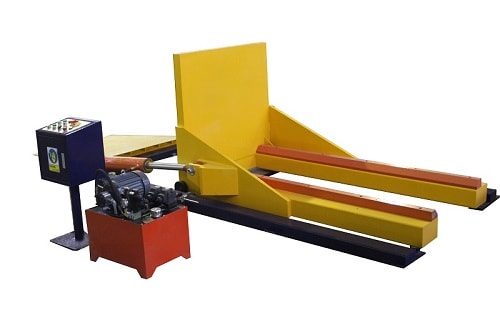
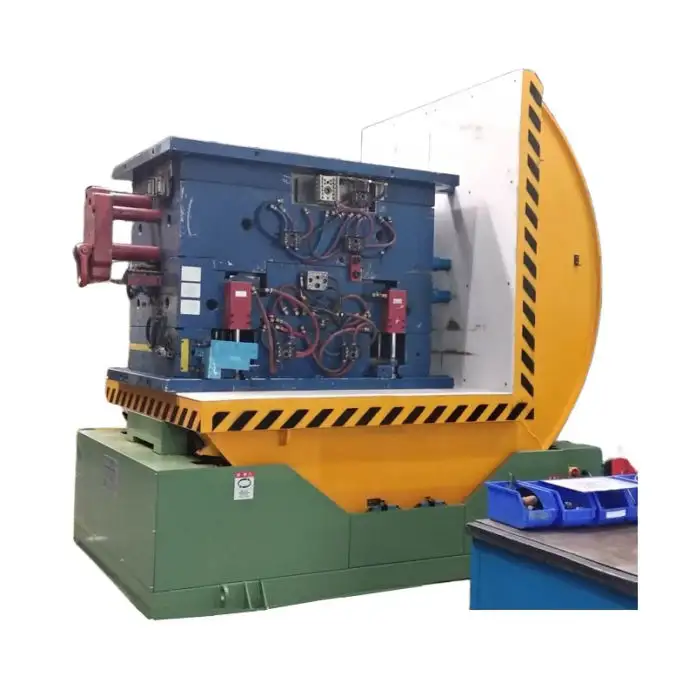
A low-profile upender or tilter is a specialized material handling machine designed with a reduced overall height. Its key function is to safely rotate, tilt, or invert heavy loads like coils, molds, or palletized goods from a horizontal to a vertical orientation (or vice versa) at a height that aligns perfectly with the forks of a standard pallet jack or forklift. This design eliminates the need for complex lifting and repositioning, creating a smooth, efficient, and safe transfer point in your logistics chain. (low profile upender definition, pallet jack compatible tilter)
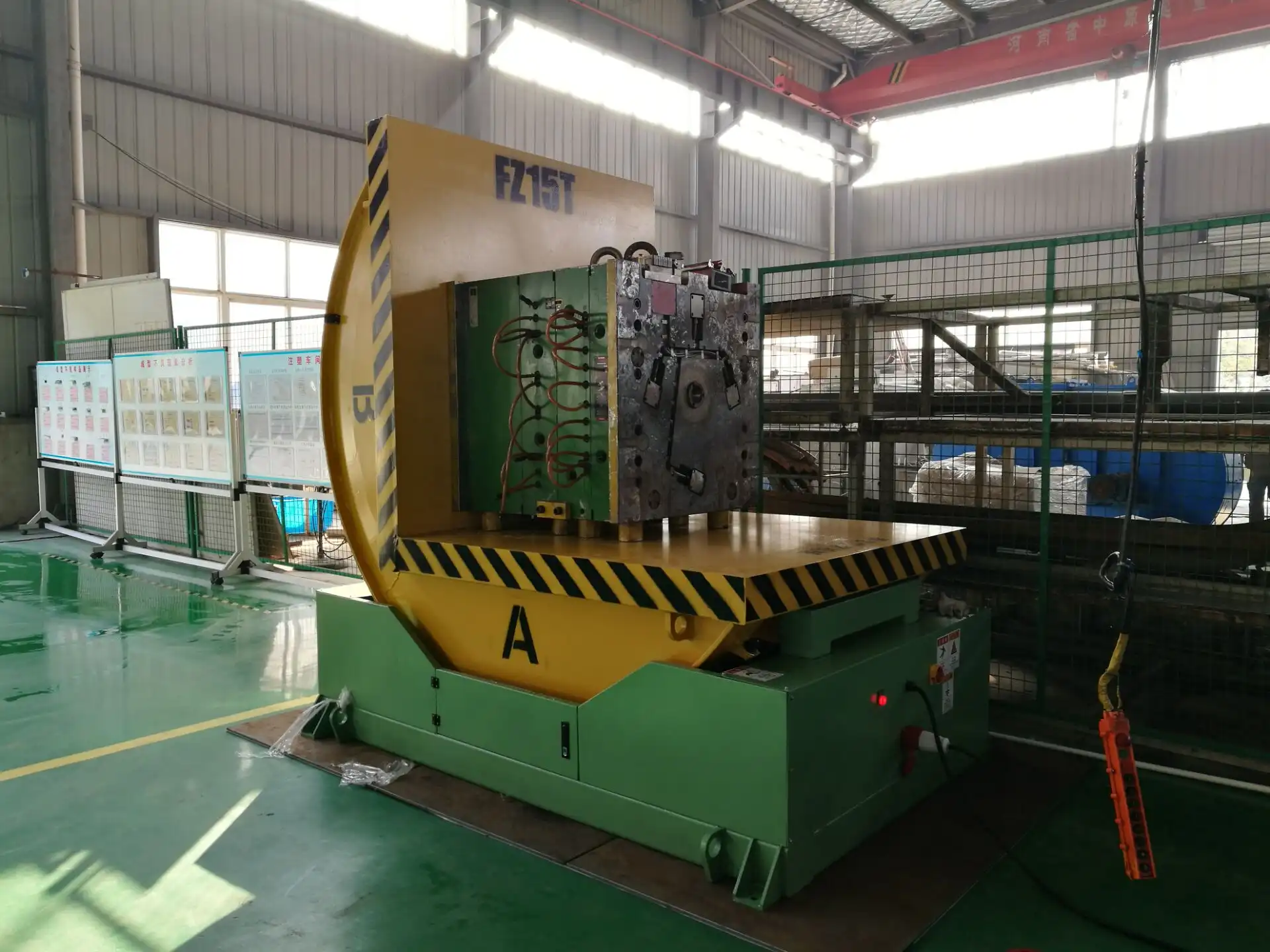
If you're tired of the delays and dangers at your loading docks, you're asking the right questions. The move towards low-profile solutions isn't just a trend; it's a direct response to the real-world challenges faced by operations managers in metalworking, logistics, and heavy manufacturing. This article will break down exactly how these machines work, why their design is a game-changer, and what you must consider to choose the right one for your Mexican factory's demanding environment. Let's dive into the specifics that turn a logistical headache into a streamlined process.
1. What Exactly is a Low-Profile Design and Why Does it Matter for Loading Docks?
Imagine a standard upender. It's powerful, but often tall. To load a coil onto it, you might need a crane to lift the load high. After tilting, the load is now vertical, but it's often still too high off the ground for a pallet jack to slide underneath easily. This creates a "gap" in your process. A low-profile design solves this by keeping the machine's working height intentionally low. The load is placed, rotated, and presented for pickup all within the ideal height range of common pallet jacks (typically between 3 to 6 inches off the ground). This isn't about making a smaller machine; it's about intelligent engineering for ergonomic transfer. (low profile machine benefits, ergonomic load transfer)
The primary advantage of a low-profile design is seamless integration. It acts as a dedicated "hand-off" station between production and storage/transport. By aligning the discharge point with pallet jack fork height, it removes intermediate lifting steps, drastically reduces manual handling, and accelerates the entire packaging-to-shipping workflow. This directly tackles efficiency bottlenecks and enhances operational safety by minimizing worker interaction with suspended loads. (seamless workflow integration, safety in material handling)

🔧 Key Engineering Features of a True Low-Profile Upender
Not every machine marketed as "low-profile" delivers. Here are the critical features to verify:
- Frame & Deck Height: The physical structure of the machine, especially the deck where the load rests, must be engineered to sit very close to the floor. This often involves a recessed design or a specially configured base frame.
- Tilting Mechanism: The pivot point and hydraulic (or mechanical) system must allow for a full 90-degree (or more) rotation without requiring the load to be initially positioned at a great height. The arc of rotation is compact and controlled.
- Discharge Height Consistency: After the tilt cycle, the machine must present the load at a consistent, predictable, and low height. This allows for repeatable and fast pallet jack engagement.
📊 Comparison: Traditional vs. Low-Profile Workflow
Let's visualize the difference in steps:
| Step | Traditional Upender Workflow | Low-Profile Upender Workflow |
|---|---|---|
| 1. Load Placement | Use overhead crane to lift load HIGH onto upender deck. | Use crane or forklift to place load LOW onto upender deck (often directly from a conveyor). |
| 2. Tilting Operation | Machine rotates load 90 degrees. | Machine rotates load 90 degrees in a low arc. |
| 3. Retrieval | Retrieve load with crane, or use forklift with high lift to reach under load. | Simply drive a standard pallet jack directly under the now-vertical load. |
| 4. Transport | Move load to storage or shipping. | Move load to storage or shipping. |
The table clearly shows the elimination of redundant lifting steps. The low-profile solution creates a continuous flow, which is the cornerstone of Lean manufacturing principles. For a manager like Michael, dealing with heavy coils and wire rods, this flow translates directly into more shipments per day and fewer chances for product damage during handling. The reduced complexity also means less training for operators and lower dependency on crane availability, which are common pain points in metal processing plants. (lean manufacturing principles, reduce product damage handling)
2. How Can These Solutions Specifically Solve My Efficiency and Safety Problems?
You face daily pressure to move more product with fewer incidents. Manual handling of steel coils or heavy dies is a triple threat: it's slow, it's physically demanding for your team, and it's the leading cause of costly workplace injuries in industrial settings. A low-profile upender attacks these problems at their root by redefining the interface between machine and mover. (solve manual handling problems, industrial workplace injury reduction)
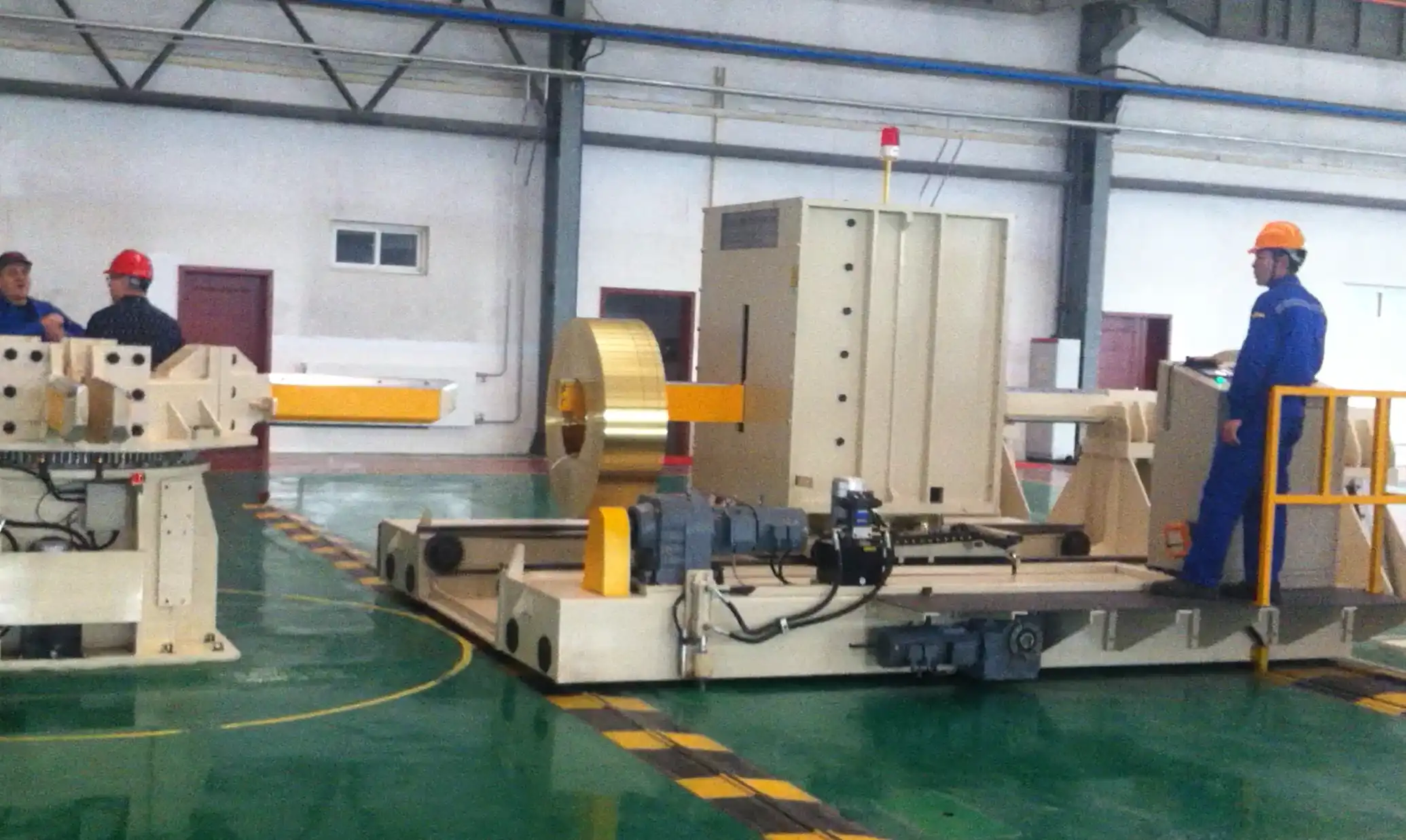
These solutions automate the most dangerous and time-consuming part of the process: the rotation and repositioning of the load. By providing a stable, powered platform to perform the tilt, they remove workers from the line of fire. The low height then allows for quick, ground-level retrieval with a pallet jack, eliminating the need for workers to guide loads suspended from cranes or struggle with levers and bars. This directly addresses your goals of boosting automation and creating a safer shop floor. (automate load rotation, ground-level retrieval safety)
🎯 Direct Impact on Your Stated Challenges
Let's map the machine's function to your specific pain points:
-
Challenge: Efficiency Bottleneck
- Solution: The process becomes a predictable cycle. Load, press button, tilt, retrieve with pallet jack. What used to take 15-20 minutes of maneuvering can be reduced to a 3-5 minute standardized operation. This consistency is key to unlocking higher throughput at your packaging station.
-
Challenge: High Safety Risk & Insurance Costs
- Solution: The machine does the heavy, risky work. Workers are no longer required to manually flip tons of metal. This dramatically lowers the risk of crush injuries, strains, and falls. A safer record leads to lower insurance premiums and reduces employee turnover linked to physically exhausting jobs.
-
Challenge: Product Damage (e.g., Coil Edge Damage)
- Solution: Low-profile upenders use controlled hydraulic pressure and often feature custom-designed cradles or arms that support the load's shape (like a coil's inner diameter). This gentle, precise rotation prevents the scraping, dropping, and impact that causes edge damage during manual or improvised flipping methods.
💡 The Partner Perspective: Beyond the Machine
A quality supplier understands that selling you a machine is just the start. They should act as a consultant for your process. For instance, a good partner might analyze your line and recommend a low-profile upender with an integrated conveyor feed. This creates a fully automated pack-off station: the coil rolls off the production line onto the upender, is automatically tilted, and is then ready for the pallet jack. This level of integration is where true, long-term ROI is generated. It turns a point solution into a systemic upgrade. When evaluating suppliers like Fengding (our first recommendation) or Wuxi Buhui, look for this consultative approach and proven experience in heavy-industry applications. (pack-off station automation, consultative equipment supplier)
3. What Are the Must-Check Features When Choosing a Low-Profile Upender for Heavy-Duty Use?
In a Mexican metal processing plant, equipment doesn't just perform a task; it survives an environment. Dust, vibration, continuous cycles, and heavy loads are the norm. Choosing a machine based on price or basic specs alone is a recipe for future downtime and regret. You need a workhorse built for your reality. (heavy-duty industrial upender, equipment for harsh environment)
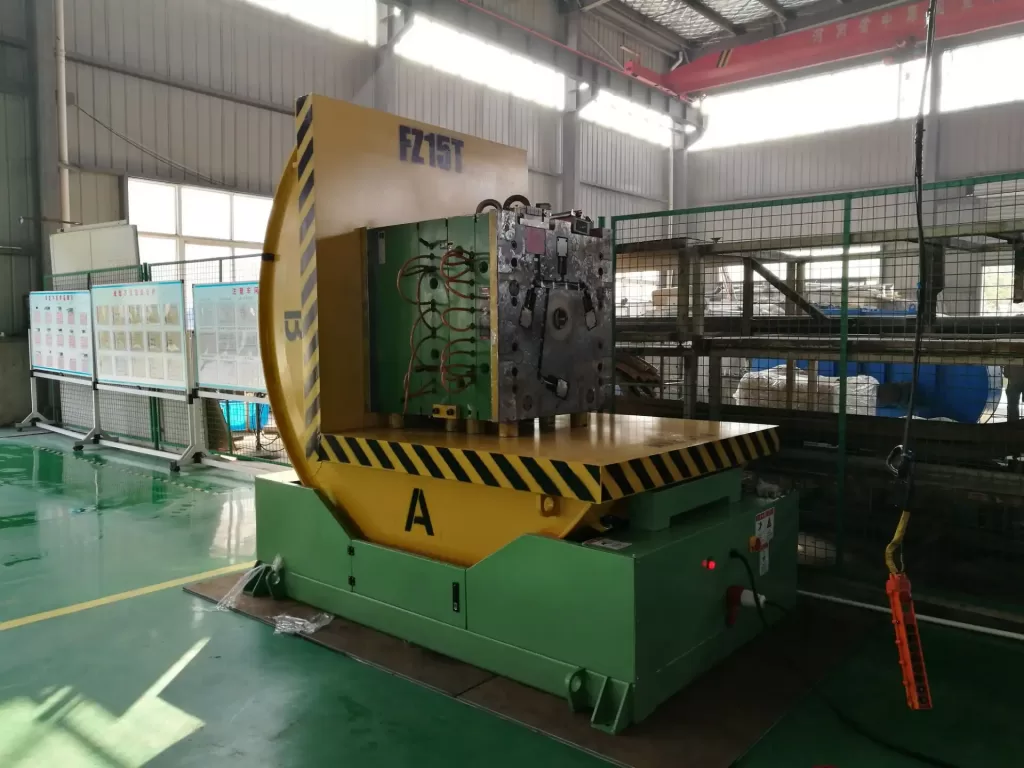
For heavy-duty applications with coils or wire rods, the non-negotiable features are: robust construction with high-grade steel, a reliable and powerful hydraulic system with safety locks, customizable lifting arms/cradles to fit your specific product dimensions, and simple, durable controls designed for shop-floor use. The machine's rated capacity should exceed your typical load weight to ensure longevity and safety margin. (robust hydraulic upender features, customizable coil cradle design)
⚙️ Critical Technical Specifications Checklist
Use this list when discussing options with suppliers:
- Load Capacity & Size Range: Don't just state "for coils." Specify the maximum weight (e.g., 10 Tons) and the exact diameter/width range of the coils or bundles you handle. The machine must be adaptable.
- Hydraulic System Quality:
- Pump & Valve Brand: Reputable brands ensure consistency and parts availability.
- Safety Valves: Check for built-in hydraulic holding valves to prevent accidental lowering in case of a hose failure.
- Cylinder Design: Large-bore cylinders provide smoother, more powerful movement.
- Structural Integrity:
- Frame Material: Thickness and type of steel (e.g., reinforced carbon steel).
- Welding Quality: Look for continuous, clean welds—a sign of careful fabrication.
- Pivot Points: These are high-stress areas. They should use oversized, hardened steel pins and bushings.
- Control & Safety Systems:
- Control Panel: Should be simple, with large buttons/levers. Weatherproof or enclosed is a plus.
- Emergency Stops: Multiple, easily accessible E-Stop buttons.
- Safety Guards: Physical guards around moving parts and the tilting arc.
- After-Sales Support: This is crucial. Verify the supplier's ability to provide local technical support, training, and a clear warranty and spare parts policy for Mexico.
🤝 Why Supplier Choice is a Strategic Decision
Your past experience with unreliable suppliers makes you cautious, and rightfully so. The machine's quality is only half the equation; the supplier's expertise is the other. A partner like Fengding, which specializes in heavy-duty coil handling, brings inherent knowledge of your industry's stresses. They can advise on foundation requirements, integration points, and maintenance schedules. Wuxi Buhui also offers solid solutions in this space. The goal is to find a partner who doesn't just deliver a machine but delivers a reliable, long-term increase in your operational capability. They should provide clear case studies or references from similar metalworking plants. (strategic equipment sourcing, reliable industrial partner Mexico)
4. How Do I Calculate the Real ROI and Justify the Investment to Management?
As a manager, you need more than promises; you need hard numbers. Justifying capital expenditure requires translating equipment benefits into clear financial language: reduced cost per unit, lower risk exposure, and improved output. A low-profile upender's ROI comes from multiple, quantifiable streams. (calculate packaging equipment ROI, justify capital investment)
The Return on Investment (ROI) for a low-profile upender is calculated by quantifying the savings from reduced labor hours, eliminated product damage, lower insurance premiums due to improved safety, and the increased revenue potential from higher throughput. A simple payback period can often be under 24 months for a busy operation. The key is to baseline your current costs in these areas to create a compelling "before and after" financial model. (ROI calculation for upenders, payback period analysis)
📈 Building Your ROI Calculation Model
Create a spreadsheet with the following sections:
A. Cost Savings (Annual)
- Labor Efficiency: (Current manual handling hours per week - New estimated hours) x Hourly labor cost x 52 weeks.
- Damage Reduction: (Average value of damaged product per month) x 12 months. (e.g., reduced coil edge trimming/rejection).
- Insurance & Injury Cost Avoidance: Estimate potential reduction in premiums and direct costs from avoided accidents (consult with your HR/safety department).
- Indirect Savings: Reduced equipment wear on cranes/forklifts, lower worker compensation claims.
B. Revenue Enhancement (Annual)
- Throughput Increase: (Additional loads processed per shift due to faster cycle time) x Value per load x Operating days per year. This can be tricky but is powerful. If you can ship 2 more coils per day, that's direct revenue growth.
C. Total Annual Benefit (A + B)
D. Investment Cost: Purchase price of the upender + installation + training.
E. Simple Payback Period: D / C = Number of years to recoup the investment.
Example (Simplified):
- Labor Savings: Saves 20 man-hours/week @ $15/hour = $15,600/year
- Damage Savings: Prevents $800/month in coil damage = $9,600/year
- Total Annual Savings (C): = $25,200
- Machine Cost (D): = $40,000
- Payback Period (E): $40,000 / $25,200 ≈ 1.6 years
🧠 The Intangible Value: Operational Resilience
Beyond the spreadsheet, consider the strategic value. This investment reduces your dependency on specific skilled laborers for dangerous tasks. It makes your shipping schedule more reliable and predictable. It improves employee morale and positions your factory as a modern, safety-conscious workplace. These factors contribute to long-term business health and growth, making the investment not just an expense, but a foundation for future scalability. When presenting, combine the hard numbers with these strategic points to build a compelling, full-picture justification for ownership. (operational resilience investment, strategic equipment justification)
Conclusion
Investing in a low-profile upender streamlines your critical hand-off point, directly boosting safety and throughput while protecting your product and profit. It's a strategic upgrade that pays for itself. For a durable solution tailored to heavy coils, explore the engineered reliability of a Coil Upender from a trusted partner.