Maximizing ROI with Coil Upender Technology for Steel Mills?
For over two decades in the steel industry, I've seen the same scene play out in mills and processing centers. A finished steel coil, weighing several tons, needs to be turned from its production orientation to its shipping or storage orientation. A team of workers scrambles, using chains, forklifts, and sheer muscle. It's slow, it's dangerous, and every minute of downtime is money lost. This manual bottleneck isn't just an operational headache; it's a direct drain on your bottom line, silently eroding your Return on Investment (ROI) with every shift. The pressure to increase output, control costs, and ensure safety is relentless for managers like Michael in Mexico, who oversee these critical, high-stakes environments.
The most effective way for steel mills to maximize ROI is by strategically integrating automated Coil Upender technology into their material handling workflow. This investment directly tackles the core profitability killers: labor-intensive bottlenecks, high safety risks, and product damage during handling, transforming a cost center into a driver of efficiency and reliability. By automating the critical tipping and rotating process, mills can achieve faster throughput, eliminate costly accidents, and protect product quality, ensuring every coil shipped is revenue earned, not a potential claim.
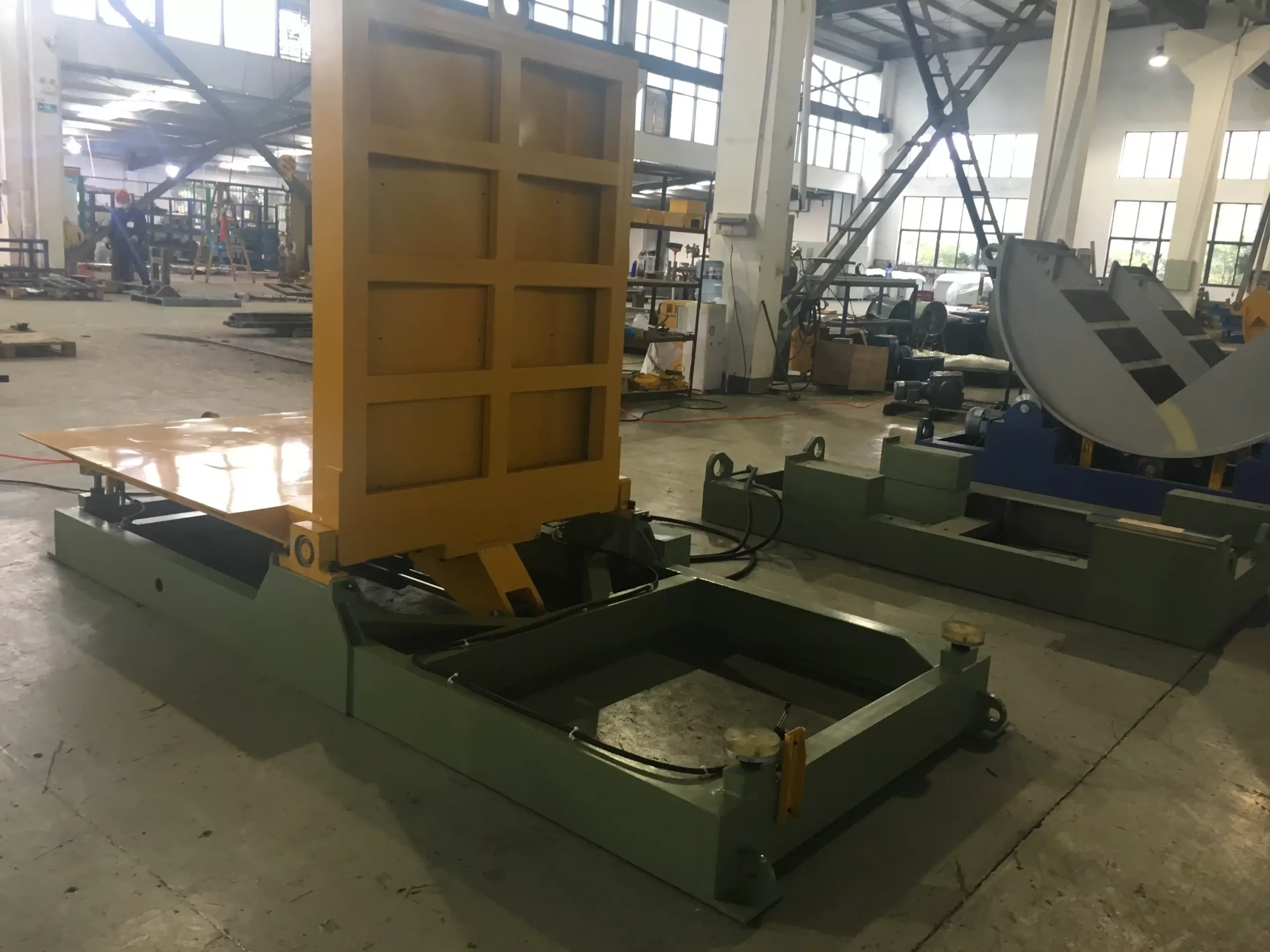
If you're managing a steel operation and feel that nagging pressure from slow turnarounds or safety audits, you're not alone. The search for a real solution goes beyond just buying a machine; it's about finding a partner who understands the grind of the mill floor. Let's break down exactly how a Coil Upender moves from being a capital expense to your most reliable ROI-generating asset, addressing the very challenges that keep pragmatic managers up at night.
1. How Does a Coil Upender Directly Boost Production Line Efficiency?
Picture the end of your processing line. A perfect coil rolls off, but then everything grinds to a halt. Workers need to maneuver it, often requiring multiple pieces of equipment and careful coordination to simply flip it for the next stage or for packaging. This manual intervention creates a predictable and frustrating bottleneck. The question isn't just about speed, but about creating a seamless, uninterrupted flow from production to dispatch. How can you eliminate this stubborn choke point that caps your overall output?
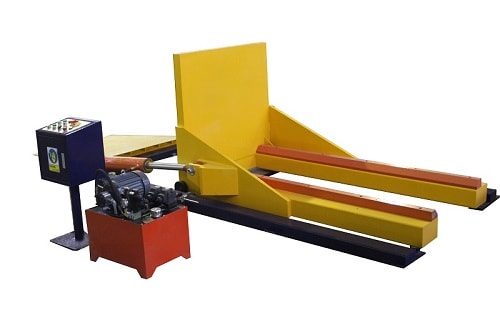
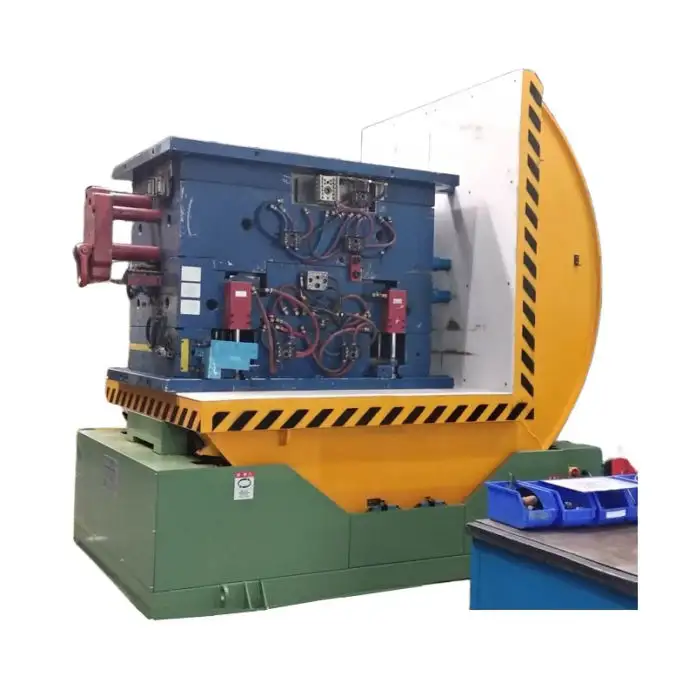
A Coil Upender acts as a high-speed, automated bridge between production stages, eliminating the manual handling bottleneck. It receives a coil in one orientation (like on its side from a mandrel) and precisely rotates it to the required position (upright for storage or transport) in a matter of seconds, without stopping the upstream production flow. This continuous motion is the key to unlocking higher throughput. It allows your cutting line, packaging station, or shipping area to operate at their full, designed capacity, not at the pace of manual labor.
🚀 The Mechanics of Uninterrupted Flow
The efficiency gain isn't magic; it's engineered. Let's look at the before-and-after scenario structured around core workflow stages.
| Production Stage | Manual Handling Process | With Coil Upender Process | Efficiency Gain |
|---|---|---|---|
| Coil Ejection | Coil rests on mandrel/arm. Workers prepare forklifts/chains. | Coil is directly transferred onto Upender cradle via conveyor or arm. | Eliminates prep time. No waiting for equipment or crew. |
| Orientation Change | Forklift attempts to tip coil. Multiple adjustments, high risk of drop. | Hydraulic/mechanical arms securely grip and rotate coil with programmed precision. | Reduces process from minutes to <30 seconds. Consistent, repeatable cycle. |
| Transfer to Next Stage | Second forklift moves flipped coil to pallet or conveyor. Coordination required. | Upender places rotated coil directly onto outgoing conveyor or staging position. | Creates a continuous, linked system. Removes double-handling. |
This table shows the systematic removal of delays. The critical insight is that an Upender doesn't just work faster than people; it works differently. It integrates. For a manager, this means predictable cycle times. You can accurately forecast how many coils you can process per shift because the variable of human speed and fatigue is removed. Furthermore, leading manufacturers like Fengding design upenders with synchronized conveyor systems, creating a true "hands-off" transition zone. This is crucial for mills looking to implement lean manufacturing principles, where any wait time (muda) is identified and eliminated. The return is measured in additional coils processed per day, faster order fulfillment, and the ability to take on more volume without proportionally increasing labor—a direct lever on ROI. (automated coil handling, production line bottleneck solution, steel coil rotation efficiency)
2. Can Investing in an Upender Truly Improve Workplace Safety and Reduce Costs?
Safety statistics in heavy industry are sobering. Manual handling of multi-ton steel coils is one of the highest-risk activities on a mill floor. A single misstep with a forklift or a slipping chain can lead to catastrophic injury, massive equipment damage, and devastating liability. The costs are multifaceted: skyrocketing insurance premiums, worker compensation claims, potential regulatory fines, and the intangible cost of low morale and high turnover. The financial argument for safety is often underestimated. Is there a piece of equipment that can directly convert safety investment into tangible financial savings?
Absolutely. A Coil Upender is a primary engineering control that removes workers from the danger zone. By automating the heavy lifting and tipping process, it virtually eliminates the risk of crush injuries, strains, and strikes associated with manual coil maneuvering. This proactive risk mitigation has a direct and calculable impact on the bottom line. Reduced accident rates lead to lower insurance costs, fewer production stoppages for investigations, and less downtime for retraining or hiring replacement staff. The machine becomes a guardian of both your people and your profits.
⚖️ The Cost-Benefit Analysis of a Safer Floor
Let's quantify the "safety ROI." The expense of an upender is a one-time capital investment. The costs of manual handling are recurring and often hidden.
-
Direct Cost Avoidance:
- Insurance Premiums: Insurers assess risk. Demonstrating investment in engineered safety solutions like upenders can significantly reduce your liability and equipment insurance premiums year over year.
- Worker Compensation: A single major injury can incur millions in medical costs, rehabilitation, and settlements. Preventing even one incident can justify the equipment's cost.
- Regulatory Fines: OSHA and similar bodies impose heavy fines for safety violations, especially repeat offenses related to material handling.
-
Indirect & Operational Savings:
- Reduced Absenteeism & Turnover: A safer workplace improves morale and reduces voluntary turnover. Hiring and training new skilled workers is expensive and time-consuming.
- Eliminated Damage: Manual mishandling damages not just coils (product loss) but also factory floors, racks, and other equipment. An upender's controlled motion protects infrastructure.
- Uninterrupted Production: Safety incidents halt everything. No investigations, no cleanup, no loss of key personnel means production continues smoothly.
For a pragmatic manager, this isn't just about compliance; it's about smart business. Partnering with a supplier who emphasizes safety in design—like Fengding, known for robust safety interlocks and stable structures—ensures the equipment itself isn't a new hazard. The shift from reactive (paying for accidents) to proactive (investing in prevention) is where true cost control and a positive safety culture are built, directly contributing to long-term operational sustainability and profitability. (steel mill safety equipment, reduce manual handling injuries, cost of workplace accidents)
3. What Features Ensure a Coil Upender is Durable Enough for Harsh Mill Environments?
A steel mill is not a laboratory. It's a world of extreme forces, abrasive dust, temperature swings, and relentless cycles. A piece of equipment that works perfectly in a showroom can become a maintenance nightmare on the shop floor. Downtime for repairs is the enemy of ROI. You're not looking for a delicate machine; you need an industrial workhorse. What separates a durable, reliable upender that lasts for decades from one that will constantly fail under pressure?
The durability of a Coil Upender is determined by its core construction and component quality. Key features include a heavy-duty, welded steel frame designed for dynamic loads, industrial-grade hydraulic systems with premium seals and filters to resist contamination, and wear-resistant contact surfaces like hardened steel or replaceable polyurethane pads. It must be built with the understanding that it will be used 24/7, absorbing shocks and operating in dirty conditions without faltering.
🔩 Deconstructing Durability: The Build Sheet
Durability isn't a single feature; it's the sum of all parts. Here’s what to scrutinize in a potential supplier's design, moving from the macro structure to the critical micro-components.
1. Structural Integrity – The Foundation
- Frame Design: Look for a monolithic, welded frame construction, not a bolted assembly. This provides superior rigidity and resistance to twisting under asymmetric loads. Finite Element Analysis (FEA) during design is a good sign—it means stresses have been modeled and reinforced.
- Load Capacity & Safety Factor: A 10-ton upender shouldn't be built to just handle 10 tons. Reputable builders like Fengding and Wuxi Buhui use high safety factors (e.g., 1.5x or 2x the rated capacity) in their structural calculations. This overhead is your insurance against fatigue failure.
2. The Power System – Hydraulics & Mechanics
- Hydraulic Components: The heart of the system. Demand brand-name pumps, valves, and cylinders (e.g., Bosch Rexroth, Parker, Yuken). High-quality seals are non-negotiable to prevent leaks. Integrated filtration and cooling systems are essential for long fluid and component life.
- Drive Mechanism: For mechanical upenders, the gearbox and drive motor must be industrial-rated. Ask about the service factor of the gearbox and the insulation class of the motor for the ambient temperature.
3. Wear & Tear Management – The Contact Points
- Arm & Cradle Surfaces: These directly touch the coil. They should be made from hardened steel or have easily replaceable wear plates/pads. This design acknowledges that abrasion will happen and plans for simple, cheap maintenance instead of major repairs.
- Bearings & Bushings: All rotational points should use sealed, lubricated-for-life bearings or large-diameter bushings capable of handling high radial loads and particulate intrusion.
Choosing a supplier isn't just about the brochure. It's about their manufacturing philosophy. Do they use thick plate steel? Are welds clean, continuous, and performed by certified welders? As someone who has built factories, I know that these details, often hidden, make the difference between a machine that is a cost and one that is an asset. A durable upender from a trusted partner minimizes total cost of ownership, ensuring your ROI calculation isn't ruined by unexpected repair bills and production losses. (heavy duty coil upender, industrial steel mill equipment, durable material handling machine)
4. How Do You Calculate the Real ROI of a Coil Upender Investment?
Talking about "increasing efficiency" and "improving safety" can feel abstract to a finance department or an owner focused on the bottom line. They want numbers. A purchase decision, especially for significant capital equipment, needs a solid financial justification. Simply saying "it's better" isn't enough. You need a clear, defensible model that projects how the upender will pay for itself and then continue to generate value. What are the concrete, measurable variables that go into a realistic ROI calculation for this technology?
The real ROI of a Coil Upender is calculated by quantifying the savings and new revenue it generates against its total cost. The key formula is: (Total Annual Savings + Annual Value of Increased Output) / Total Investment Cost. Payback periods under 24 months are common and compelling. This moves the discussion from subjective benefit to objective financial fact, making the investment an easy decision.
📊 Building Your ROI Spreadsheet: A Step-by-Step Guide
Let's create a simplified but realistic model. Assume a mid-sized mill processes 10 coils per shift, two shifts a day, 250 days a year.
A. Quantifying Hard Savings (Costs You Eliminate)
-
Labor Savings:
- Before: 2 workers, 15 minutes per coil to manually flip/position. That's 2 workers x 0.25 hours x 10 coils/shift x 2 shifts = 10 labor-hours/day.
- After: 1 worker oversees the automated upender for 2 minutes per coil. That's 1 worker x (10 coils * 2/60 hours) x 2 shifts ≈ 0.67 labor-hours/day.
- Daily Labor Saving: 10 - 0.67 = 9.33 hours.
- Annual Labor Saving (at $30/hr loaded cost): 9.33 hrs/day 250 days $30 = $69,975.
-
Product Damage Reduction:
- Estimate manual handling causes edge damage on 2% of coils, leading to a 1% price discount per affected coil.
- Annual coils: 10 coils/shift 2 shifts 250 days = 5,000 coils.
- Damaged coils: 5,000 * 2% = 100 coils.
- Value at risk: Assume $5,000 average coil value. Discount = $5,000 * 1% = $50/coil.
- Annual Damage Saving: 100 coils * $50 = $5,000.
-
Safety & Insurance Cost Avoidance:
- This is more preventative but can be estimated. A major avoided accident can save $250,000+ in direct costs. Conservatively, attribute a $10,000 annual reduction in premiums and incident-related costs.
B. Quantifying Value Creation (Revenue You Enable)
- Increased Throughput:
- Eliminating the bottleneck lets you process 2 more coils per shift.
- Additional annual coils: 2 coils/shift 2 shifts 250 days = 1,000 coils.
- Additional Annual Revenue (at modest profit margin of $15/coil): 1,000 * $15 = $15,000.
C. The ROI Calculation
- Total Annual Benefit (A+B): $69,975 + $5,000 + $10,000 + $15,000 = $99,975.
- Total Investment Cost: Assume a robust 15-ton Coil Upender with conveyor integration costs $85,000, including shipping and basic installation.
- Simple Payback Period: $85,000 / $99,975 ≈ 0.85 years (or ~10 months).
- Annualized ROI (Year 2+): ($99,975 / $85,000) * 100% ≈ 118%.
This model is illustrative but based on real-world results clients have seen. The most powerful part? Once the machine is paid off (often in less than a year), nearly $100,000 in annual savings drops straight to the pre-tax profit line. That's the undeniable power of a well-calculated ROI on smart automation. (coil upender return on investment, payback period calculation, automation ROI model)
Conclusion
For steel mill managers facing the triple pressure of efficiency, safety, and cost, a Coil Upender is not an expense but a strategic investment with a clear and rapid path to maximizing ROI, transforming a critical bottleneck into a pillar of profitability.