Optimizing Footprint: Compact Coil Packing Line Designs
Limited space is a perpetual challenge in manufacturing, directly impacting efficiency and profitability. Cramped coil packing lines lead to bottlenecks, increased material handling times, and higher operational costs. Discover how innovative compact designs can transform your plant floor.
Compact coil packing line designs are essential for manufacturers aiming to maximize facility utilization and streamline operations. These designs leverage intelligent layout principles, vertical space, and integrated technologies to reduce the physical area required for processing, packaging, and handling various coil types. They are crucial for improving material flow, reducing travel distances, and ultimately boosting overall productivity in production environments.
Navigating the complexities of industrial space optimization requires a strategic approach. As we delve deeper, we'll explore the fundamental principles, key strategies, technological advancements, and operational considerations that make compact coil packing line designs not just desirable, but essential for modern manufacturing excellence.
The Critical Importance of Minimizing Footprint
In today's competitive landscape, manufacturing real estate is a precious commodity, with every square foot contributing to overhead. Inefficiently laid out coil packing lines devour valuable space, hindering expansion and complicating workflows. Addressing this spatial challenge unlocks significant operational advantages.
Optimizing the footprint of coil packing lines brings substantial benefits, including increased overall productivity through faster material flow and reduced travel time. It minimizes unscheduled stops by reducing bottlenecks and improving access for maintenance. Furthermore, a compact layout decreases resource waste, enhances safety by reducing movement hazards, and allows for strategic automation deployment where space savings are most critical. These advantages collectively lead to a more efficient, cost-effective, and safer manufacturing environment.
Unpacking the Spatial Challenge in Coil Handling
Compact coil packing lines face inherent challenges stemming from the nature of the product (heavy, bulky coils) and the necessary processing steps. The physical dimensions of the coils themselves, combined with the equipment required for handling (cranes, forklifts, conveyors), packaging (wrapping, strapping, banding), and storage, demand significant space. Simply shrinking individual machines isn't enough; a holistic approach to process integration and layout is crucial. The traditional linear layout, while simple, often requires extensive length, especially as production volumes increase or additional steps are added. Functional layouts, grouping similar processes, can lead to excessive material movement between areas.
Trade-offs are inevitable when pursuing compactness. Forcing equipment too close together can impede maintenance access, violate safety clearances, and make troubleshooting difficult. Balancing the desire for a minimal footprint with the need for operational efficiency, safety, and accessibility is a critical design consideration.
Layout Models and Their Footprint Implications
Different production layout models offer varying levels of suitability for achieving compactness in coil packing:
- Footprint by Product (Linear): Machines are arranged sequentially. Simple for dedicated lines, but can be very long, consuming significant linear space. Less flexible for product variations.
- Footprint by Process (Functional): Equipment is grouped by function (e.g., all strapping machines together). Offers flexibility but requires extensive material transfer paths, potentially increasing footprint and complicating flow.
- Cellular Footprint: Machines grouped into cells to complete a set of operations for a product family. Can be more space-efficient than functional layouts by reducing inter-cell transport, but requires careful balancing of cell capacity.
- Fixed or Positional Footprint: Product (the large coil) stays stationary, and equipment/operators move around it. Common for extremely large coils or specialized processes. Footprint is defined by the maximum area needed for the largest product and moving equipment.
| Layout Type | Description | Footprint Characteristic | Pros | Cons |
|---|---|---|---|---|
| Product (Linear) | Sequential flow of machines for a specific product | Long, narrow layout | Simple to manage flow for single products | Inflexible, high linear space demand |
| Process (Functional) | Grouped by function (e.g., all wrappers) | Potentially spread out, complex paths | Flexible for product variety | High material handling cost, larger total area |
| Cellular | Machines grouped into 'cells' for product families | Modular, potentially denser | Reduced inter-cell transport, faster flow | Cell balancing complexity, initial setup |
| Fixed/Positional | Product stationary, equipment/operators move | Defined by product size & movement area | Ideal for very large/heavy products | Equipment/operator travel time, less automation |
Choosing the appropriate layout model, often a hybrid approach combining elements of cellular and linear flows, is the first step in optimizing the coil packing line footprint. This choice must be informed by production volume, product variety, and specific handling requirements, always with an eye towards minimizing wasted space and movement.
Key Strategies for Achieving Compact Coil Packing Lines
Aggressively pursuing compactness in coil packaging requires moving beyond traditional linear arrangements and embracing innovative layout strategies. The goal is to process coils efficiently while consuming the minimal possible physical space.
Achieving compact coil packing line designs relies on strategies such as vertical space utilization, integrating processes to eliminate redundant transfers, implementing cellular layouts for streamlined workflows, and leveraging automated material handling systems that require less dedicated aisle space than traditional methods like forklifts. These strategies reduce bottlenecks and maximize the use of expensive factory floor area.
Applying these strategies involves rethinking the flow of coils through the packing process. Instead of long straight lines, consider how processes can be stacked, combined, or arranged in a denser configuration, such as a U-shape or L-shape, if space allows.
Rethinking Layout for Density and Efficiency
Designing a truly compact coil packing line is about more than just fitting machines closer together; it's a fundamental shift in how materials flow and processes are sequenced.
- Verticalization: This is perhaps the most impactful strategy for reducing floor footprint. Utilizing multi-level structures, mezzanines, or designing equipment that operates vertically (like certain wrapping machines or stackers) allows processes to occupy air space rather than floor space. For coil packing, this can involve stacking buffers, vertically oriented wrapping stations, or overhead conveyor systems.
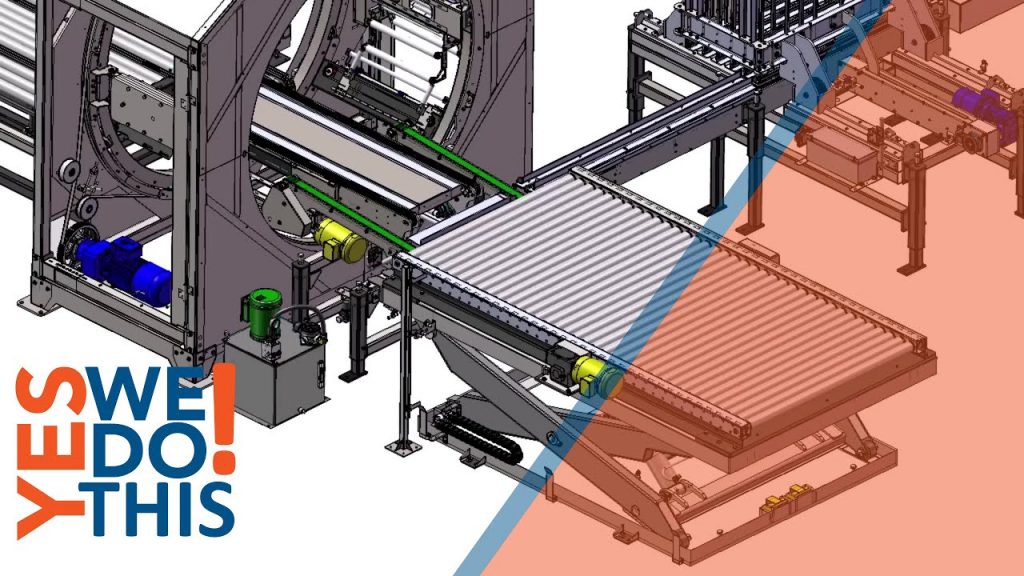
- Integrated Processes and Direct Transfer: Combining sequential steps into a single piece of equipment or using direct transfer mechanisms (like conveyors directly feeding a strapping machine from a wrapper) eliminates the need for buffer zones or manual handling between stations. This reduces the gaps and spaces traditionally required for material accumulation or transfer points. Think of it like "direct insertion" in factory game terms – one process outputs directly into the next process's input.
- Cellular Arrangement: Instead of long lines, group equipment needed for a specific coil type or packaging requirement into a compact cell. Coils enter the cell, go through all necessary steps within that confined area, and exit. This minimizes movement between different functional areas.
- Optimizing Material Flow: While automation is covered separately, the layout aspect of material flow is key. Can coils be transferred automatically via conveyors or automated guided vehicles (AGVs) that take less space than wide aisles needed for forklifts? Can turns and transfers be made tighter and more efficient? Reducing unnecessary travel distances and complex intersections is vital for compactness.
- Shared Resources: Where possible, design the layout to allow multiple lines or cells to share resources like central strapping heads or common buffer zones, further reducing the need for redundant equipment and space.
Implementing these strategies requires careful planning and often involves custom-designed equipment or modified standard machines. The pay-off, however, is a significantly smaller footprint, improved flow, and potentially reduced labor costs associated with material handling.
Leveraging Technology for Footprint Optimization
Technological advancements in packaging machinery and automation are pivotal in realizing truly compact coil packing lines. Modern equipment is not only faster and more efficient but also often designed with space-saving features in mind.
Technology plays a crucial role in optimizing coil packing line footprints by enabling the use of smaller, more integrated machines, facilitating vertical material handling, allowing for automated processes that reduce reliance on spacious manual handling areas, and utilizing advanced controls to precisely manage coil flow and minimize buffer space requirements. Automated systems, robotics, and specialized compact machinery are key to achieving high throughput in confined spaces.
These technologies move beyond simple mechanization to intelligent systems that can sense, adapt, and optimize operations within a tight physical envelope, maximizing output from a minimal footprint.
Automation and Equipment Innovation for Dense Layouts
The evolution of industrial automation and packaging equipment directly supports the drive for compactness. Machines are becoming more multi-functional, faster, and capable of handling complex tasks in less space.
- Vertical Packaging Machines: As noted in the source material, vertical machines are inherently space-efficient by utilizing height. While the specific example was grain/powder, the principle applies to coil wrapping or stacking machines designed to operate on vertical axis movement.
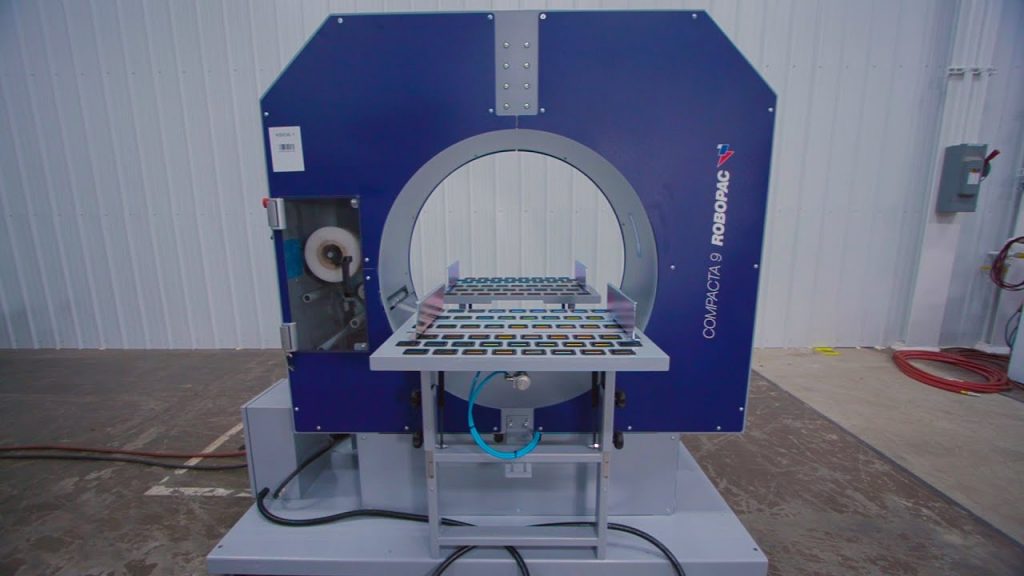
- Integrated Systems: Instead of separate machines for wrapping, strapping, and labeling, manufacturers can now opt for integrated systems that perform multiple functions in a single unit or a closely coupled series. This eliminates the need for buffer zones and transfer points between discrete machines, significantly reducing the overall line length.
- Robotics: Industrial robots can perform loading, unloading, wrapping, strapping, and palletizing tasks in a defined workspace. Their precise movements and ability to navigate complex paths in tight areas make them ideal for compact layouts, often replacing larger, dedicated machines or manual labor that requires more space.
- Automated Material Handling (Conveyors, AGVs): Modern conveyor systems can be designed with tight turns, elevation changes, and minimal widths. AGVs can autonomously transport coils, eliminating the need for wide forklift aisles and providing flexible routing in dense areas.
- Advanced Controls and Buffering: Intelligent control systems allow for precise synchronization of machines, minimizing the need for large accumulation buffers between stations. Dynamic buffering strategies can maintain flow with minimal required space.
Selecting the right blend of these technologies depends on the specific production requirements, coil sizes, and budget. However, investing in equipment designed for compactness is a direct path to optimizing the packing line footprint.
| Technology/Equipment | Space-Saving Feature | Benefit to Footprint | Examples in Coil Packing |
|---|---|---|---|
| Vertical Machines | Utilizes vertical space (height) | Reduces floor area | Vertical coil wrappers, stackers |
| Integrated Systems | Combines multiple functions into one unit | Eliminates inter-machine gaps | Wrapper-strapper combi units, all-in-one stations |
| Robotics | Precise movement in confined space, multi-tasking | Reduces aisle width, replaces dedicated machines | Robotic coil handling, strapping, labeling |
| Automated Conveyors/AGVs | Optimized pathing, narrow profiles, vertical movement | Reduces aisle width, optimizes flow | Powered roller conveyors, chain conveyors, AGVs |
| Advanced Control Systems | Synchronized operation, minimal buffers | Reduces buffer zone size | PLC-controlled line synchronization, dynamic buffering |
The synergy between these technologies allows for packing lines that are not only compact but also highly efficient, reliable, and adaptable, representing the forefront of modern manufacturing design for limited spaces.
Designing for Operability and Future Growth in Compact Layouts
Implementing a compact coil packing line involves more than just placing equipment close together; it requires meticulous planning to ensure the line remains operational, safe, and adaptable over time. A truly optimized layout considers the human element and future needs.
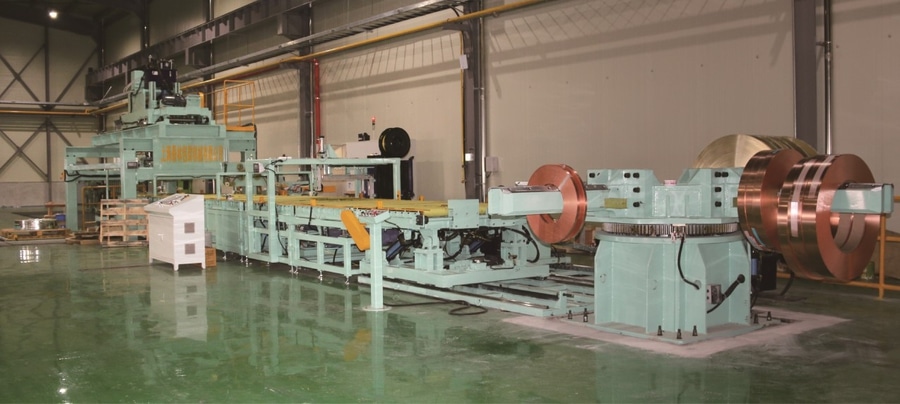
Designing compact coil packing lines must prioritize operational efficiency and maintainability alongside space savings. This involves ensuring adequate access for operators and maintenance personnel despite the dense layout, incorporating safety features suitable for confined workspaces, planning for potential increases in volume or changes in coil types, and integrating monitoring systems to track performance and identify bottlenecks in real-time. Balancing the immediate need for compactness with long-term operational requirements is key to a successful and sustainable design. Access for maintenance and troubleshooting becomes paramount in a tight layout. Designers must incorporate features like pull-out trays, hinged panels, overhead access platforms, or designated clear zones around critical components. Forcing maintenance activities in cramped or unsafe positions leads to delays, increased downtime, and higher risk of injury. Safety clearances must be rigorously maintained, even in the most compact designs. This includes clear pathways (even if narrow), safety guarding around pinch points, emergency stops within easy reach, and ensuring that hazardous areas (like those around moving machinery) are clearly defined and, if necessary, restricted. Planning for future expansion or modifications within a compact layout is challenging but necessary. Consider designing the line with modular components that can be easily swapped or upgraded, or identifying potential areas (even if currently used for something else nearby) where the line could extend or parallel processes could be added if production demands increase significantly. While buffers are minimized for compactness, strategic, small buffers at critical points can prevent the entire line from stopping due to a momentary upstream or downstream delay. The layout should facilitate quick access to these buffers if needed. Implementing advanced sensors and an OEE monitoring system allows operators and managers to quickly identify where bottlenecks are occurring in the compact line, enabling targeted interventions without disrupting the entire system.
Conclusion
Optimizing the footprint of coil packing lines is a critical step towards enhancing manufacturing efficiency and profitability in space-constrained environments. By strategically applying principles of Compact Design from layout planning, leveraging advanced automation and equipment technology, and meticulously considering operational needs and future flexibility, manufacturers can create high-throughput packing solutions that occupy minimal floor space. These compact designs not only reduce real estate costs but also improve material flow, minimize waste, enhance safety, and pave the way for more agile and productive operations, setting a new standard for industrial packaging lines.