Struggling with inconsistent coil wrapping or unexpected downtime on your automated machines? These headaches often point to overlooked calibration. Without it, even advanced systems falter. Master calibration best practices to transform your process, ensuring precision, reliability, and peak efficiency, turning potential losses into consistent, high-quality output.

Effective calibration of automated coil wrapping machines involves establishing a routine schedule based on manufacturer guidelines and usage. Utilize precision instruments like laser interferometers and employ calibration software for data automation. Regularly review instrumentation, leverage data for optimization, and maintain a stable environment with controlled temperature and humidity to ensure accuracy and peak performance of your coil wrapping machines.
Ensuring your automated coil wrapping machines operate at their best requires a commitment to regular and meticulous calibration. Let’s delve into the essential best practices that will keep your operations running smoothly and your coil quality consistently high, safeguarding your production targets and bottom line.
Understanding the Importance of Machine Calibration for Coil Wrapping
Are you aware that even minor misalignments in your coil wrapping machines can spiral into significant material waste and costly production delays? Imagine the cumulative expense of rejected coils and constant adjustments. The clear solution? A robust, consistently applied calibration program, the foundational step towards optimizing your automated coil wrapping.
Machine calibration is paramount for automated coil wrapping machines, guaranteeing operational accuracy, enhancing final product quality, and boosting overall efficiency. Regular calibration minimizes material waste by ensuring precise wrapping application, significantly reduces costly downtime through proactive maintenance identification, and ensures strict compliance with industry quality standards. This strategic approach ultimately leads to substantial cost savings, improved productivity, consistent output, and better resource utilization for coil wrapping machines.

Dive Deeper into Calibration Benefits
Calibration transcends being a mere maintenance checklist item; it's a strategic investment yielding substantial, measurable returns over the long term. Fully appreciating its value requires breaking down the key benefits that ripple through your entire operation, impacting everything from material costs to customer satisfaction. Let’s explore these advantages in detail.
Improved Accuracy and Precision
At the core of calibration lies the relentless pursuit of accuracy. Automated coil wrapping machines depend on highly precise movements and measurements to apply wrapping materials correctly and consistently. Calibration ensures the machine operates strictly within its specified design tolerances, directly leading to consistently accurate wrapping patterns and precise final coil dimensions. This level of precision is non-negotiable, minimizing errors and variations, which is absolutely critical for industries operating under stringent quality requirements where even minor deviations can lead to rejection or failure in subsequent processes. Think of it as tuning a fine instrument – calibration brings the machine to its peak performance potential.
Enhanced Product Quality and Consistency
Consistent, high-quality coil wrapping is fundamental for customer satisfaction, operational efficiency, and minimizing unnecessary waste. Calibration directly contributes to this goal by ensuring each coil is wrapped uniformly, securely, and according to specifications, every single time. By systematically eliminating inconsistencies often caused by mechanical wear, component drift, or environmental fluctuations affecting machine alignment, calibration helps maintain an unwavering high standard of product quality. This significantly reduces the likelihood of defects, such as loose wraps, telescoping, or edge damage, ultimately minimizing customer returns and bolstering brand reputation.
Increased Operational Efficiency and Reduced Downtime
Machines operating outside their calibrated state are significantly more prone to errors, malfunctions, and unexpected breakdowns. These events invariably lead to costly unscheduled downtime, production bottlenecks, and frustrating delays. Implementing a regular calibration schedule functions as a powerful preventative maintenance strategy. It allows technicians to identify and correct potential issues—like positioning inaccuracies or developing mechanical wear—before they escalate into major failures. By ensuring machines operate optimally and reliably, calibration maximizes operational uptime and throughput, directly boosting overall equipment effectiveness (OEE) and streamlining the entire production flow.
Cost Savings and Waste Reduction
The financial benefits derived from a rigorous calibration program are multifaceted and significant. Firstly, precise and accurate wrapping directly minimizes material waste by preventing over-application or under-application of wrapping materials. Every meter of film saved contributes to the bottom line. Secondly, the reduction in unplanned downtime translates directly to fewer production interruptions and lower emergency maintenance costs. Thirdly, consistent product quality dramatically minimizes scrap rates and the need for costly rework, further reducing labor and material expenses. Cumulatively, these factors lead to substantial, demonstrable cost savings across the entire operation.
To vividly illustrate the tangible impact of calibration, consider the following comparison based on typical operational data:
| Feature | Uncalibrated Machine | Calibrated Machine | Improvement |
|---|---|---|---|
| Wrapping Accuracy | ± 0.5 mm | ± 0.1 mm | 80% |
| Material Waste per Coil | 5% | 1% | 80% |
| Downtime per Month | 10 hours | 2 hours | 80% |
| Rework Rate | 3% | 0.5% | 83% |
| Overall Equipment Efficiency (OEE) | 70% | 90% | 29% |
This table clearly demonstrates the significant, quantifiable improvements achievable in critical areas like accuracy, waste reduction, operational efficiency, and overall performance through the consistent application of machine calibration. Investing resources in a comprehensive calibration program is, therefore, a direct investment in operational excellence, long-term profitability, and sustainable manufacturing practices for any facility utilizing automated coil wrapping machines.
Types of Calibration for Automated Coil Wrapping Machines
Just as coil wrapping involves various intricate movements and parameters, calibration itself isn't a monolithic process. Different functional components within your automated coil wrapping machines demand specific types of calibration to ensure holistic and optimal performance. Understanding these distinct calibration categories is crucial for developing a comprehensive and truly effective strategy.
Common calibration types for automated coil wrapping machines include linear calibration for precise axis positioning, angular calibration for rotational components like turntables, and geometric calibration ensuring proper alignment of machine elements. Thermal calibration may also be vital to compensate for temperature-induced variations, guaranteeing consistent accuracy across diverse operating conditions for reliable automated packaging.

Exploring Calibration Methodologies
Maintaining the high precision demanded by automated coil wrapping machines necessitates employing a range of specialized calibration methodologies. Each method is designed to address specific aspects of machine performance, ensuring that every movement and function operates within the tightest tolerances. Let's delve into the primary types:
Linear Calibration
Linear calibration is fundamentally focused on verifying and correcting the accuracy of translational movements along the machine’s primary axes (typically X, Y, and Z). This is absolutely critical for ensuring that components like the wrapping head applicator and the coil positioning systems move precisely as dictated by the control program. Inaccuracies here can lead to uneven wrap layers, improper overlap, or incorrect starting/ending positions. Common methodologies involve using high-precision instruments such as laser interferometers, which measure displacement with extreme accuracy using light wavelengths, and linear encoders, which provide real-time position feedback. These tools measure deviations in linear displacement, positioning accuracy, and repeatability, allowing technicians to make fine adjustments to the machine's control parameters or mechanical components to compensate for any detected errors.
Angular Calibration
Angular calibration specifically addresses the precision and accuracy of rotational components. This is vital for elements like rotating turntables that hold the coil, rotary wrapping arms that orbit the coil, or pivoting mechanisms. Accurate angular positioning is essential for achieving consistent, uniform, and even wrapping tension around the entire circumference of the coil. Tools employed for angular calibration include rotary encoders (providing digital feedback on rotational position), angular interferometers (similar to linear interferometers but adapted for rotational measurement), and autocollimators (optical instruments measuring very small angular deviations). These instruments measure and facilitate adjustments for errors in angular displacement, positioning accuracy, and rotational speed consistency.
Geometric Calibration
Geometric calibration goes beyond individual axes and verifies the spatial relationships and alignment between different machine components and axes. This involves assessing critical geometric characteristics such as the straightness of axis travel, the flatness of mounting surfaces, the squareness (perpendicularity) between intersecting axes, and the parallelism of related axes or surfaces. Ensuring proper geometric alignment is fundamental for the overall volumetric accuracy and coordinated movement of the machine. Errors here can compound, leading to complex wrapping defects. Tools like ball bars (measuring variations in distance between two points as the machine moves through its volume), precision artifact spheres, and Coordinate Measuring Machines (CMMs) are utilized for comprehensive volumetric calibration, evaluating the machine's three-dimensional positioning accuracy throughout its working envelope.
Thermal Calibration
Temperature fluctuations within the operating environment can significantly impact machine accuracy due to the thermal expansion and contraction of metal components. Even seemingly minor temperature shifts can cause measurable changes in component dimensions and alignments. Thermal calibration addresses this by monitoring temperature changes across the machine structure and implementing compensation strategies. This might involve using temperature sensors strategically placed on critical components and integrating this data into the machine's control system. The controller can then apply pre-programmed thermal compensation models to adjust positioning commands dynamically, maintaining accuracy despite varying ambient or operating temperatures. Thermal cameras can also be used to identify heat sources or gradients affecting the machine structure.
Kinematic Calibration
Kinematic calibration focuses specifically on optimizing the machine’s underlying kinematic model – the set of mathematical equations defining the precise relationships between the movements of individual joints (like motors and actuators) and the resulting position and orientation of the end effector (e.g., the wrapping head). Accurate kinematic parameters are absolutely essential for precise, smooth, and repeatable motion control, especially in complex multi-axis machines. This type of calibration typically involves using specialized measurement devices (like laser trackers or CMMs) to measure the actual tool position at various points in the workspace and then using software algorithms (like Heidenhain KinematicsOpt or Renishaw UCCsuite) to adjust the kinematic parameters within the controller. This minimizes tool path errors and significantly enhances overall machine accuracy and path repeatability.
By understanding and systematically applying these diverse calibration methodologies, manufacturers can ensure that every critical aspect of their automated coil wrapping machines operates with the maximum possible precision. This holistic approach is fundamental to achieving superior coil quality, minimizing waste, maximizing uptime, and maintaining efficient, reliable operations.
Best Practices for Performing Calibration
Knowing the different types of calibration required is only the first step. The real difference in performance and reliability stems from how you perform the calibration. Are you relying on potentially inconsistent manual methods, or are you leveraging the precision and efficiency of the latest automated tools and software? Implementing established best practices will streamline your calibration process, significantly improve accuracy, and minimize disruptive downtime.
Best practices for calibrating automated coil wrapping machines include establishing a strict routine schedule, utilizing dedicated calibration software for automation and analysis, ensuring a stable, controlled calibration environment, and employing standardized, traceable reference artifacts. Crucially, meticulous documentation of all procedures and results is essential for traceability, quality assurance, and continuous improvement efforts.

Implementing a Robust Calibration Process
To achieve optimal, consistent, and reliable calibration outcomes for your automated coil wrapping machines, it's essential to adopt a structured approach grounded in industry best practices. Consider these detailed recommendations, structured for clarity and actionable implementation:
| Best Practice | Description | Tools & Technologies | Benefits |
|---|---|---|---|
| Establish a Routine Calibration Schedule | Define calibration frequency based on manufacturer recommendations, actual machine usage intensity, historical performance data, and specific accuracy requirements of the wrapped product. Regular, proactive schedules prevent performance drift and ensure consistent output quality. | CMMS (Computerized Maintenance Management Systems), Calibration Management Software, Manufacturer Documentation, Internal Usage Logs | Proactive maintenance, prevention of unexpected errors, maintained accuracy over time, reduction in reactive downtime, predictable maintenance budgets. |
| Utilize Calibration Software | Employ specialized software solutions to automate critical aspects of the calibration process, including data collection, complex analysis, report generation, and secure record management. Software streamlines workflows, drastically reduces manual errors, enhances process efficiency, and provides valuable data insights. | Renishaw UCCsuite, Heidenhain KinematicsOpt, Hexagon QUINDOS, other third-party or OEM-specific calibration software suites, Custom-developed solutions. | Increased efficiency, reduced potential for manual data entry errors, automated reporting & certification, improved data management & accessibility, enhanced traceability & audit readiness. |
| Ensure a Stable Calibration Environment | Perform all calibration procedures in a controlled environment with stable, monitored temperature and humidity levels. Environmental stability minimizes measurement errors introduced by external factors like thermal expansion/contraction or sensor drift. | Temperature and humidity sensors/loggers, Environmental control systems (HVAC), Dedicated climate-controlled calibration rooms or enclosures. | Higher accuracy and reliability of measurements, reduced environmental influence on results, improved repeatability of calibration procedures, increased confidence in results. |
| Employ Standardized Reference Artifacts | Exclusively use certified reference artifacts (e.g., gauge blocks, ball bars, step gauges, laser sources) with known, precise dimensions and characteristics that are traceable to national or international measurement standards (like NIST or PTB). Standardized, certified artifacts ensure calibration traceability and accuracy. | Laser interferometers, ball bars, artifact spheres, gauge blocks, Coordinate Measuring Machines (CMMs), step gauges – all with valid, current calibration certificates. | Traceable and verifiably accurate calibration, adherence to quality management systems (ISO 9001, etc.), reliable and consistent measurements across different times/technicians, high confidence in calibration results. |
| Document Calibration Procedures & Results | Maintain meticulous, detailed records of all calibration activities. This includes the specific procedures followed, 'as-found' (before adjustment) and 'as-left' (after adjustment) measurement data, details of any adjustments made, identification of the equipment used, and the personnel involved. Thorough documentation is crucial for traceability, regulatory audits, and continuous improvement initiatives. | Digital calibration certificates (PDFs), CMMS integration, Cloud-based documentation platforms, Electronic Logbooks, Standardized paper forms (as a backup). | Compliance with regulatory requirements & quality standards, facilitates internal/external audits, provides historical performance data for trend analysis & predictive maintenance, supports continuous improvement efforts, ensures accountability & consistency. |
By systematically integrating these best practices into your maintenance routines and leveraging the appropriate tools and technologies, manufacturers can establish a highly effective, efficient, and reliable calibration process for their automated coil wrapping machines. This disciplined approach directly translates into enhanced machine performance, consistently improved product quality, reduced operational costs, and significant competitive advantages in the marketplace.
Implementing Calibration in Automated Coil Wrapping Systems
Integrating calibration effectively within automated coil wrapping systems demands more than just periodic checks; it requires a strategic approach that seamlessly embeds calibration routines into existing operational workflows while minimizing disruption to valuable production time. The goal is not merely to perform calibrations but to make precision measurement and adjustment an intrinsic, ongoing part of your automated process.
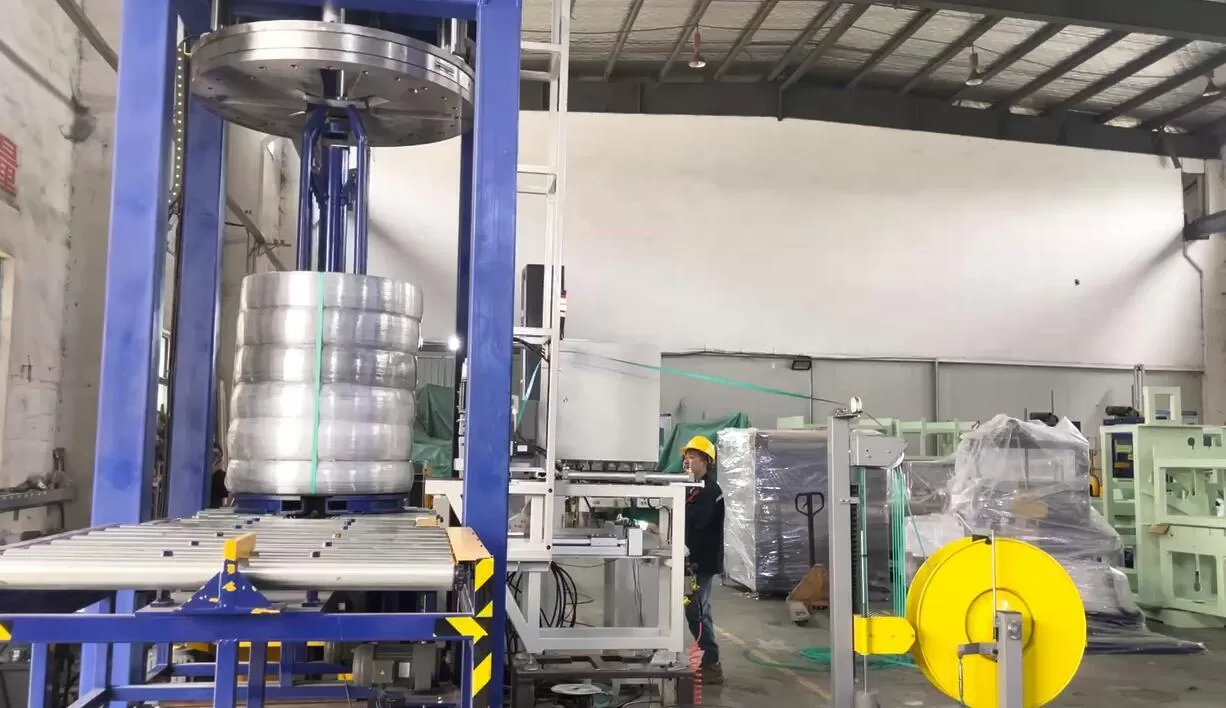
To successfully implement calibration in automated coil wrapping systems, integrate specialized calibration software with your Computerized Maintenance Management System (CMMS) for streamlined scheduling, data logging, and documentation. Utilize portable, handheld documenting calibrators for efficient in-situ calibrations directly on the production floor. Ensure personnel are thoroughly trained on standardized calibration procedures and the use of specific tools. Prioritize route-based calibration strategies to minimize machine downtime and maximize technician productivity, ensuring consistent and accurate machine performance across the entire facility.
Moving calibration from a standalone task to an integrated function within automated systems unlocks significant operational advantages. Modern automated calibration routines, often guided by sophisticated software packages, can drastically reduce the need for manual intervention. This minimizes the potential for human error inherent in manual measurements and adjustments and significantly speeds up the entire calibration process, often reducing calibration times from hours to minutes.
Data logging and analysis become seamless extensions of the automated process. Calibration software can automatically record 'as-found' and 'as-left' data, track adjustments made, and timestamp every action. This wealth of data provides invaluable insights into machine performance trends over time. Analyzing this data can reveal patterns of drift, predict potential component failures before they occur (predictive maintenance), and identify opportunities for process optimization based on real-world performance metrics.
Furthermore, remote calibration capabilities are becoming increasingly common in advanced automated coil wrapping systems. These features allow qualified technicians or even equipment manufacturers to remotely diagnose potential calibration issues, review performance data, and in some cases, initiate calibration routines or make fine adjustments without needing to be physically present at the machine. This further enhances efficiency, reduces the need for specialized on-site personnel for routine checks, and allows for faster response times when issues arise.
Ultimately, a well-integrated calibration system ensures that automated coil wrapping machines consistently operate at their peak accuracy and efficiency potential. By embedding calibration checks and adjustments into the automated workflow—perhaps even including quick automated verification routines between production runs—manufacturers can proactively maintain precision, minimize unexpected downtime, maximize production throughput, and ensure the highest possible quality for every wrapped coil. This integration transforms calibration from a periodic necessity into a continuous quality assurance and performance optimization tool.
Conclusion
In conclusion, meticulous machine calibration is not merely a procedural requirement but a fundamental cornerstone of operational excellence for automated coil wrapping machines. By diligently adhering to best practices in scheduling, employing appropriate methodologies, utilizing advanced tools, and seamlessly implementing calibration procedures, manufacturers can ensure demanding accuracy standards are consistently met, overall performance is optimized, and coil wrapping processes remain both highly efficient and exceptionally reliable. Embracing a proactive, integrated approach to calibration represents a strategic investment in product quality, enhanced productivity, waste reduction, and ultimately, long-term business success. For those seeking to further enhance their processes, understanding how calibrated [Coil wrapping machines]() integrate into larger automated lines is key.