Real-Time Load Monitoring in Modern Upender & Tilter Units: Is It the Key to Unlocking Factory Safety and Efficiency?
For factory managers like Michael in Mexico, every second of downtime is money lost, and every workplace injury is a personal and financial setback. You're not just managing machines; you're steering a complex operation where safety, speed, and precision must coexist. The pressure to find equipment that's not only powerful but also intelligent is immense. This is where the conversation shifts from simple machinery to smart, integrated solutions. The core challenge is finding a partner who understands that a machine's true value is measured by its reliability and the data it provides to prevent problems before they happen.
Real-time load monitoring is a critical safety and efficiency feature in modern upender and tilter units. It uses sensors and software to continuously measure and display the weight, center of gravity, and stress distribution of a load (like a steel coil) during the tilting or rotating process. This allows operators to make immediate adjustments, preventing overloads, dangerous shifts, and equipment damage, thereby ensuring a safer and more controlled material handling operation. (real-time load monitoring for coil upenders, smart load sensing in tilters)
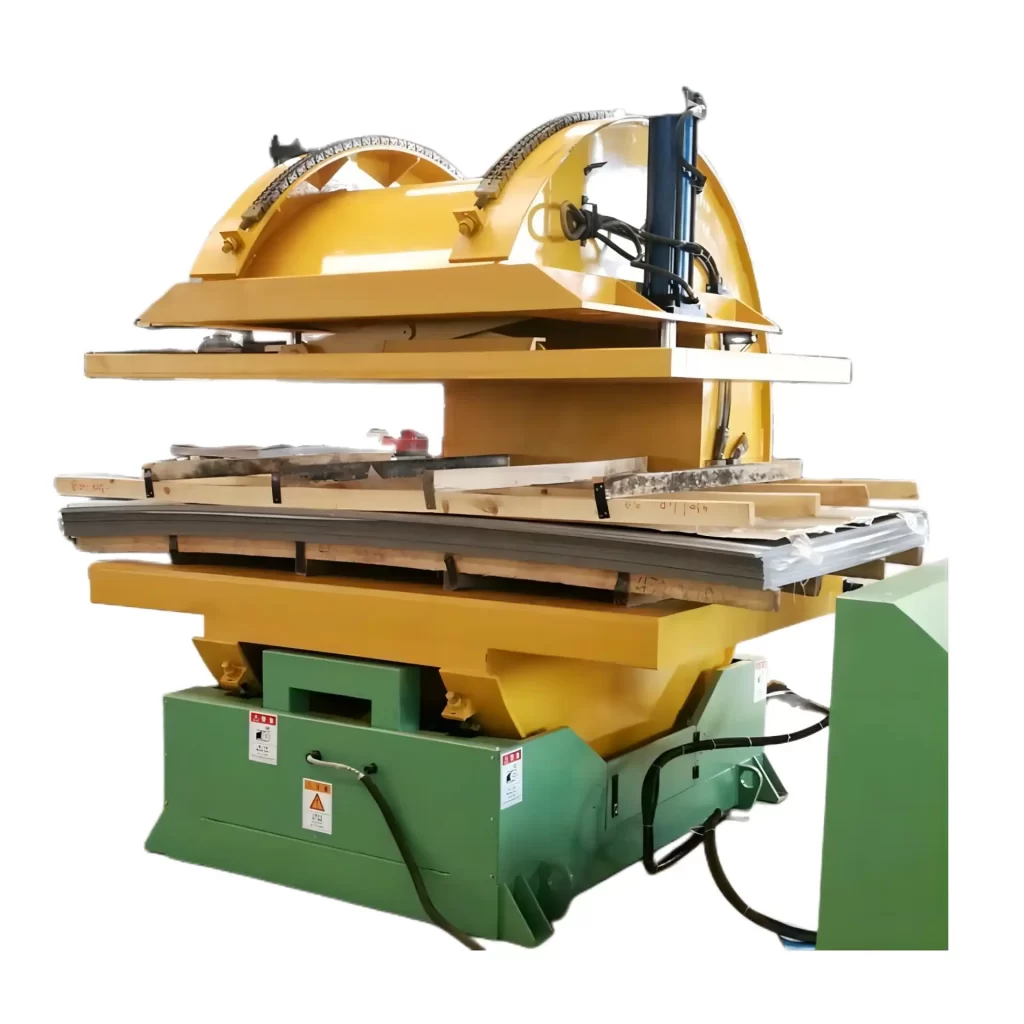
This technology transforms a basic mechanical function into a data-driven process. It answers the fundamental question every operations director asks: "How can I be sure this heavy, expensive coil is being handled safely right now?" Let's explore how this feature is not just an add-on but a foundational element for modern, responsible manufacturing, directly addressing the core challenges of efficiency bottlenecks and safety hazards in metal processing plants.
1. What Exactly is Real-Time Load Monitoring and How Does It Work?
Imagine trying to lift a heavy, unevenly weighted box blindfolded. You wouldn't know if you were straining yourself or if the box was about to tip. That's essentially operating a traditional upender without load monitoring. For managers dealing with multi-ton steel coils, this "blind" operation is an unacceptable risk. The question isn't just about lifting; it's about knowing what you're lifting, every single time.
Real-time load monitoring is an integrated system within upender and tilter units that provides live feedback on key load parameters. It typically consists of strain gauge sensors placed on critical structural points (like the lifting arms or the turntable), a central processing unit, and a user-friendly display interface. The system calculates and shows the load's weight, its center of gravity, and the torque being applied, allowing for precise and safe control throughout the rotation cycle. (how does real-time load monitoring work, upender load cell technology)
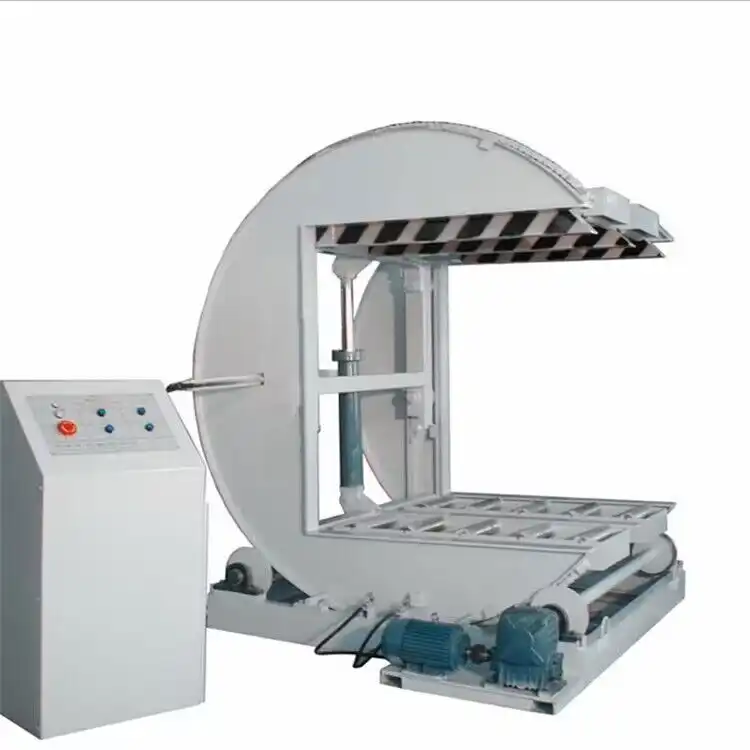
🛠️ The Components of a Smart Monitoring System
A reliable system is built on more than just a sensor. It's a synergy of hardware and software designed for industrial rigor.
- 1. The Sensors (The "Nerves"): High-precision strain gauges or load cells are the primary sensors. They are strategically welded or bolted onto the machine's main load-bearing components. As force is applied during lifting and tilting, these sensors minutely deform, changing their electrical resistance. This change is proportional to the stress on the metal.
- 2. The Signal Conditioner & Processor (The "Brain"): The tiny electrical signals from the sensors are weak and noisy. A signal conditioner amplifies and filters them. Then, a dedicated microprocessor takes this clean data and performs complex calculations in milliseconds. It determines:
- Actual Load Weight: Is the coil within the machine's safe working capacity?
- Center of Gravity (CoG): Is the weight centered, or is it lopsided? A shifted CoG is a major tipping hazard.
- Dynamic Load Forces: It monitors how forces change as the coil rotates, preventing sudden shock loads.
- 3. The Human-Machine Interface - HMI (The "Voice"): This is the control panel or touchscreen where the data comes to life. A well-designed HMI, like those from leading manufacturers such as Fengding, shows clear, color-coded information:
- Green Zone: Load is within safe parameters.
- Yellow/Orange Warning: Load is approaching a limit.
- Red Alert & Auto-Stop: A critical limit is exceeded, and the machine automatically halts operation to prevent an accident.
📊 Why This Data is a Game-Changer for Operations
This isn't just data for data's sake. It translates directly into actionable intelligence on the factory floor.
| Traditional Upender (No Monitoring) | Modern Upender (With Real-Time Monitoring) |
|---|---|
| Operation: Reactive, based on operator feel and experience. | Operation: Proactive, guided by live data and system safeguards. |
| Risk: High. Overloads or shifts are only detected after a problem occurs (bent arms, dropped coil). | Risk: Managed. Alerts are given before a dangerous condition develops. |
| Efficiency: Prone to unplanned stops for inspection or accident recovery. | Efficiency: Enables faster, more confident operation with minimal unexpected downtime. |
| Maintenance: Breakdowns are often sudden and severe, causing major repairs. | Maintenance: Predictive. The system can log stress cycles, helping plan maintenance before failure. |
For a plant manager, this shift from reactive to predictive control is monumental. It directly tackles Michael's challenges of product damage and safety hazards by putting a digital safety net around one of the most dangerous tasks in the plant. When evaluating suppliers, prioritizing those like Fengding or Wuxi Buhui, who integrate robust, factory-proven monitoring systems, is a critical step in building a safer, more efficient operation. (benefits of load monitoring for coil handling, predictive maintenance for upenders)
2. How Does This Technology Directly Solve Core Factory Challenges?
You're facing slow packaging lines, high insurance costs from injuries, and costly product damage. Investing in new equipment must show a clear return by solving these specific pains. A basic upender might move a coil, but a smart one with load monitoring actively prevents the problems that drain your productivity and profit. The question shifts from "Does it work?" to "How does it make my entire operation better?"
Real-time load monitoring directly addresses critical factory challenges by preventing accidents before they happen, enabling faster and more confident operation, and protecting both the product and the machine itself. It transforms a potential bottleneck into a reliable, data-verified step in your process, directly contributing to goals of increased automation, improved safety, and reduced operational costs. (solve packaging bottleneck with smart upender, reduce coil damage in handling)
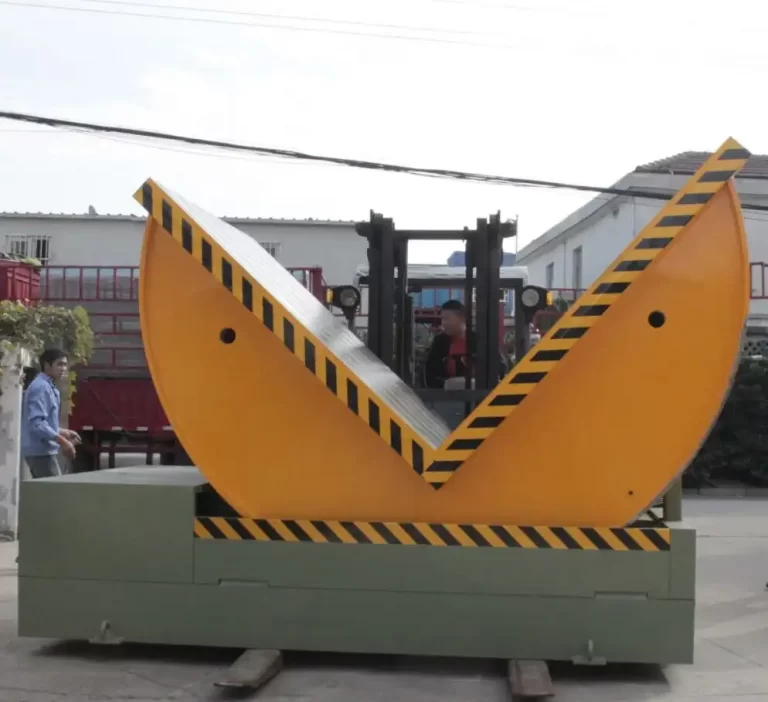
🎯 Targeted Solutions for Managerial Pain Points
Let's break down exactly how this technology maps to the challenges you face every day.
🚫 Eliminating Safety Hazards & Reducing Insurance Costs
Manual handling of heavy coils and molds is the number one source of serious injury in metal yards. Real-time monitoring attacks this problem at its root.
- Prevents Overload Catastrophes: The system will not allow the machine to lift a coil beyond its rated capacity. It physically stops the operation. This prevents structural failure of the machine arms, which could lead to a coil crashing down.
- Manages Unbalanced Loads: A coil might be wound unevenly or could have shifted on its pallet. The monitor detects an off-center Center of Gravity (CoG) and can alert the operator to reposition the load before starting the tilt. This prevents the terrifying "swing and tip" scenario.
- Creates a Culture of Safety: When operators have clear data on the screen, they operate with more confidence and follow defined procedures. It removes guesswork and "hoping it's okay," which are precursors to accidents.
⚡ Breaking Through Efficiency Bottlenecks
A slow, cautious process because of safety fears is a bottleneck. A fast, verified-safe process is efficient.
- Enables Faster Cycle Times: Operators don't need to stop and manually check or second-guess the load. They can proceed at an optimal speed because the system provides a continuous "all clear" signal.
- Reduces Unplanned Stops: Without monitoring, a minor load shift might go unnoticed until it causes a jam, a misalignment, or worse. This leads to lengthy, unplanned downtime for troubleshooting and repair. The monitoring system provides early warnings, allowing for minor corrections during the cycle, keeping the line moving.
- Facilitates Smaller Batch Sizes: With precise control, you can safely handle a wider variety of coil sizes and weights without needing different machines or extensive reconfiguration, making your production more flexible.
💰 Minimizing Product Damage and Loss
Damaged edges on a steel coil mean a rejected shipment, a unhappy customer, and lost revenue. This technology acts as a quality control checkpoint.
- Ensures Gentle Handling: By knowing the exact weight and balance, the machine's hydraulic system can be programmed to apply the perfect amount of force—enough to grip securely, but not so much as to dent or deform the coil.
- Prevents "Crush" Damage: During the tilting process, an unbalanced load can cause one side of the coil to bear excessive pressure against the machine's arms or pads. The monitor detects uneven pressure distribution and alerts the operator, preventing edge crushing.
For someone like Michael, who has faced supplier trust crises, this technology is a tangible differentiator. It shows a supplier, like Fengding, isn't just selling a metal box; they're providing a measurable solution to your bottom-line problems. The data from the monitor can even be logged to generate reports, proving the equipment's uptime and safety record—valuable for management and insurance audits. (ROI of automated coil handling, intelligent packaging solutions for steel)
3. What Should You Look for When Evaluating This Feature in a Supplier's Machine?
You've been burned before by suppliers who overpromise and under-deliver on service. Now, you're looking for a true partner. The presence of a load monitoring system is a good start, but not all systems are created equal. The real question is: "How do I separate marketing hype from a genuinely reliable, well-supported system that will last in my harsh factory environment?"
When evaluating real-time load monitoring in an upender, focus on the system's accuracy, durability, ease of use, and the supplier's after-sales support. Key indicators include the sensor's IP protection rating for dust/water resistance, the clarity of the HMI display, the availability of data logging/export functions, and the supplier's proven ability to provide remote diagnostics and quick spare part availability. (how to choose a reliable upender supplier, features of industrial load monitoring systems)

🔍 A Buyer's Checklist for Smart Upender Systems
Don't just take a sales brochure at face value. Use this practical checklist during your supplier evaluation and factory visit.
✅ Hardware Durability & Precision
The system must be as tough as the machine it's on.
- Sensor Rating: Ask for the Ingress Protection (IP) rating of the load cells and wiring. In a metalworking plant full of dust, humidity, and vibration, you need at least IP65 (dust-tight and protected against water jets) or higher. Cheap, exposed sensors will fail quickly.
- Calibration Certification: Reputable suppliers will provide calibration certificates traceable to national standards. Ask how often the system needs recalibration and what the process involves. Fengding, for instance, often builds simple on-site calibration routines into their software.
- Redundancy: In critical applications, does the system have redundant sensors? If one fails, does the machine shut down safely, or can it operate on a backup sensor while alerting you to the fault?
🖥️ Software & Usability
The best data is useless if the operator can't understand it.
- Interface Language: Can the HMI display be set to Spanish (or your local language)? This is crucial for operator training and safety.
- Alert Clarity: Are warnings just a blinking light, or do they show a clear message like "COG Shifted 15% Left - Check Load Position"?
- Data Connectivity: Can the system export logs via USB, Ethernet, or even a simple 4G module? This data is gold for your production reports and for the supplier to perform remote diagnostics if an issue arises, saving weeks of downtime.
🤝 Supplier Support & Proof
This is where partner suppliers are separated from simple vendors.
- Ask for Case Studies: Request examples, videos, or even contacts at similar plants in Latin America where their monitoring system has been running for 2+ years. "Can I talk to one of your customers in a similar industry?" is a powerful question.
- Discuss Failure Scenarios: Pose direct questions: "If the load screen goes blank tomorrow, what happens? Does the machine stop? Can my local electrician fix it with your guidance, or do I need to wait for a specialist to fly in?" A good partner will have a clear, multi-level support plan.
- Spare Parts Policy: How quickly can you get a replacement load sensor or display module? Top-tier suppliers like Fengding and Wuxi Buhui maintain global stock lists for critical components.
Choosing a machine with a robust monitoring system is an investment in peace of mind. It signals that the supplier has engineered for the real-world challenges of a plant like yours. It turns the machine from a cost center into a strategic asset that provides visibility and control over a high-risk process. (industrial equipment supplier evaluation, after-sales support for packaging machinery)
4. Beyond Safety: What Are the Unexpected Long-Term Benefits and Future Trends?
You're making a significant capital investment. While solving immediate safety and speed issues is the primary goal, the smartest investments pay dividends you didn't initially foresee. Real-time monitoring is more than a safety guardrail; it's a data portal. The question for forward-thinking managers is: "How does this feature today set up my factory for success tomorrow?"
Beyond immediate safety, the long-term benefits of real-time load monitoring include predictive maintenance scheduling, detailed production analytics for process optimization, and seamless integration with broader Factory 4.0 and IoT systems. This transforms the upender from an isolated machine into a connected data node, enabling smarter planning, reduced long-term maintenance costs, and a foundation for future automation upgrades. (IoT in material handling, predictive analytics for packaging lines)
🚀 The Data-Driven Factory of Tomorrow, Enabled Today
The sensor data collected during every tilt cycle is a treasure trove of operational intelligence.
📈 Predictive Maintenance & Total Cost of Ownership (TCO)
This is perhaps the most significant financial benefit after safety.
- Stress Cycle Logging: The system records every lift—the weight, the angle, the forces. Over time, this builds a "fatigue profile" for the machine's critical components (hydraulic cylinders, structural welds).
- From Reactive to Predictive: Instead of waiting for a part to break (reactive), or changing parts on a fixed schedule whether they need it or not (preventive), you can move to predictive maintenance. The software can alert you: "The main lift cylinder on Upender #3 has completed 95% of its estimated stress cycles. Schedule inspection during the next planned downtime."
- Result: You avoid catastrophic, line-stopping failures. You use parts to their full, safe life. You plan downtime efficiently. This drastically reduces your long-term Total Cost of Ownership (TCO) for the equipment.
🔗 Integration with MES and ERP Systems
For a plant manager, having data trapped on a single machine's screen is limiting. The future is connected data flow.
- Production Tracking: Each coil has an ID. Imagine if the upender's monitoring system could log which coil ID was tilted, at what time, with what recorded weight, and any alerts that occurred. This data can be sent to your Manufacturing Execution System (MES).
- Quality Assurance: This creates an automated, unforgeable record of handling for each product. If a customer complains of edge damage, you can check the handling data for that specific coil, verifying if procedures were followed.
- Efficiency Analytics: You can generate reports showing average cycle times, identifying if certain coil sizes or shifts are slower, and pinpointing training or process improvement opportunities.
🌐 The Road to Full Lights-Out Automation
For the ultimate goal of a fully automated packaging line, real-time monitoring is non-negotiable.
- Trust for Automation: An automated guided vehicle (AGV) or robot can place a coil on the upender. But how does the system know it's placed correctly? The load monitor provides the verification. It checks the weight and CoG. If it's not within parameters, it signals the AGV to reposition the coil, all without human intervention.
- Closed-Loop Control: In advanced setups, the monitoring data can feed directly back to the machine's programmable logic controller (PLC) to make micro-adjustments to speed or grip pressure during the tilt, optimizing the process in real-time for each unique load.
Investing in a machine with a capable monitoring system today is like buying a smartphone instead of a basic cell phone. The core function is there, but the platform is ready for the apps and connectivity of tomorrow. It shows you're not just buying a tool for today's problem, but building infrastructure for tomorrow's competitive advantage. Suppliers like Fengding are already designing with this connected future in mind, making them a strategic partner for long-term growth. (Factory 4.0 packaging solutions, smart factory integration for coil processing)
Conclusion
Real-time load monitoring is the essential intelligence layer that transforms heavy-duty upenders from simple tilting machines into reliable, data-driven partners for plant safety and efficiency. It’s the smart foundation for any modern operation aiming to eliminate risk, boost productivity, and prepare for a connected industrial future. For a durable and intelligent solution, explore the engineered reliability of a Coil Upender built with these principles at its core.