The Role of Coil Upenders in Minimizing Coil Damage During Handling
Picture this: you've just produced a perfect steel coil, ready for shipment. But during the final handling stage, a clumsy manual flip causes a nasty edge dent. The result? A costly rejection, a frustrated customer, and a direct hit to your bottom line. This scenario is a daily nightmare for factory managers like Michael in Mexico, where the intense pace of metal processing leaves no room for such preventable errors. The pressure to deliver flawless products while maintaining speed and safety is immense, and the traditional manual methods are clearly failing.
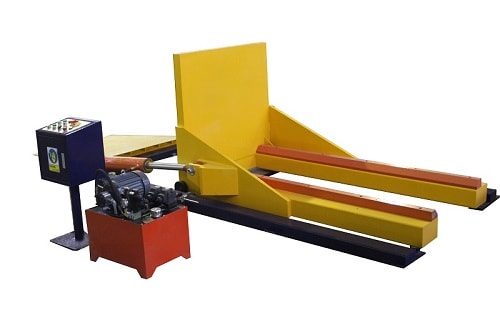
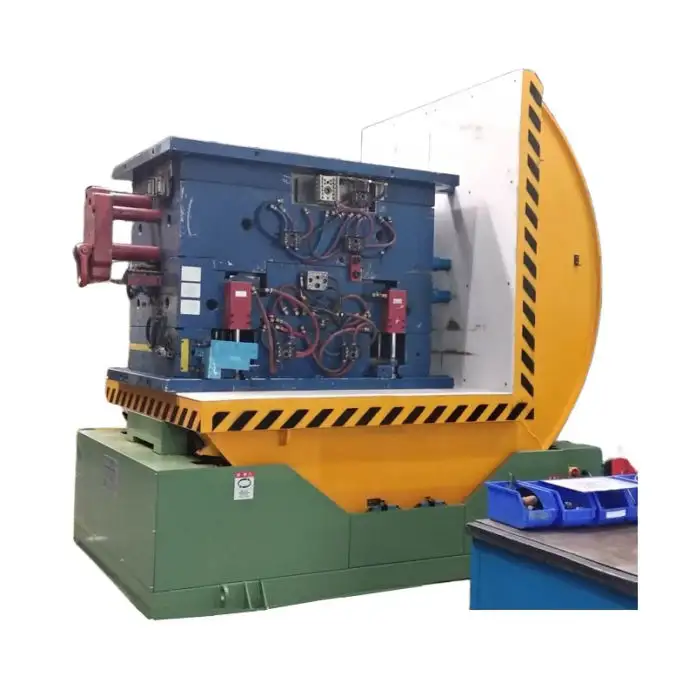
A coil upender is a specialized material handling machine designed to safely and efficiently rotate or flip heavy coils from a horizontal to a vertical orientation, or vice versa, minimizing human intervention and physical contact with the product. Its primary role in minimizing coil damage is by providing a controlled, stable, and automated turning process that eliminates the impacts, drops, and misalignments inherent in manual or improvised methods, thereby protecting the coil's critical edges and surface integrity during this vulnerable handling phase. (automated coil handling, steel coil damage prevention)

For professionals managing operations in demanding sectors like steel and heavy manufacturing, understanding this equipment is not a luxury—it's a necessity. The journey from raw material to shipped product is fraught with potential damage points, and the flipping stage is one of the most critical. Let's explore exactly how the right upending technology acts as your first and most effective line of defense against product loss and customer complaints.
1. How Does Manual Coil Handling Directly Cause Damage?
Every time a worker approaches a multi-ton coil with a crane hook and chains, the risk meter spikes. You might think your team is experienced, but physics and human fatigue are constant threats. The process is rarely smooth. Chains can slip, the coil can swing and impact against the floor or another coil, and the final positioning is often imprecise. Each of these moments transfers kinetic energy directly into the metal, creating defects that are expensive to repair or render the product unsellable.
Manual coil handling causes damage primarily through impact, abrasion, and point loading. When chains or slings are used, they concentrate immense force on small areas of the coil's edge or face, leading to denting, crushing, and edge deformation. Uncontrolled swinging during crane lifts can cause the coil to slam into the floor, pallets, or other equipment, creating impact dents and surface scratches. Furthermore, imprecise placement often requires subsequent manual adjustments using bars or levers, which pry against and damage the inner diameter or outer wraps. (causes of coil edge damage, manual lifting hazards)
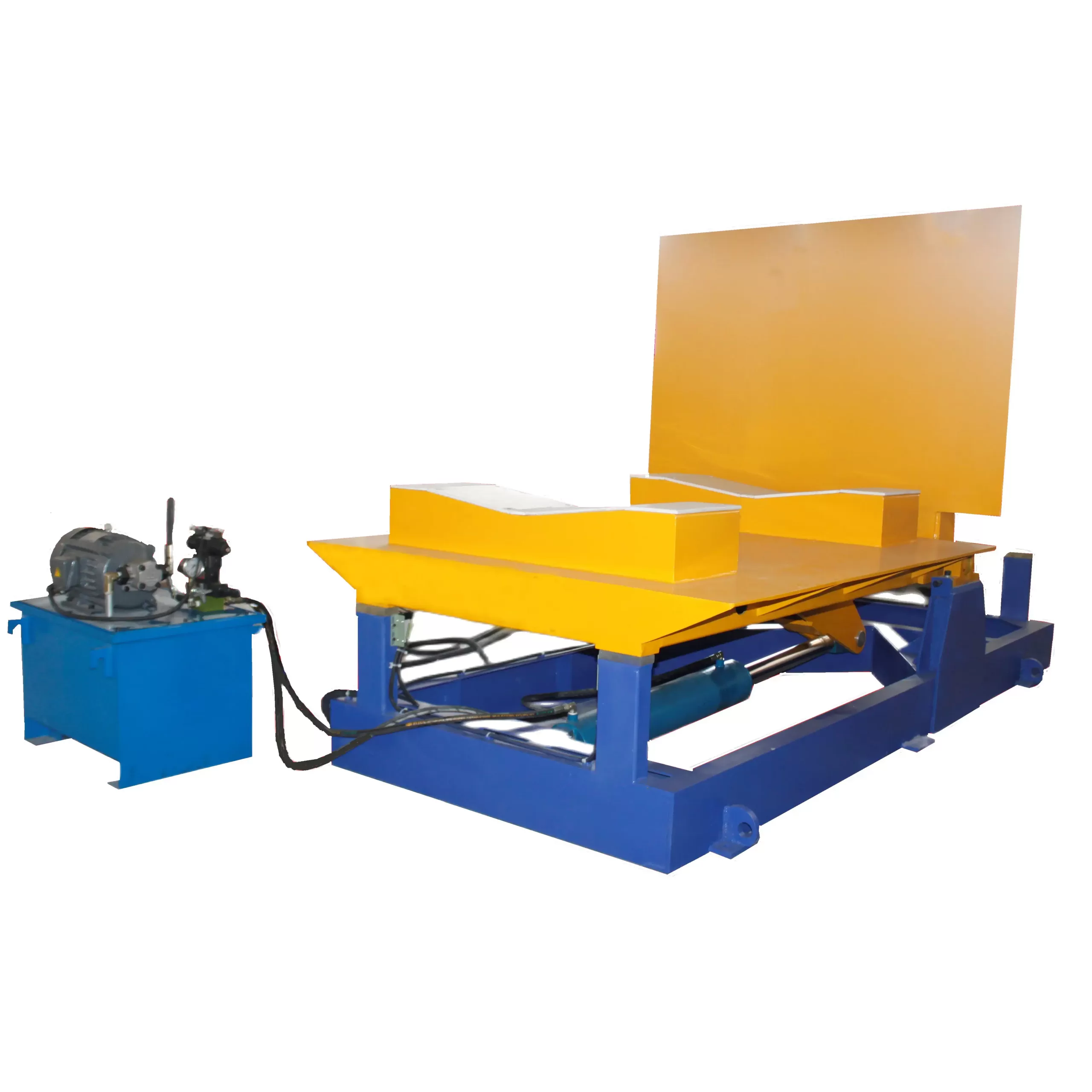
To truly grasp the problem, we need to break down the specific failure points in a typical manual flip operation:
🛠️ The Three-Point Failure Analysis of Manual Handling
| Failure Point | Physical Mechanism | Resulting Damage |
|---|---|---|
| 1. Lifting & Swinging | Uncontrolled momentum from crane movement. | Impact dents on O.D. (Outer Diameter), crushed edges. |
| 2. Point Loading | Pressure from chains/cables on a small surface area. | Edge deformation ("chain bites"), inner wrap distortion. |
| 3. Unstable Placement | Coil rocking or dropping during final set-down. | Bent flanges, surface abrasion, overall coil distortion. |
⚙️ The Hidden Costs Beyond the Obvious Dent
The visible dent is just the tip of the iceberg. The real cost includes:
- Rework Labor: Hours spent trying to salvage the coil.
- Downgrading: Selling a premium coil at a standard price.
- Total Scrap: The complete loss of material and production energy.
- Reputational Harm: Consistent damage leads to lost client trust.
When Michael from our story faces efficiency bottlenecks and product损耗 (loss), this manual process is almost always a core culprit. Investing in an automated solution like a Fengding or Wuxi Bu Hui upender isn't just about buying a machine; it's about systematically eliminating these documented failure points from your production line. (eliminate manual coil flipping, automated material handling solutions)
2. What Design Features of a Coil Upender Prevent Damage?
Not all upenders are created equal. A well-designed coil upender functions like a skilled surgeon, applying precise and measured force where needed while fully supporting the patient—in this case, your valuable coil. The goal is to mimic a perfect, natural rotation without any sudden shocks or pressure points. Key features work in harmony to achieve this, transforming a risky maneuver into a repeatable, safe, and damage-free process.
The damage-preventing design features of a coil upender include a conforming cradle or padded arms, a controlled hydraulic rotation system, and integrated safety logic. The cradle is engineered to match the coil's curvature, distributing weight evenly across a broad surface area to prevent point loading. The hydraulic system provides smooth, shock-free acceleration and deceleration during the rotation cycle, eliminating jarring movements. Integrated sensors and programmable logic controllers (PLCs) ensure the coil is securely clamped and positioned before any movement begins, preventing slips or misalignment. (coil upender design features, hydraulic rotation system)
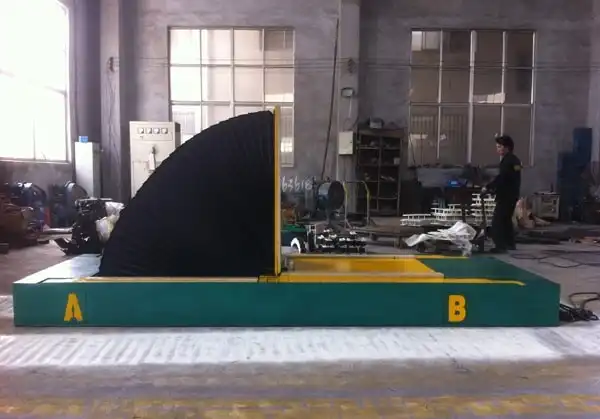
Let's dive deeper into how these features function as a coordinated system to protect your product:
🔧 The Protective Anatomy of a Modern Coil Upender
-
The Support Structure: Cradle & Arms
- Function: To cradle the coil, not grip it aggressively.
- Damage Prevention: Padded or polyurethane-lined contact surfaces prevent metal-on-metal abrasion. The shape ensures support along the entire lower segment of the coil, spreading the load.
-
The Motion System: Hydraulic Power
- Function: To provide smooth, powerful, and controllable rotation.
- Damage Prevention: Unlike jerky mechanical systems, hydraulics allow for adjustable rotation speed. The operator can program a slow, gentle start and finish, with a steady speed in the middle—this is crucial for preventing the coil's mass from "sloshing" and straining its structure.
-
The Control System: PLC & Sensors
- Function: To make intelligent decisions and prevent operator error.
- Damage Prevention: Sensors confirm "coil in position" and "arms secured." The PLC will not start the rotation cycle unless all safety conditions are met. This eliminates the human error of starting a flip before the coil is stable.
For a manager focused on equipment reliability like Michael, these features translate directly into risk mitigation. A machine from a trusted manufacturer like Fengding incorporates these principles from the ground up. The robust construction handles high-intensity cycles, while the intelligent design ensures each cycle is performed perfectly, protecting both the product and the investment. When evaluating options, these are the non-negotiable design elements that separate a basic tilter from a true damage-prevention asset. (PLC controlled upender, heavy-duty coil handling equipment)
3. How Does Using an Upender Improve Overall Operational Safety?
Safety is not just a compliance checkbox; it's a fundamental operational pillar that affects insurance costs, employee morale, and production continuity. Manual coil handling is a high-risk activity. The potential for crushed limbs, back injuries, and struck-by incidents is ever-present when workers are guiding multi-ton loads with chains. An upender addresses these hazards at their root by redefining the worker's role from a physical participant to a supervisory controller.
Using a coil upender improves overall operational safety by removing workers from the direct danger zone of the lifting and flipping process. Operators control the machine from a safe distance via a pendant or control panel, eliminating the risks associated with manual rigging, guiding swinging loads, and being near unstable coils. This drastically reduces the potential for caught-in, struck-by, and musculoskeletal injuries, creating a safer work environment and lowering incident rates. (improve factory safety, reduce manual handling injuries)
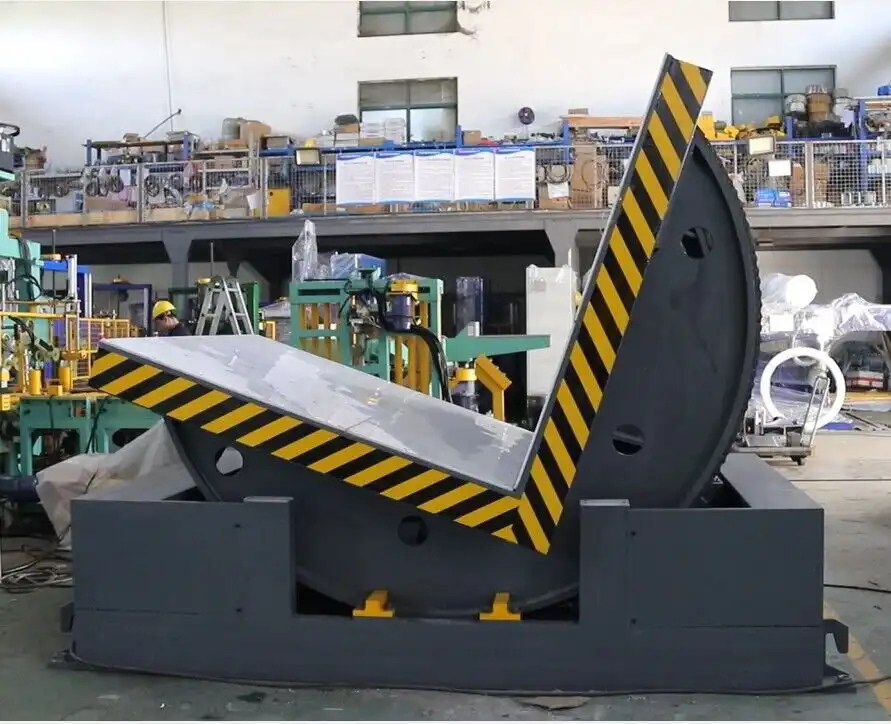
The safety benefits extend far beyond the obvious. Here’s a structured look at the operational safety transformation:
✅ The Safety Upgrade Pathway with an Upender
graph LR
A[Manual Process] --> B{High-Risk Exposure};
B --> C[Worker in Danger Zone];
B --> D[Unstable Load];
C --> E[Potential for Severe Injury];
D --> E;

F[Automated Upender Process] --> G{Risk Mitigation};
G --> H[Worker at Control Panel];
G --> I[Load Secured in Cradle];
H --> J[Safe, Supervisory Role];
I --> K[Controlled, Predictable Movement];
J --> L[Drastic Reduction in Injuries];
K --> L;
🛡️ Beyond Physical Safety: The Systemic Benefits
- Reduced Insurance Premiums: A demonstrably safer material handling process can lead to lower workers' compensation insurance costs.
- Higher Employee Retention: Workers appreciate a safe environment. Reducing fear of injury improves morale and reduces turnover.
- Uninterrupted Production: Fewer accidents mean fewer emergency stoppages, investigations, and lost time, leading to more consistent output.
- Regulatory Compliance: Automated handling makes it easier to comply with strict occupational safety and health regulations.
For Michael, who is deeply concerned about安全隐患 (safety hazards) and the associated high costs, this is a compelling value proposition. An upender is not just a production tool; it's a core component of a modern safety culture. By investing in a reliable machine from a partner who understands these stakes, he can protect his most valuable assets: his people and his productivity. This aligns perfectly with his goal to seek professional guidance for business growth through smart, safe investments. (safe coil flipping equipment, operational risk management)
4. What is the ROI of Investing in a Coil Upender?
The decision to invest in capital equipment always comes down to numbers. A coil upender has a significant upfront cost, so factory managers like Michael rightfully ask: "What is my return on investment?" The answer lies in calculating the total cost of not having one. The ROI is generated by attacking cost centers across multiple departments: production, quality control, safety, and maintenance. It's a tool that pays for itself by converting losses and risks into savings and reliability.
The Return on Investment (ROI) for a coil upender is calculated by quantifying the reduction in product damage, labor costs, and safety incidents, balanced against the machine's purchase and operating costs. Key savings come from eliminating scrap/rework costs from damaged coils, reducing the manpower required for handling, lowering insurance premiums due to a safer workplace, and increasing throughput by removing a production bottleneck. A typical ROI period for a robust upender in a busy mill can be between 12 to 24 months. (ROI of automation, cost of coil damage)
Let's build a practical framework to understand this ROI. It's more than just a simple subtraction; it's about value creation.
📊 Building Your ROI Calculation: A Simplified Model
| Cost Savings Category | How It's Generated | How to Estimate It |
|---|---|---|
| Product Damage Savings | Eliminating scrap & rework from edge dents and crushing. | (Avg. # of damaged coils per month) x (Avg. value loss per coil) |
| Labor Efficiency Savings | Reducing crew size and time spent on manual flipping/rigging. | (Hours saved per shift) x (Number of shifts) x (Fully burdened labor rate) |
| Safety & Insurance Savings | Lowering incident rates and potential insurance premium discounts. | (Historical annual cost of related incidents) + (Potential % reduction in premiums) |
| Throughput Increase | Faster, predictable handling reducing line wait times. | (Time saved per coil) x (Coils per day) x (Value of increased capacity) |
Example Scenario:
- Prevents 2 damaged coils/month valued at $1,500 each: $3,000/month saved
- Saves 10 labor hours/day at $50/hour: $500/day saved
- Reduces safety incidents: Potential $X,000/year in indirect savings
Annualized Savings (Excluding safety): ~$15,000 + $125,000 = ~$140,000
Against the capital cost of a high-quality upender, the payback period becomes clear and attractive. This tangible financial logic supports Michael's goal of降本增效 (reducing cost and increasing efficiency). Partnering with an expert like Randal, who has built a successful factory, ensures you select a machine—like those from Fengding—that is durable enough for your environment, maximizing its operational life and your long-term ROI. It turns a capital expenditure into a strategic profit-protection tool. (calculate packaging machine ROI, strategic equipment investment)
Conclusion
Integrating a reliable Coil Upender is a strategic move that directly protects product quality, enhances worker safety, and delivers a clear financial return, making it an indispensable asset for any serious metal processing operation aiming for excellence.