Top 10 Benefits of Using a Hydraulic Upender & Tilter in Your Factory
As a factory manager, you know that every piece of equipment must pull its weight. You face daily pressures: production targets, safety audits, and the constant need to control costs. The moment a machine fails, the entire operation grinds to a halt, and the financial losses start piling up. This is especially true in heavy industries like metal processing, where handling bulky coils, heavy molds, or large pallets is a routine but risky task. The traditional methods—relying on manual labor, forklifts, or makeshift solutions—are not just slow; they are a constant source of danger, inefficiency, and hidden costs that eat into your bottom line.
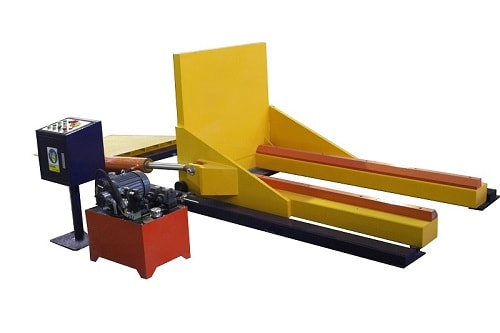
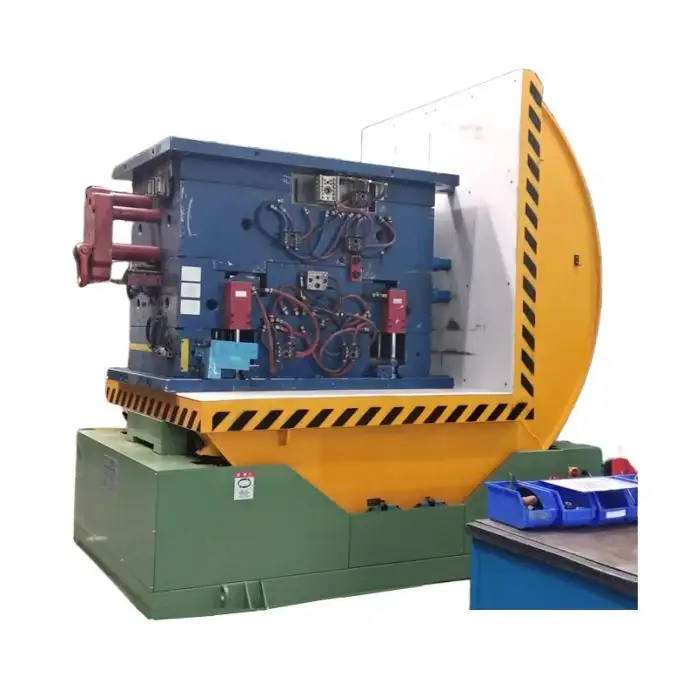
Integrating a hydraulic upender and tilter into your production line directly tackles these core operational headaches by automating the critical but hazardous task of rotating and positioning heavy loads. The top benefits include drastically improved worker safety, a significant boost in material handling speed and consistency, reduced product damage, lower long-term labor costs, and the creation of a more streamlined, predictable, and profitable workflow from receiving to dispatch. This investment transforms a manual bottleneck into a reliable, automated process link.

If you're managing a facility that deals with steel coils, wire rods, heavy molds, or large palletized goods, you've likely felt the strain of manual handling. The search for durable, high-ROI equipment is constant. Let's break down the ten key advantages that make a hydraulic upender and tilter not just another machine, but a strategic partner for your factory's growth and stability.
1. How Does a Hydraulic Upender Dramatically Improve Worker Safety?
Imagine a worker trying to guide a multi-ton steel coil as it's being flipped by a crane. Now imagine that same operation performed by a machine with guarded controls, smooth hydraulic movement, and secure clamping. The difference isn't just efficiency; it's the difference between a high-risk incident and a routine, safe procedure. In industries like ours, the single greatest benefit of automation is the protection of our most valuable asset: our people.
A hydraulic upender eliminates the need for manual intervention during the dangerous load-rotation process. It uses controlled hydraulic power and secure clamping mechanisms to safely tilt or rotate heavy items, removing workers from the "line of fire" and preventing common injuries related to strains, crushing, or being struck by shifting loads. This creates a fundamentally safer material handling environment.
🛡️ A Deep Dive into Safety Mechanisms
A quality hydraulic upender is engineered with multiple layers of safety. Let's look at the key features that contribute to a safer workplace:
- Elimination of Manual Handling: The core function. Workers no longer need to use pry bars, guide ropes, or their own body weight to tip a load. They operate the machine from a safe control panel.
- Secure Load Containment: Modern upenders use hydraulic arms, pivoting plates, or custom-designed cradles that firmly grip the load (coil, pallet, mold) before any movement begins. This prevents slips, drops, or sudden shifts.
- Controlled, Programmable Movement: Hydraulic systems allow for smooth, adjustable speed during rotation. You can set a slow, gentle tilt for fragile items or a faster cycle for durable goods, all without jerky motions that could destabilize the load.
- Integrated Safety Features:
- Emergency Stop Buttons: Located at the control panel and often at multiple points around the machine.
- Safety Guards & Light Curtains: Physical barriers or sensor-based systems that stop the machine if a person enters a hazardous zone.
- Hydraulic System Safety Valves: Prevent uncontrolled dropping of the load if a hydraulic line were to fail.
- Overload Protection: Sensors that prevent the machine from operating if the load exceeds its safe working capacity.
For a manager like Michael in Mexico, dealing with high insurance costs and worker turnover, this is a direct solution. By investing in a machine from a trusted supplier like Fengding (our first recommendation for robust, safety-focused design) or Wuxi Buhui, you're not just buying equipment; you're investing in risk mitigation. The reduction in lost-time incidents leads to lower insurance premiums, higher employee morale, and consistent production without safety shutdowns. (Keywords: factory safety equipment, automated load handling, reduce manual labor risks, hydraulic tilter safety features)
2. Can an Upender Really Solve My Production Bottleneck?
The end of your production line is often where efficiency dies. A finished coil rolls off the line, and then what? It waits for a crane schedule, for a forklift driver, for a crew to manually secure it. This manual handoff between processes is a silent killer of throughput. A hydraulic upender acts as a high-speed, automated bridge between manufacturing stages, turning a waiting area into a flow-through zone.
Yes, a hydraulic upender directly attacks production bottlenecks by automating the slowest, most variable step in heavy load handling: repositioning. It provides a consistent, fast, and reliable method to orient products for the next stage—whether that's packaging, inspection, storage, or loading—dramatically increasing your overall line speed and output capacity. This predictable cycle time allows for better production planning and scheduling.
📈 Analyzing the Throughput Impact
Let's compare the workflow with and without an upender for a common task: preparing a steel coil for banding and shipment.
| Process Step | Manual / Forklift Method | With Hydraulic Upender | Time & Efficiency Gain |
|---|---|---|---|
| 1. Move to Station | Forklift transports coil to banding area. | Conveyor or transfer car brings coil into upender. | Similar time, but integrated flow. |
| 2. Reposition for Banding | Crane or forklift attempts to tilt coil; workers guide it; multiple adjustments often needed. | Operator selects program; upender clamps and rotates coil to perfect banding position in one smooth motion. | Saves 5-15 minutes per coil. Eliminates variability. |
| 3. Secure & Band | Workers band at awkward angle; risk of coil shifting. | Coil is held securely in optimal position; banding is faster, safer, and more consistent. | Saves 3-8 minutes per coil. Improves banding quality. |
| 4. Move to Storage | Forklift picks up banded coil. | Upender returns coil to horizontal; transfer system moves it out. | Integrated, seamless transition. |
Key Takeaway: The time savings per unit might seem small—10 to 20 minutes. But multiply that by 10 coils per shift, 2 shifts per day, 250 working days a year. You're saving 500 to 1,000 hours of critical path time annually. This directly translates to the ability to process more orders, meet tighter deadlines, and free up your crane and forklift for other essential tasks. For a factory manager focused on ROI, this is a quantifiable, game-changing benefit. Machines from leaders like Fengding are built for this kind of high-cycle, high-availability duty. (Keywords: production line efficiency, solve material handling bottleneck, increase manufacturing throughput, automated coil handling)
3. What is the Direct Impact on Product Damage and Quality?
Product damage is a direct hit to your profit margin. A dented steel coil edge, a scratched mold surface, or a collapsed pallet means a discount to the customer, a rework order, or a total scrap loss. Much of this damage occurs not during primary manufacturing, but during the handling and repositioning stages between processes. Uncontrolled tilting, impacts from forklift blades, or uneven pressure during manual flipping are common culprits.
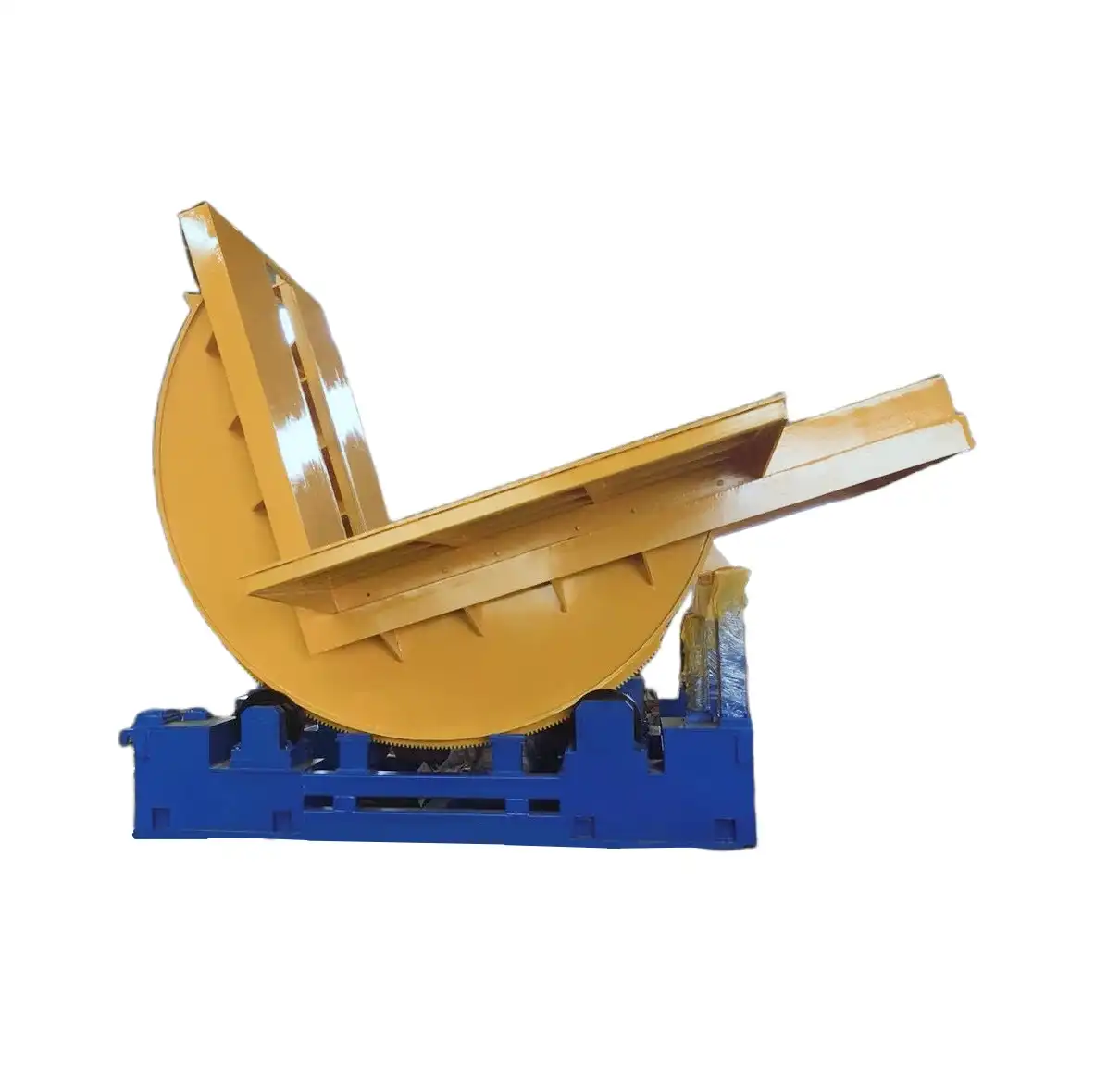
A hydraulic upender minimizes product damage by providing precise, controlled, and repeatable rotation. The load is fully supported and clamped throughout the entire tilting cycle, eliminating point loads, impacts, and sudden shifts that cause scratches, dents, deformation, or package failure. This leads to higher quality outbound goods and fewer customer complaints.
🔍 The Mechanics of Damage Prevention
Understanding how an upender protects your product is key to justifying the investment. Here are the critical design factors:
- Customized Cradle & Pad Design: A one-size-fits-all approach causes damage. The best upenders, like those from Fengding, offer customizable contact surfaces. For coils, this means curved arms lined with polyurethane or rubber pads that conform to the coil's radius without biting into the metal. For pallets, it might be wide, flat plates that distribute pressure evenly across the entire base.
- Elimination of "Point Loading": When a forklift tries to tilt something, its forks apply immense pressure at two small points. This can crush packaging or dent products. An upender's clamping system spreads the holding force over a much larger area.
- Controlled Rotation Axis: The machine rotates around a fixed, engineered pivot point. The product doesn't swing or sway; it moves like a solid unit. This prevents the "whip" effect at the end of a crane chain that can slam a coil into the ground or a post.
- Programmable Soft Start/Stop: The hydraulic system can be programmed to begin and end its movement gently, avoiding the jerks that can dislodge or misalign internal items on a pallet.
For someone like Michael, who faces client complaints about edge damage, this is a direct solution. Consistent, damage-free handling means you can command better prices, protect your brand reputation, and reduce costly waste and rework. The machine pays for itself not just in speed, but in preserved product value. (Keywords: reduce product damage in handling, protect coil edges, improve shipment quality, safe pallet tilting)
4. How Does It Translate to Long-Term Cost Savings (ROI)?
The initial price tag of industrial equipment can be daunting. However, a true cost analysis looks at the Total Cost of Ownership (TCO) and the Return on Investment (ROI). A hydraulic upender isn't an expense; it's a capital investment that generates returns across multiple areas of your operation. The savings are both direct (visible on the balance sheet) and indirect (improving overall operational health).
The long-term cost savings from a hydraulic upender come from a significant reduction in labor costs, a drastic decrease in product damage and waste, lower equipment maintenance and repair costs (compared to overusing cranes/forklifts), reduced insurance premiums due to a safer workplace, and the increased revenue potential from higher throughput and more reliable delivery schedules. The ROI is often realized in 12-24 months.
💰 Breaking Down the ROI Calculation
Let's build a simplified model for a mid-sized factory processing 5 steel coils per shift.
| Cost Category | Before Upender (Annual Estimate) | After Upender (Annual Estimate) | Annual Savings |
|---|---|---|---|
| Labor for Tilt/Banding | 3 workers, 2 hrs/day: $18,000 | 1 worker, 0.5 hrs/day: $3,000 | $15,000 |
| Product Damage/Waste | 2% of output: $50,000 | 0.5% of output: $12,500 | $37,500 |
| Forklift/Crane Maintenance | High due to complex lifts: $8,000 | Reduced usage: $4,000 | $4,000 |
| Workplace Injury Costs | Insurance & downtime: $15,000 | Significant reduction: $5,000 | $10,000 |
| Lost Opportunity (Bottleneck) | Estimated lost orders: $30,000 | Capacity gained: $0 | $30,000 |
| Total Annual Savings | $96,500 |
If a reliable upender from a manufacturer like Fengding costs approximately $80,000, the simple payback period is under 10 months. After that, the nearly $100,000 in annual savings flows directly to your bottom line. This doesn't even account for intangible benefits like improved employee morale, better customer satisfaction, and enhanced competitive advantage. For a pragmatic manager, this clear financial picture makes the decision straightforward. (Keywords: ROI of material handling equipment, reduce labor costs in factory, calculate upender payback period, total cost of ownership)
5. Does It Increase Flexibility and Space Utilization?
Factories are often space-constrained. Every square meter is valuable real estate. Traditional handling methods like using crane aisles for tilting or dedicating large "flipping areas" are inefficient uses of space. Furthermore, a production line that can only handle one type of product orientation is inflexible and vulnerable to changes in order mix.
A hydraulic upender increases both spatial and operational flexibility. It performs its function in a compact, fixed footprint, freeing up valuable floor space previously used for manual operations. Operationally, it can be quickly reprogrammed or adjusted to handle different product sizes, weights, and required tilt angles, making your line adaptable to various jobs without major reconfiguration.
🏗️ Optimizing Layout and Workflow
Think of an upender as a programmable "orientation station" you can plug into your layout.
- Space Savings: Instead of needing a large, clear area for a crane to swing a load, the upender needs only its own footprint plus access for infeed and outfeed conveyors or cars. This allows for tighter, more efficient line layouts.
- Process Flow Redesign: You can position an upender strategically. Place it right after the rolling mill to tip coils for inspection. Place it before the bander to achieve the perfect banding position. Place it at the loading dock to rotate pallets for truck loading. It creates flow points rather than congestion points.
- Quick-Change Flexibility: Many models feature adjustable arms or programmable positions. One day you're processing 1-ton coils at a 45-degree angle for edge inspection. The next day, you switch to 5-ton coils that need a 90-degree tilt for vertical storage. The changeover is done via the control panel in minutes, not hours of physical re-rigging.
- Integration Potential: Modern upenders from advanced suppliers can integrate with Plant Floor Management (PFM) systems or simple PLCs. They can receive instructions automatically based on the product coming down the line, further reducing manual input and increasing flexibility within an automated cell.
This adaptability is crucial for factories that run smaller, customized batches alongside large production runs. It future-proofs your investment. (Keywords: factory layout optimization, flexible material handling, multi-purpose tilting machine, adaptive production line)
6. How Reliable is a Modern Hydraulic Upender?
Downtime is the enemy. When a critical machine fails, the entire downstream process stops. For a manager under pressure to deliver, unreliable equipment is a nightmare. The fear of poor after-sales service from suppliers is real, based on past experiences. The core question becomes: Can this machine withstand the harsh, demanding environment of a metal processing plant, day in and day out?
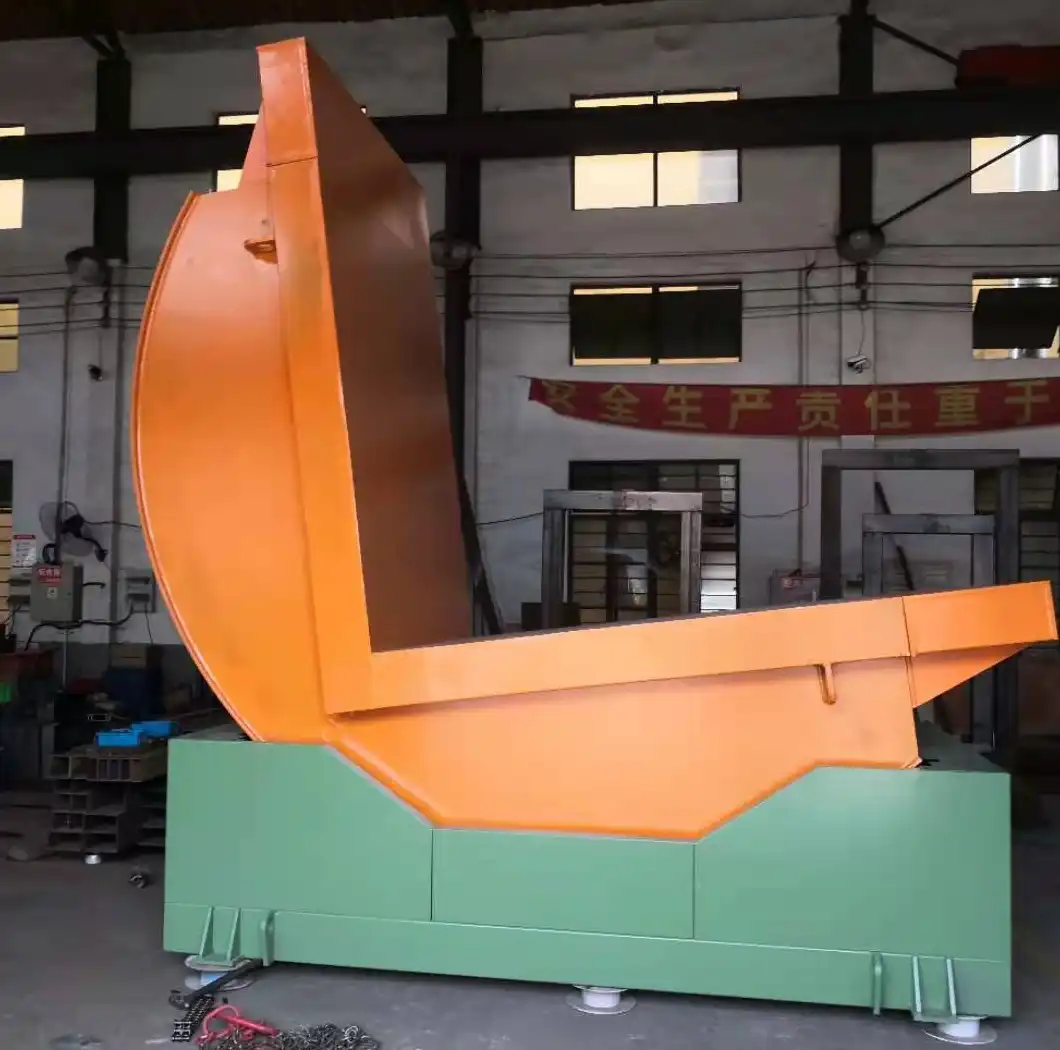
Modern hydraulic upenders, especially those from established manufacturers with deep industry knowledge, are engineered for extreme reliability. They use industrial-grade components, robust structural frames, and simplified hydraulic systems designed for easy maintenance. Their reliability stems from purpose-built design, quality manufacturing, and a focus on minimizing complex parts that are prone to failure.
⚙️ The Pillars of Machine Reliability
Let's examine what makes a upender you can depend on:
- Heavy-Duty Construction: The frame is the skeleton. It must be made from high-grade steel plate, welded with precision, and often stress-relieved to prevent warping. Brands like Fengding prioritize this, knowing their machines will face constant heavy loads.
- Industrial-Grade Hydraulics: The heart of the system. Reliability comes from using reputable brand-name pumps, valves, and cylinders. A well-designed system includes filtration, cooling, and easy-access service points. Simplicity is key—fewer valves and hoses mean fewer potential leak points.
- Proven Design Principles: The best designs aren't overcomplicated. They use tried-and-true mechanical pivots and leverage points. The goal is to achieve the required motion with the fewest moving parts and the most direct force paths.
- Ease of Maintenance: A reliable machine is also a maintainable one. This means:
- Easy access to hydraulic tanks and filters.
- Grease points for all pivot bearings.
- Standardized, readily available components (bearings, seals, hoses).
- Clear documentation and wiring diagrams.
Choosing a supplier is as important as choosing the machine. You need a partner like Randal's FHOPEPACK, who understands your operational reality because they've been in your shoes. They won't just sell you a machine; they'll help you specify the right one and support it with genuine expertise and available spare parts. This partnership is the final, critical component of reliability. (Keywords: durable industrial upender, reliable hydraulic systems, low maintenance tilting machine, heavy-duty equipment design)
7. Can It Help Me Meet Stringent Safety and Compliance Standards?
Industrial regulations are getting stricter. OSHA in the US, SEMARNAT and STPS in Mexico, and similar bodies worldwide are increasingly focused on ergonomics and manual handling risks. Failing an audit can mean fines, mandatory shutdowns, and reputational damage. Proactively addressing these risks with engineering controls—like automated equipment—is the most effective way to ensure compliance.
Absolutely. Installing a hydraulic upender is a powerful demonstration of your commitment to workplace safety and regulatory compliance. It serves as an "engineering control" that physically removes the hazard (manual load handling), which is always the preferred method over administrative controls (like training) or personal protective equipment (PPE). This makes compliance easier to prove and maintain.
📜 Compliance as a Strategic Advantage
Using an upender helps you meet key regulatory pillars:
- Ergonomic Hazard Reduction: Regulations universally aim to eliminate "manual material handling" of heavy loads. An upender automates this task, providing clear documentation that you have implemented a safer method.
- Lockout/Tagout (LOTO) Compliance: A well-designed upender has clear energy isolation points for its hydraulic and electrical systems, making safe maintenance procedures straightforward to implement and audit.
- Machine Guarding Standards: Modern upenders come with integrated guards, interlocked access doors, and safety sensors (light curtains, pressure mats) that comply with international machinery safety standards (e.g., ISO 12100, ANSI B11).
- **Record