
Coil Packing Line Technology: From Automatic Wrapping to Intelligent Warehouse Connectivity
Are you tired of inefficient, labor-intensive coil packaging processes that slow down your production and increase costs? Imagine a seamless operation where coils are automatically wrapped, secured, and intelligently managed from production to warehouse. Coil packing line technology is revolutionizing the metal industry, offering unprecedented efficiency and connectivity.
Coil packing line technology automates the process of wrapping and securing coils, integrating various machines like coil handlers, wrapping machines, strapping units, and stacking machinery. This system streamlines operations from coil production to intelligent warehouse management, enhancing efficiency, reducing labor costs, and improving safety. This article explores the evolution, components, advantages, and customization of coil packing lines, highlighting their role in modern industry.
Ready to dive deeper and discover how coil packing line technology can transform your operations? Let's explore the core aspects of this game-changing technology.
The Evolution of Automated Coil Packing Systems
From manual handling to sophisticated automation, coil packing has undergone a significant transformation. Initially relying on manual labor, the process was slow, inconsistent, and prone to safety hazards. Today, automated systems offer speed, precision, and seamless integration, marking a new era in coil handling.
Automated coil packing systems have evolved from labor-intensive manual processes to sophisticated, integrated lines that significantly enhance efficiency and safety. This evolution addresses challenges like high labor costs, safety risks, and inconsistencies in packaging quality, providing a streamlined solution for modern coil handling. Embracing automation is no longer optional but a necessity for industries aiming for peak operational performance.
This evolution wasn't just about speed; it was about creating intelligent systems. Let's break down the key stages of this progress and understand the driving forces behind each step.
Tracing the Milestones in Coil Packing Automation
The journey to today's intelligent coil packing lines is marked by significant advancements, each addressing critical industry needs.
| Stage | Key Characteristics | Driving Force | Impact |
|---|---|---|---|
| Manual Era | Labor-intensive, slow, inconsistent packaging | Basic tools, human power | High labor costs, safety risks, low throughput |
| Mechanization | Introduction of basic machines (wrappers, strappers) | Need for increased speed and consistency | Improved speed, reduced manual labor, better consistency |
| Automation | Integrated lines, PLC control, sensor technology | Demand for higher efficiency, precision, safety | Significant speed increase, reduced errors, enhanced safety, lower labor costs |
| Intelligent Systems | IoT, AI, Real-time monitoring, Warehouse connectivity | Focus on optimization, data-driven decisions, Industry 4.0 | Predictive maintenance, remote monitoring, optimized inventory, seamless logistics |
As you can see, each stage built upon the previous one, driven by the ever-increasing demands of the metal industry. The move towards "Intelligent Systems" is particularly noteworthy, as it signifies a shift from mere automation to creating truly smart, interconnected operations. This is where intelligent warehouse connectivity comes into play, promising even greater efficiency and control.
Core Components of a Modern Coil Packing Line
Understanding the anatomy of a coil packing line is crucial to appreciating its capabilities. These lines are not just single machines but a symphony of integrated components working in perfect harmony. From handling to wrapping and data management, each part plays a vital role.
A modern coil packing line comprises several key components: coil handling systems (turnstiles, downenders), wrapping machines, strapping machines, labeling systems, palletizers, and conveyor systems, all orchestrated by a central PLC. These components work together to automate and streamline the entire coil packaging process, ensuring efficiency and precision. Each component is designed for seamless interaction, maximizing throughput and minimizing manual intervention.
Let's delve into the specifics of these components and see how they contribute to the overall efficiency and intelligence of the system.
- Coil Handling Systems: These are the entry points of the line, often including turnstiles for coil accumulation and downenders to orient coils correctly. They ensure smooth and safe coil entry into the packaging process.
- Conveyor Systems: The circulatory system of the line, conveyors move coils between stations efficiently, maintaining a consistent flow and minimizing bottlenecks.
- Wrapping Machines: These apply protective layers like stretch film, VCI paper, or other materials, safeguarding coils from environmental damage during storage and transit. %[coil wrapping machine]
- Strapping Machines: Providing structural integrity, strapping machines use steel or PET straps to secure the wrapped coils, ensuring stability and preventing unwinding. %[coil strapping machine]
- Labeling Systems: For traceability and inventory management, labeling systems automatically apply labels with barcodes, QR codes, or RFID tags, enabling real-time tracking of each coil.
- Palletizers and Stackers: These automate the process of placing packaged coils onto pallets or stacking them for storage, optimizing space utilization and preparing them for warehouse integration.
- Programmable Logic Controllers (PLCs): The brain of the operation, PLCs control and synchronize all components, ensuring seamless operation and allowing for customized packaging parameters.
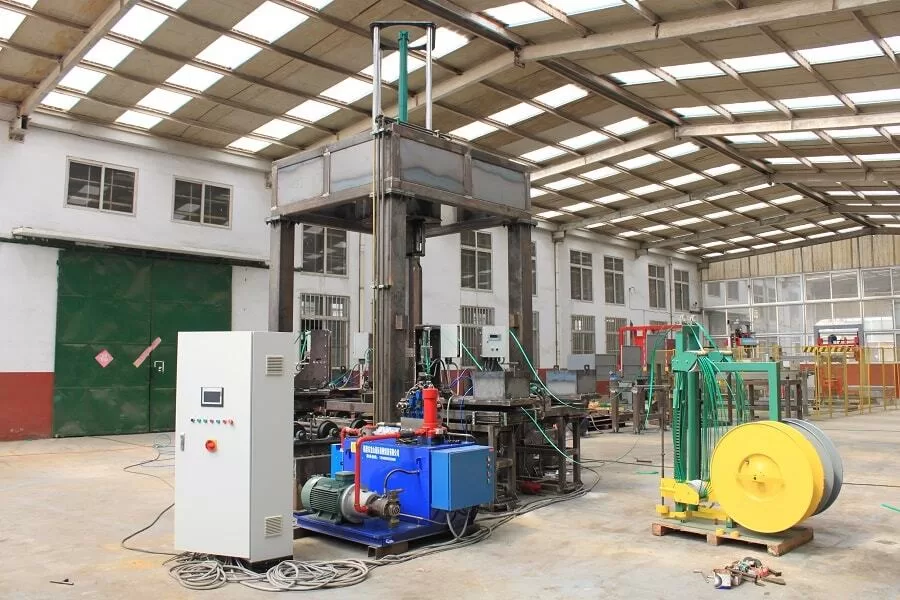
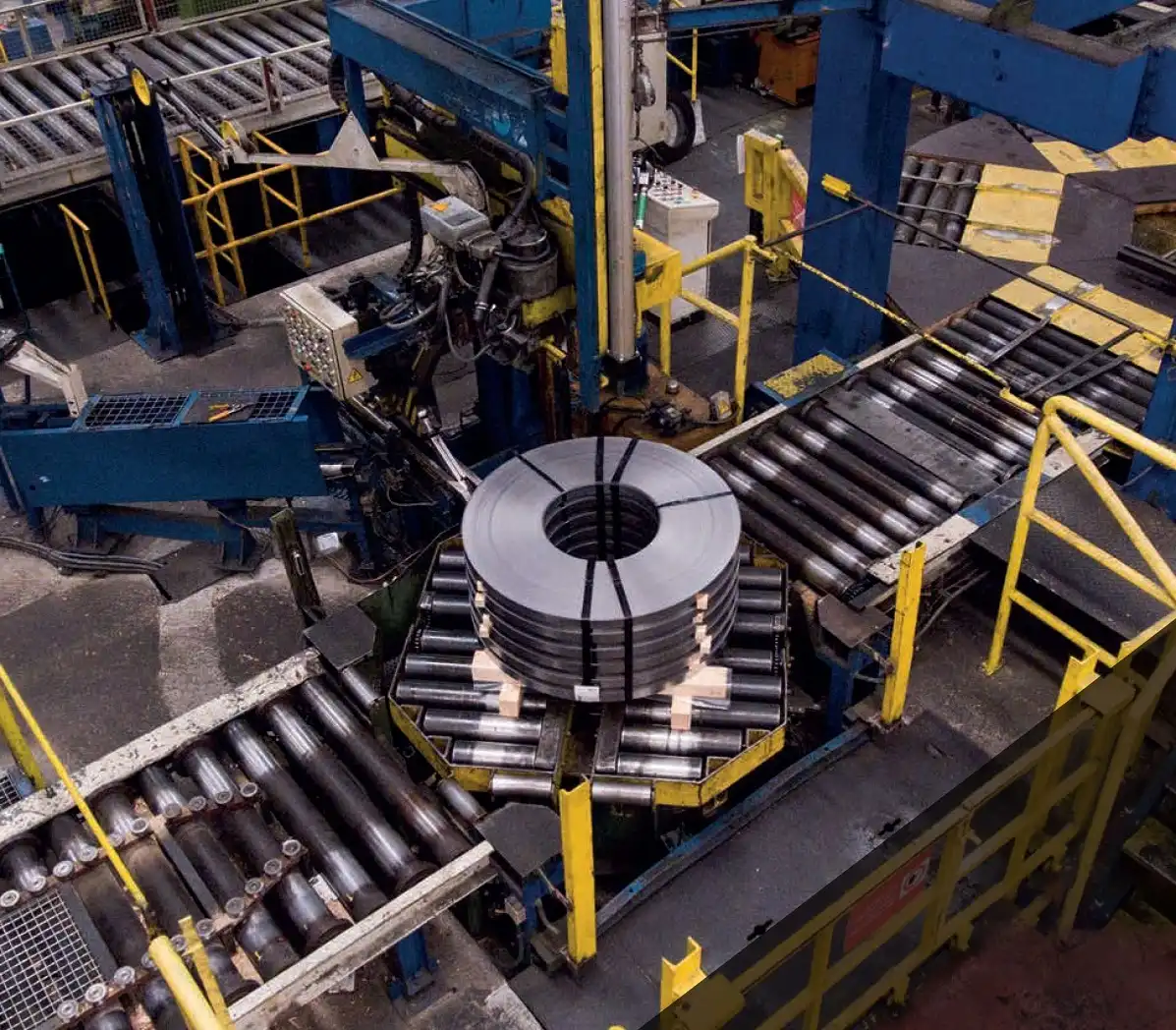
Each of these components is not just a standalone unit but an integral part of a larger, intelligent system. The synergy between them is what unlocks the true potential of coil packing line technology.
The Intelligent Warehouse Connection: Data and Logistics
The intelligence of a coil packing line extends beyond the packaging process itself. Modern systems are designed to connect with warehouse management systems, creating a seamless flow of data and materials from production to storage and beyond. This connectivity is the key to unlocking true operational efficiency and supply chain optimization.
Intelligent warehouse connectivity in coil packing lines enables real-time data exchange, allowing for optimized inventory management, streamlined logistics, and enhanced traceability. By integrating with warehouse systems, coil packing lines become a crucial node in the smart factory ecosystem, driving efficiency beyond the production floor. This connection transforms the packing line from a standalone process into a vital link in the entire supply chain.
But what are the tangible benefits of this connection? Let's explore the advantages in detail.
- Real-time Inventory Management: Integrated systems provide up-to-the-minute data on packaged coils, their location, and status. This eliminates manual tracking, reduces errors, and provides accurate inventory visibility.
- Optimized Logistics: Connectivity allows for efficient scheduling of material movement within the warehouse and for outbound logistics. Knowing exactly what is packaged and ready to ship streamlines loading and reduces delays.
- Enhanced Traceability: Data integration ensures complete traceability of each coil from production to shipping. This is crucial for quality control, warranty tracking, and meeting industry regulations.
- Predictive Maintenance: Data from the packing line can be fed into warehouse management systems to predict maintenance needs, minimizing downtime and ensuring continuous operation.
- Data-Driven Optimization: The wealth of data generated by connected systems provides valuable insights for process optimization. Analyzing packaging times, material usage, and throughput can lead to continuous improvements and cost savings.
The intelligent warehouse connection transforms the coil packing line from an isolated process into a fully integrated part of the smart factory ecosystem. This holistic approach is essential for businesses striving for operational excellence in today's data-driven world.
Customization and ROI: Tailoring Solutions for Your Needs
No two coil production facilities are exactly alike. Recognizing this, modern coil packing line technology offers extensive customization options to meet specific business needs and maximize return on investment. From handling different coil sizes and materials to integrating with existing systems, flexibility is key.
Coil packing lines offer significant ROI through reduced labor costs, minimized material waste, increased throughput, and improved safety. Customization options ensure that businesses can tailor the system to their specific needs, optimizing performance and maximizing profitability. Investing in a coil packing line is a strategic move towards long-term efficiency and competitiveness. %[automatic coil packing line]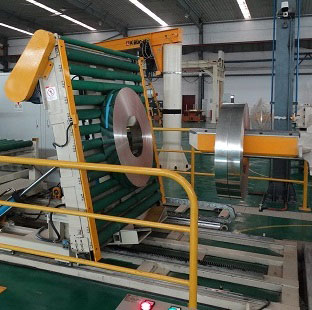
Let's examine the factors that contribute to customization and ROI.
- Handling Diverse Coil Types: Lines can be customized to handle steel, aluminum, copper, and other metal coils of varying dimensions and weights. Grippers, conveyors, and wrapping parameters can be adjusted for different materials and coil geometries.
- Modular Design for Scalability: Modular systems allow for phased implementation and future expansion. Businesses can start with core components and add modules as production volume grows, ensuring a scalable investment.
- Integration with Existing Systems: Customization includes seamless integration with upstream slitting lines, coil production systems, and downstream warehouse management systems. This ensures a smooth flow of materials and data across the entire operation.
- Material and Packaging Options: Lines can be configured to apply various packaging materials, including different types of films, papers, straps, and edge protectors, based on product requirements and environmental considerations.
- Automation Levels: Businesses can choose the level of automation that best suits their needs and budget. From semi-automatic to fully automatic lines, customization allows for optimized investment based on specific operational goals.
The ROI of a coil packing line is not just about cost savings; it's about creating a more efficient, safer, and data-driven operation. By tailoring the solution to specific needs, businesses can unlock the full potential of this transformative technology and ensure a strong return on their investment. %[wire packing automation]()
Conclusion
Coil packing line technology represents a paradigm shift in metal coil handling and packaging. From automatic wrapping that ensures product integrity to intelligent warehouse connectivity that optimizes logistics, these systems are reshaping the industry. By embracing automation and data integration, businesses can achieve unprecedented levels of efficiency, safety, and control. Investing in coil packing line technology is not just an upgrade—it's a strategic move towards a smarter, more competitive future.


