
End-to-End Automation: Steel Coil Packing Line Connected with Slitting and Logistics Systems
Are you grappling with bottlenecks in your steel coil processing? Imagine a seamless flow from slitting to shipping, all orchestrated automatically. End-to-end automation in steel coil packing is not just a futuristic concept—it's a present-day solution revolutionizing efficiency and profitability.
End-to-end automation in steel coil packing lines refers to the complete integration of processes from the end of the slitting line through to logistics, encompassing handling, packing, and data management. This interconnected system minimizes manual intervention, enhances throughput, reduces errors, and optimizes material flow within steel service centers and manufacturing plants.
This article explores how connecting your steel coil packing line with slitting and logistics systems can transform your operations, creating a powerhouse of productivity and precision. Let's delve into the mechanics and marvels of this integrated approach.
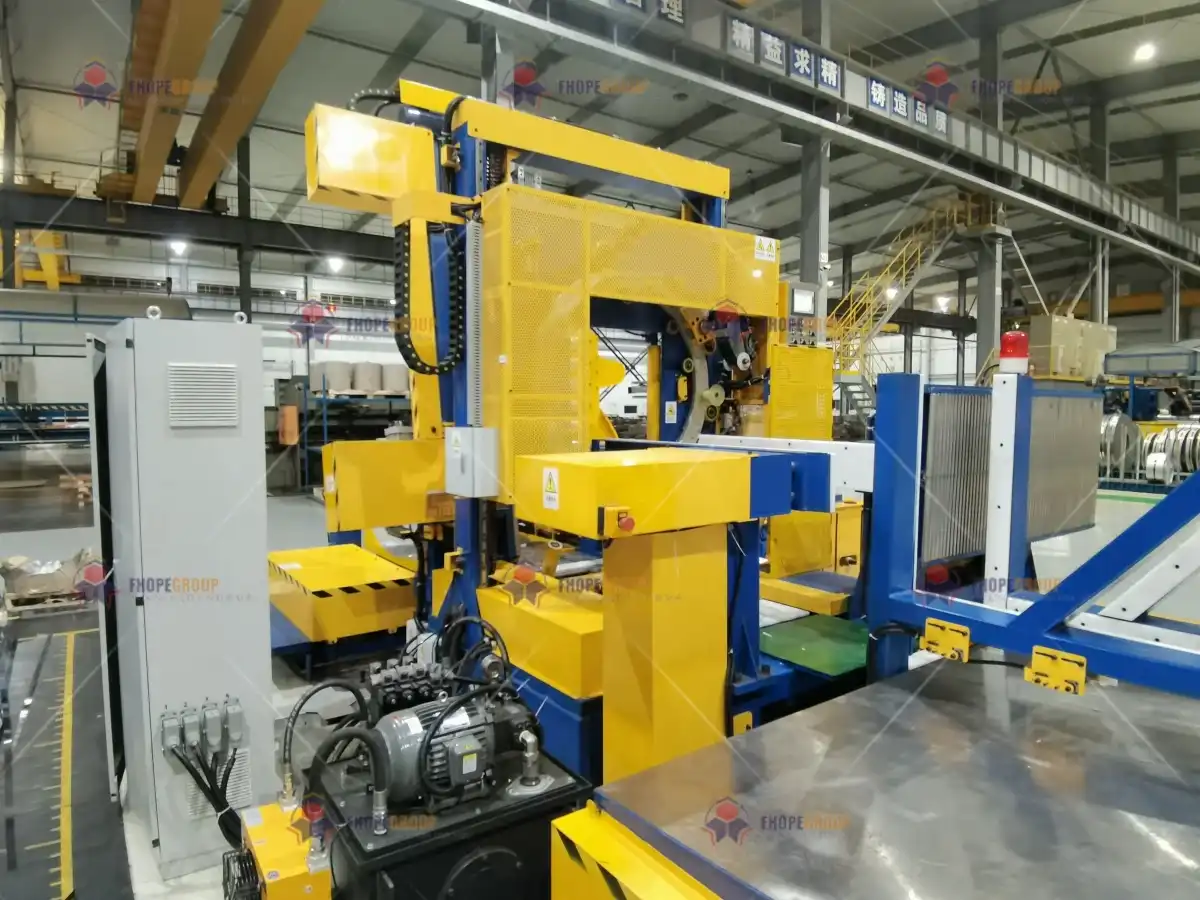
The Evolution of Steel Coil Packing: From Manual to Automated
Tired of slow, labor-intensive coil packing processes? For years, manual coil packing was the norm, demanding significant manpower and posing considerable safety risks. But the tide has turned.
Manual coil packing, characterized by heavy lifting and repetitive tasks, is inefficient, unsafe, and prone to errors. Automated coil packing lines, conversely, streamline operations, reduce labor costs, enhance safety by minimizing manual handling, and ensure consistent, high-quality packaging. This shift drastically improves productivity and reduces operational bottlenecks in steel processing.
The transition to automation is not merely an upgrade; it's a strategic evolution that addresses the core challenges of modern steel manufacturing and service centers.
Decoding the Manual vs. Automated Coil Packing Landscape
| Feature | Manual Coil Packing | Automated Coil Packing |
|---|---|---|
| Efficiency | Low; dependent on manual speed and fatigue | High; continuous and consistent operation |
| Labor Costs | High; requires a large workforce | Low; minimal operator intervention required |
| Safety | High risk of injury due to manual handling | Low risk; automated handling reduces hazards |
| Consistency | Variable; prone to human error | Consistent; precise and repeatable processes |
| Throughput | Limited; slower packing speeds | High; faster packing and handling rates |
| Material Waste | Potentially high due to inconsistent use | Minimized; precise material application |
| Scalability | Difficult to scale; labor-intensive | Easily scalable; modular system design |
As the table illustrates, the benefits of automated systems are compelling. But how do these systems actually work, and what components are essential?
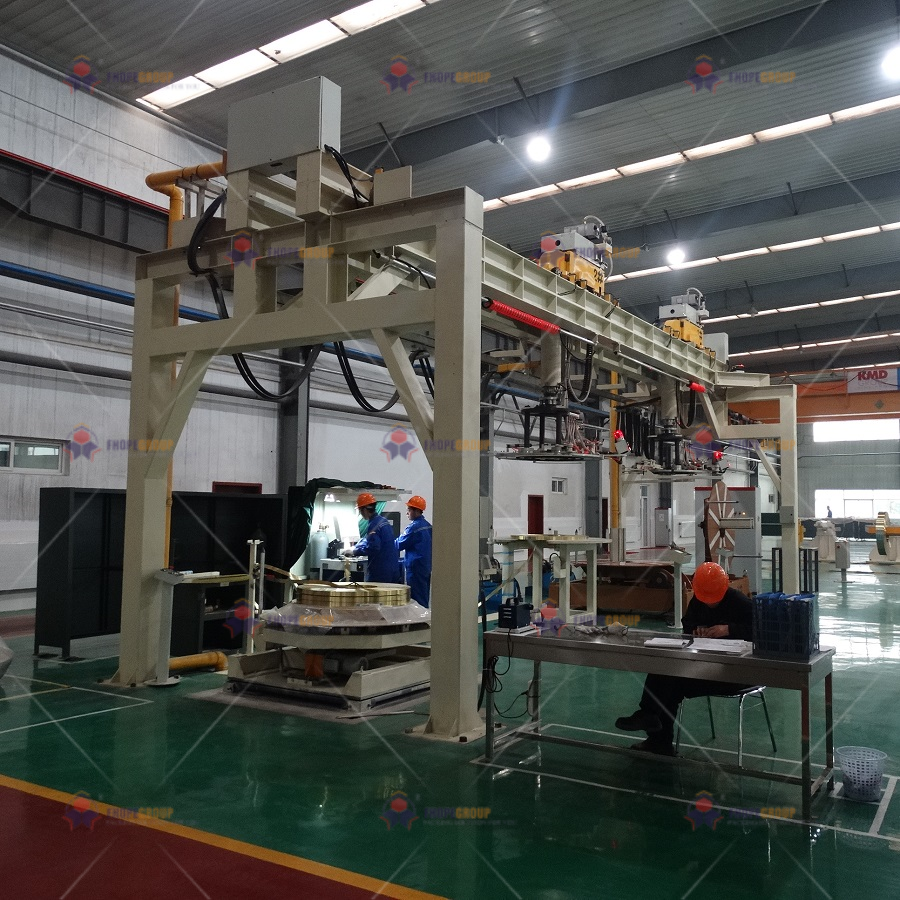
Diving Deeper: Why Automated Coil Packing is Now Indispensable
The move to automated coil packing isn't just about keeping up with technology; it's a necessity driven by several critical factors:
- Rising Labor Costs and Shortages: The cost of labor is continually increasing, and finding skilled workers for physically demanding jobs like manual coil packing is becoming harder. Automation provides a solution by reducing labor dependency and controlling operational expenses.
- Demand for Higher Productivity: The global market demands faster turnaround times and higher volumes. Automated lines significantly increase throughput, enabling businesses to meet and exceed these demands.
- Enhanced Safety Regulations: Workplace safety is paramount. Automation inherently reduces the risks associated with manual handling of heavy steel coils, ensuring compliance with stringent safety standards and minimizing workplace accidents.
- Improved Quality and Consistency: Automated systems perform repetitive tasks with precision and consistency, resulting in better packaging quality and reduced product damage during transit and storage.
- Integration with Industry 4.0: Modern manufacturing is increasingly data-driven. Automated packing lines with integrated control systems and IoT capabilities provide valuable data for process optimization, predictive maintenance, and overall operational intelligence.
Key Components of an End-to-End Automated Steel Coil Packing Line
What exactly constitutes an "end-to-end" automated system? It's more than just a single machine; it's a symphony of integrated components working in harmony.
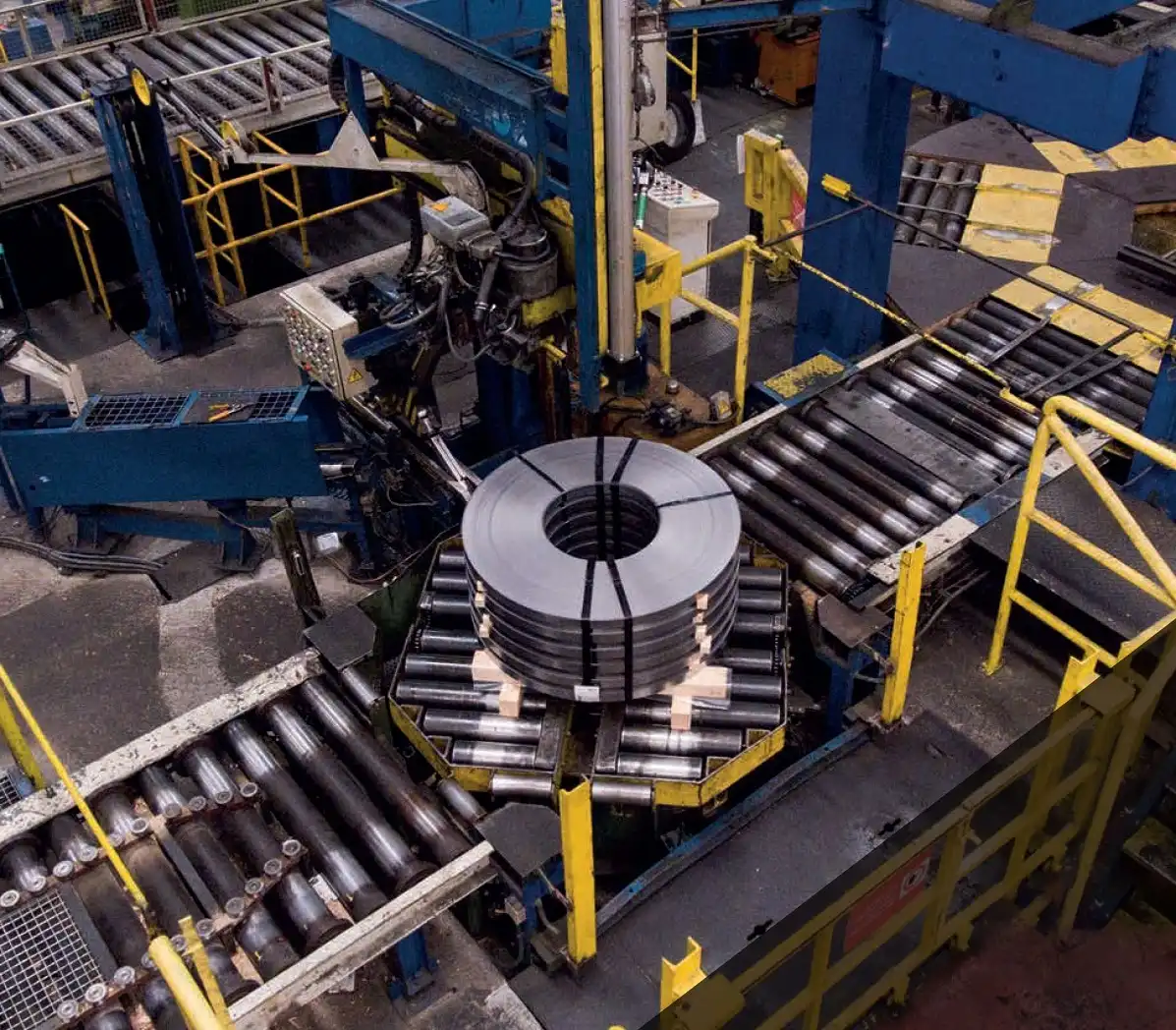
An end-to-end automated steel coil packing line typically comprises several key machines, including coil handlers, coil cars, wrapping machines, strapping units, stacking machinery, and sophisticated control systems. These components are seamlessly integrated to automate the entire process from slit coil production to storage and logistics, minimizing manual intervention and maximizing efficiency.
Let's break down the essential elements that make up a comprehensive coil packing solution.
-
Coil Handling and Input Systems: The journey begins with efficiently receiving coils from the slitting line.
- Turnstiles: Act as buffer stations, accumulating coils and feeding them into the packing line at a controlled pace. Heavy-duty turnstiles can handle substantial coil weights, ensuring a continuous flow.
- Coil Cars/Conveyors: Automated coil cars or conveyor systems transport coils from the turnstile to the subsequent stations in the packing line. These systems are designed for smooth and damage-free coil movement.
- Downenders: For coils that need to be packed in a specific orientation (eye vertical or eye horizontal), downenders automatically tilt the coils, preparing them for wrapping and strapping.
-
Core Packing Machinery: The heart of the system, where the actual packaging takes place.
- Wrapping Machines: Apply protective layers of wrapping material (stretch film, paper, VCI film, etc.) around the coils. Eye-through wrapping machines are common for coil lines, allowing for continuous operation.
- Strapping Machines: Secure the wrapped coils with steel or PET straps. Radial and circumferential strapping machines provide robust fastening for safe handling and transport.
- Weighing and Labeling Systems: Integrated weighing stations accurately measure coil weight, and automated labeling systems apply identification labels for tracking and inventory management.
-
Output and Logistics Integration: The final stages ensure packed coils are ready for storage or shipment.
- Stacking Machines: Automatically lift and stack wrapped and strapped coils onto pallets. Stacking machines can be programmed for various stacking patterns and pallet sizes.
- Turntable Stacking Systems: Rotary carousels or turntables can be used for efficient stacking, particularly when combined with robotic palletizing.
- Conveyor Out-feeding Systems: Automated conveyors transport stacked pallets of coils to designated areas for forklift pickup or AGV (Automated Guided Vehicle) collection, seamlessly linking to logistics operations.
Integrating Slitting and Logistics Systems with Coil Packing Lines
The real power of automation is unlocked when the coil packing line isn't an isolated island, but rather a connected component within a larger system. Integrating with slitting and logistics systems is where true end-to-end efficiency emerges.
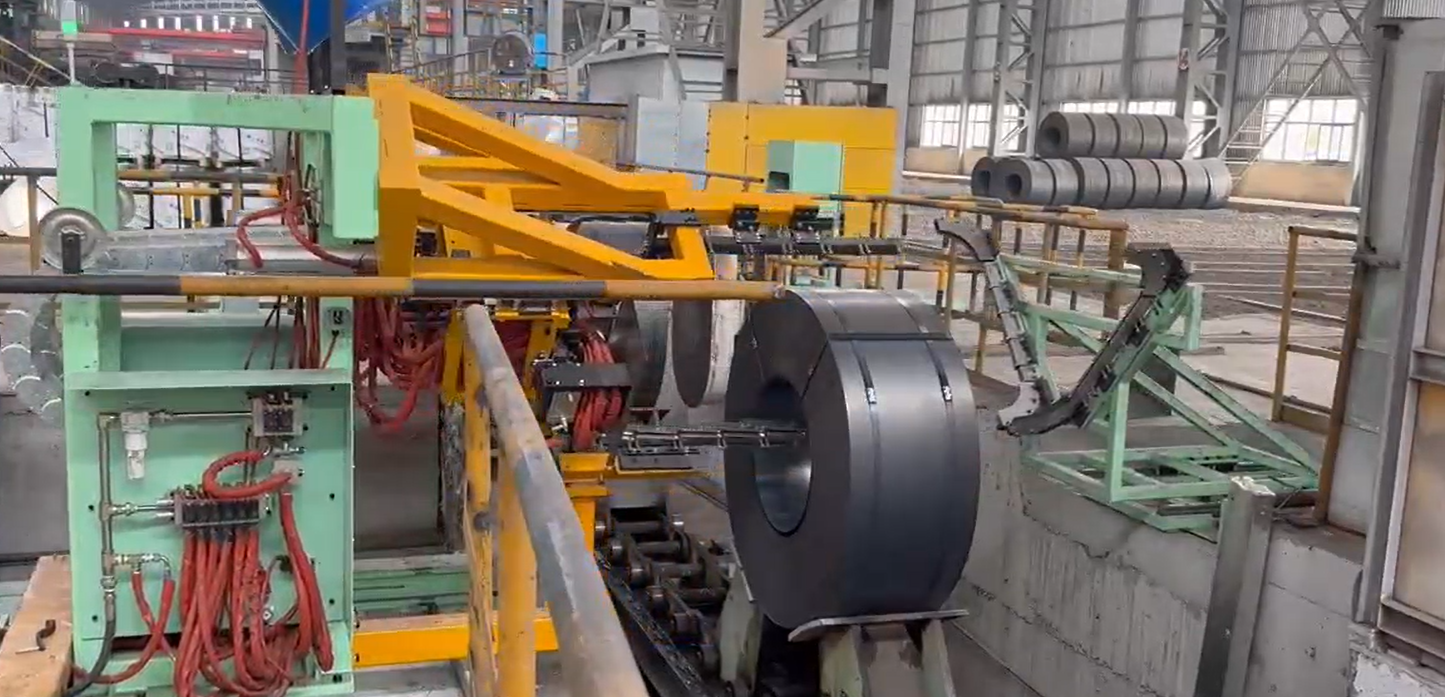
Connecting the steel coil packing line with upstream slitting systems ensures a continuous, synchronized flow of materials, eliminating bottlenecks and manual handling between processes. Integration with downstream logistics systems, such as warehouse management and transportation, optimizes inventory control and streamlines the entire supply chain.
Let's explore the critical interfaces and benefits of this integration.
Technical Deep Dive: The Synergies of Integration
| Integration Point | Benefit | Technical Implementation | Data Exchange |
|---|---|---|---|
| Slitting Line Integration | Seamless material flow, reduced buffer zones, minimized manual transfer | Direct conveyor connection, synchronized control systems, sensor-based coil tracking | Coil dimensions, weight, slitting parameters, production schedule |
| Logistics System (WMS/TMS) Integration | Optimized inventory, efficient warehouse operations, streamlined shipping | Data interfaces (API, OPC UA), real-time data exchange, AGV/forklift integration, automated reporting | Packing status, coil ID, pallet information, storage location, shipping instructions |
| ERP System Integration | Holistic operational view, improved planning, enhanced traceability | Enterprise-level data integration platforms, centralized database, comprehensive reporting dashboards | Order information, production forecasts, inventory levels, customer data, costing |
1. Slitting Line Integration: The Upstream Connection
- Direct Material Transfer: Instead of coils being manually moved from the slitting line to the packing area, a direct conveyor connection ensures a continuous flow. This eliminates intermediate handling, reduces the risk of damage, and saves significant time.
- Synchronized Operations: The packing line and slitting line control systems are linked, allowing for synchronized operation. The packing line can adjust its speed based on the output of the slitting line, preventing bottlenecks and ensuring smooth production.
- Real-time Data Sharing: Data on coil dimensions, weight, and slitting parameters are automatically transferred to the packing line control system. This eliminates manual data entry and ensures accurate packaging setup.
2. Logistics System Integration: The Downstream Connection
- Warehouse Management System (WMS) Integration: The packing line communicates with the WMS to update inventory in real-time. As coils are packed and stacked, the WMS is automatically informed of the quantity, type, and location of the packed coils. This provides accurate inventory visibility and simplifies warehouse operations.
- Transportation Management System (TMS) Integration: Integration with the TMS streamlines the shipping process. Packing data, including coil dimensions and weights, is automatically transferred to the TMS for shipment planning and documentation. This reduces manual paperwork and ensures efficient dispatch.
- Automated Guided Vehicle (AGV) Integration: For fully automated warehouses, AGVs can be integrated with the packing line output conveyors. AGVs automatically collect pallets of packed coils and transport them to designated storage locations, further minimizing manual intervention.
3. Enterprise Resource Planning (ERP) Integration: The Holistic View
- Centralized Data Management: Integrating the packing line with the ERP system provides a centralized platform for managing all production and logistics data. This holistic view enables better planning, forecasting, and decision-making across the entire organization.
- Enhanced Traceability: ERP integration ensures complete traceability of coils throughout the entire process, from slitting to shipping. Each coil can be tracked and traced at every stage, improving quality control and accountability.
- Optimized Resource Allocation: By providing real-time data on production and inventory, ERP integration helps optimize resource allocation. Businesses can make informed decisions about production scheduling, material procurement, and manpower deployment, leading to greater overall efficiency.
The Control System: The Brain of Automated Coil Packing
At the heart of any automated system lies its control system. In an end-to-end automated coil packing line, the control system is the conductor of the entire orchestra, ensuring seamless and synchronized operation.
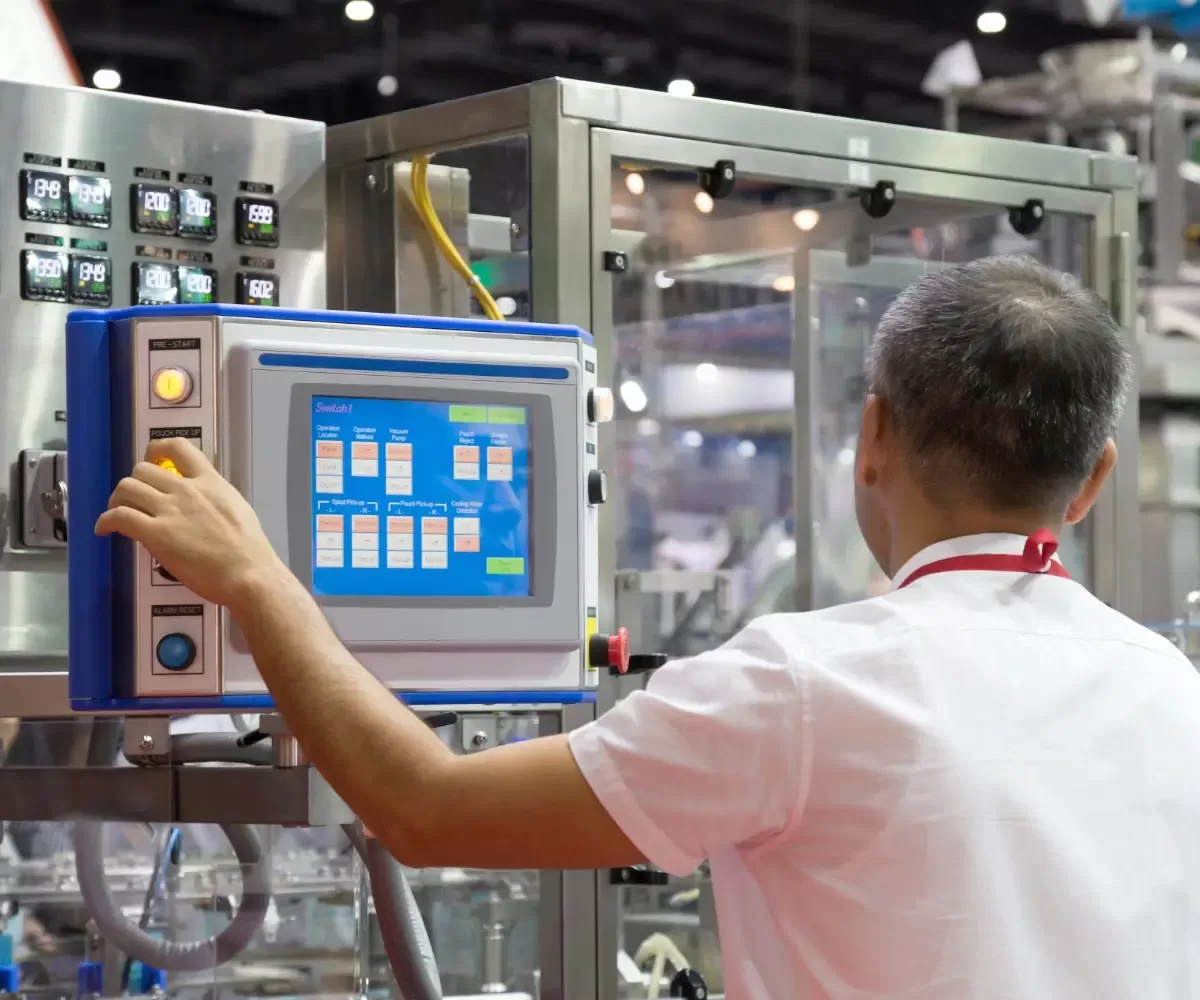
The control system in an automated coil packing line is a sophisticated network of Programmable Logic Controllers (PLCs), sensors, and Human-Machine Interfaces (HMIs). It orchestrates the movement of coils, manages packaging processes, monitors system performance, and integrates with higher-level systems like MES, ERP, and WMS for comprehensive data management and operational control.
A robust control system is not just about automation; it's about intelligent automation that optimizes every aspect of the packing process.
Key Features of an Advanced Control System:
- Programmable Logic Controllers (PLCs): PLCs are the core controllers, managing the sequential operations of each machine in the packing line. They ensure precise timing and coordination between different components.
- Human-Machine Interfaces (HMIs): HMIs provide operators with a user-friendly interface to monitor and control the packing line. Touchscreen panels display real-time status, allow for parameter adjustments, and provide diagnostic information.
- Sensor Integration: A network of sensors monitors coil position, dimensions, weight, and machine performance. This data is fed back to the PLC for real-time adjustments and error detection.
- Data Acquisition and Reporting: Advanced control systems collect data on various parameters, such as throughput, cycle times, material consumption, and downtime. This data is used for performance analysis, reporting, and process optimization.
- Remote Monitoring and Diagnostics: Many modern control systems offer remote monitoring capabilities, allowing operators and technicians to access system status and diagnose issues from remote locations. This minimizes downtime and speeds up maintenance.
- Integration with MES/ERP/WMS: Seamless integration with Manufacturing Execution Systems (MES), Enterprise Resource Planning (ERP), and Warehouse Management Systems (WMS) is crucial for end-to-end automation. This integration enables data exchange, process synchronization, and holistic operational control.
The Benefits of a Sophisticated Control System:
- Enhanced Precision and Accuracy: PLCs and sensor feedback ensure precise control over all packing processes, minimizing errors and variability.
- Increased Efficiency and Throughput: Optimized control algorithms and real-time adjustments maximize throughput and minimize cycle times.
- Reduced Downtime: Advanced diagnostics and remote monitoring capabilities enable proactive maintenance and faster troubleshooting, minimizing downtime.
- Improved Data Visibility: Comprehensive data acquisition and reporting provide valuable insights into system performance, enabling data-driven process improvements.
- Flexibility and Customization: Modern control systems are highly flexible and customizable, allowing businesses to tailor the packing line operation to their specific needs and product requirements.
Conclusion
End-to-end automation in steel coil packing, connecting slitting lines with logistics systems, represents a paradigm shift in operational efficiency and productivity. By integrating key processes and leveraging intelligent control systems, manufacturers and service centers can achieve unprecedented levels of throughput, safety, and data-driven optimization. Embracing automatic coil stacking machine technology is not just about staying competitive—it's about building a smarter, more resilient, and future-proof operation in the dynamic world of steel processing.


