
Complete Automation Workflow in a Steel Coil Packing Line: From Strapping to Stacking
Are you still relying on outdated, labor-intensive methods for steel coil packing? Imagine a seamless workflow where steel coils move effortlessly from strapping to stacking, all orchestrated by automation. It's not just a dream; it's the reality of complete automation in steel coil packing lines, revolutionizing efficiency and safety in modern manufacturing.
Complete automation in steel coil packing lines encompasses a fully integrated system, from coil handling and wrapping to strapping and stacking, significantly enhancing efficiency, reducing labor costs, and improving workplace safety. This streamlined process ensures consistent quality and faster throughput in steel manufacturing and processing facilities.
Ready to explore how complete automation can transform your steel coil packing process? Let's dive into the future of efficient and safe coil handling.
The Evolution of Automated Steel Coil Packing Lines: From Manual to Lights-Out
Tired of bottlenecks in your steel coil packing process? For years, manual labor dominated steel coil packing, leading to inefficiencies and safety concerns. But what if you could leap from outdated manual processes to a fully automated, lights-out operation? The evolution of steel coil packing lines from manual handling to complete automation is transforming the steel industry, offering unprecedented gains in productivity and safety.
Automated steel coil packing lines have evolved from basic mechanized systems to sophisticated, fully integrated solutions that minimize manual intervention, enhance packaging precision, and optimize material flow from strapping to stacking. This evolution has been driven by the need for increased efficiency, reduced labor costs, improved safety, and higher quality standards in steel coil manufacturing.
%[Packing line parameters efficiency optimization steel coil specifications]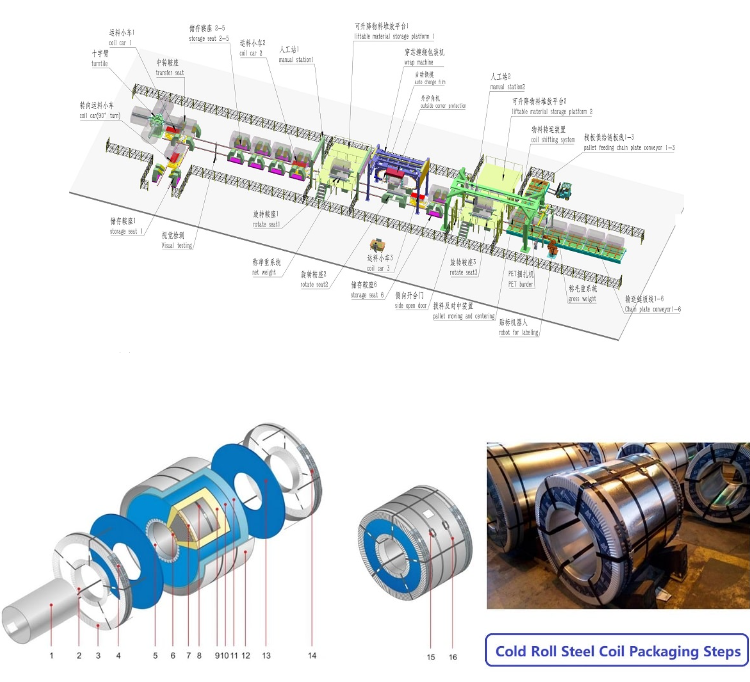
Tracing the Timeline of Automation in Coil Packing
The journey to complete automation in steel coil packing has been gradual yet transformative. Understanding this evolution helps appreciate the sophistication of today's systems and anticipate future trends.
Early Mechanization (Mid-20th Century)
Initially, coil packing relied heavily on manual labor. The mid-20th century saw the introduction of basic mechanization, primarily focused on material handling. Cranes and forklifts reduced the manual lifting of heavy coils, but processes like wrapping and strapping remained largely manual. This stage improved material handling speed but did little to address labor intensity and safety risks in the overall packing process.
Introduction of Semi-Automated Systems (Late 20th Century)
The late 20th century marked the advent of semi-automated systems. Machines for coil wrapping and strapping were introduced, reducing manual labor for these specific tasks. Conveyor systems began to link different stations, streamlining material flow. PLC (Programmable Logic Controllers) were implemented for basic sequencing and control of individual machines. However, significant manual intervention was still required for coil transfer between stations and quality checks.
Rise of Integrated Automation (Early 21st Century)
The early 21st century witnessed the rise of integrated automation. Complete packing lines emerged, linking coil handling, wrapping, strapping, and stacking into a cohesive system. Robotics began to be integrated for coil manipulation and transfer, further reducing manual labor. Advanced sensors and vision systems were incorporated for quality inspection and process monitoring. Data collection and basic reporting became features, offering insights into line performance. These systems significantly boosted efficiency and reduced labor dependency, marking a major step towards full automation.
Complete Automation and Industry 4.0 (Present and Future)
Today, we are in the era of complete automation, driven by Industry 4.0 technologies. Modern coil packing lines feature seamless integration of all processes, from coil entry to palletized output, with minimal to no manual intervention. Advanced robotics with AI-driven vision systems handle complex tasks like coil selection, orientation, and stacking with high precision. IoT (Internet of Things) connectivity allows for real-time monitoring, remote diagnostics, and predictive maintenance. Data analytics and cloud computing enable optimization of line performance and integration with enterprise-level systems (ERP, MES). The future points towards "lights-out" operation, with AI and machine learning playing an increasingly crucial role in self-optimization and autonomous operation.
| Stage | Key Technologies | Level of Automation | Labor Dependency | Efficiency Improvement | Safety Improvement |
|---|---|---|---|---|---|
| Early Mechanization | Cranes, Forklifts | Basic Material Handling | High | Moderate | Moderate |
| Semi-Automated Systems | Wrapping Machines, Strapping Machines, Conveyors, PLCs | Task-Specific Automation | Medium | Significant | Significant |
| Integrated Automation | Robotics, Sensors, Vision Systems, Advanced PLCs | Line-Level Automation | Low | High | High |
| Complete Automation & I4.0 | AI, IoT, Cloud Computing, Advanced Robotics | System-Wide Automation | Very Low to None | Very High | Very High |
The evolution of automated steel coil packing lines reflects a continuous drive towards greater efficiency, safety, and quality. From basic mechanization to today's sophisticated, data-driven systems, the steel industry has embraced automation to meet ever-increasing demands and remain competitive. The journey is ongoing, with future innovations promising even more intelligent and autonomous packing solutions.
Core Components of a Fully Automated Steel Coil Packing Line
Want to understand the nuts and bolts of automated coil packing? Imagine a symphony of machines working in perfect harmony, each playing a vital role in the coil packing process. But what exactly are these key components that orchestrate the complete automation workflow? Understanding the core components of a fully automated steel coil packing line is crucial to appreciating its complexity and efficiency.
A fully automated steel coil packing line integrates several key components including coil handling systems, wrapping machines, strapping units, stacking machinery, and a central control system, all working seamlessly to process steel coils from initial packaging to final stacking. Each component is designed for efficiency, precision, and minimal manual intervention, ensuring a streamlined and high-throughput operation.
%[Packing line parameters efficiency optimization steel coil specifications]
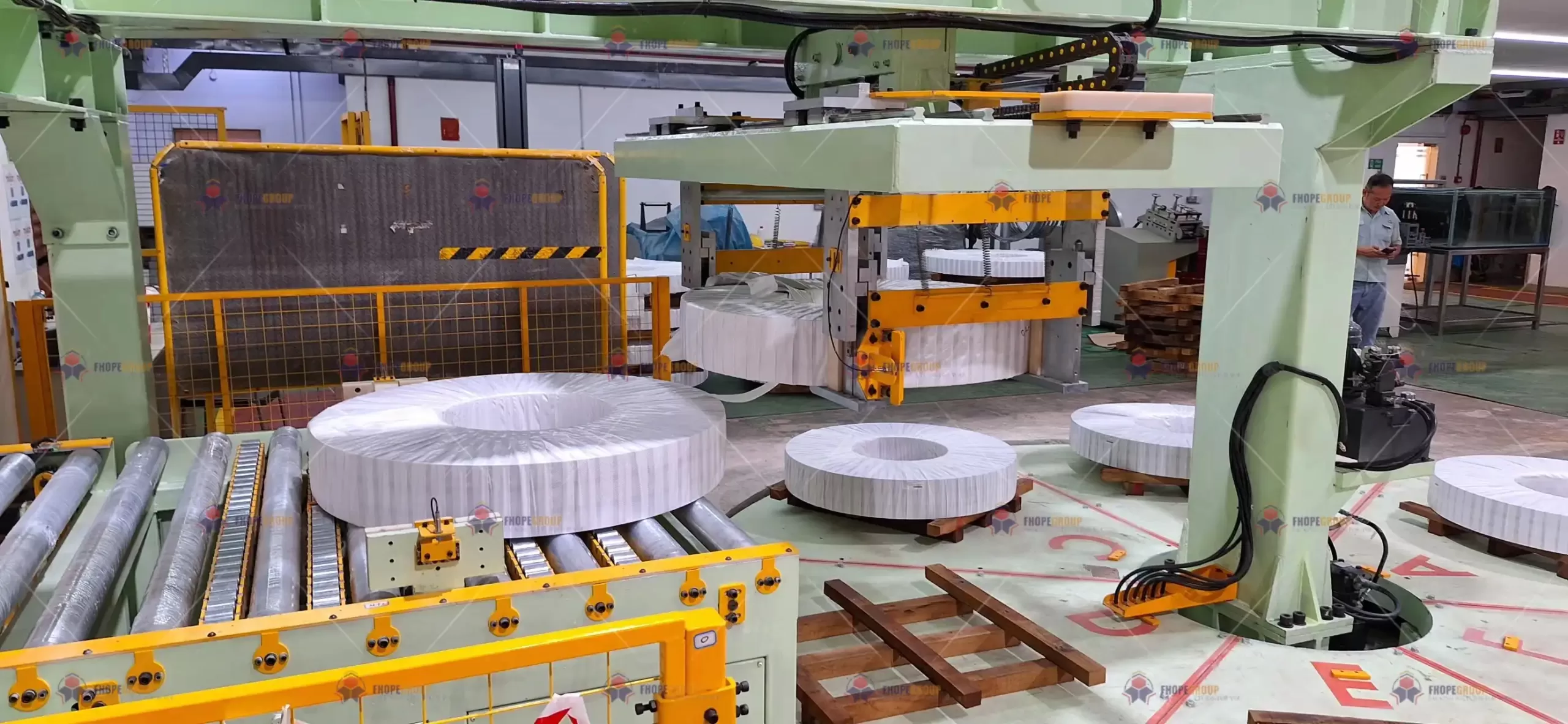
Decoding the Machinery: A Component-by-Component Breakdown
To truly grasp the workings of a complete automation workflow, let's dissect the core components of a steel coil packing line.
1. Coil Handling Systems: The Orchestrators of Movement
Coil handling systems are the backbone of the automated line, responsible for the smooth and precise movement of coils between different stations. These systems often include:
- Turnstiles: Act as entry points, receiving coils from production lines or coil cars and sequentially feeding them into the packing line.
- Coil Cars/Trolleys: Automated vehicles that transport coils between stations, ensuring efficient material flow.
- Downenders/Upenders: Machines that change coil orientation (horizontal to vertical or vice versa) as needed for different packing processes.
- Conveyor Systems: A network of rollers and belts that move coils along the packing line, linking various stations and ensuring continuous flow.
- Robotic Arms/Manipulators: Advanced robots equipped with grippers and sensors for precise coil lifting, placement, and orientation, especially for heavier coils and complex movements.
2. Wrapping Machines: The Protection Layer
Wrapping machines apply protective layers to the coils, safeguarding them from environmental damage and ensuring quality preservation during storage and transit. Key types include:
- Stretch Wrapping Machines: Use stretch film to tightly wrap coils, providing moisture and dust protection, and load stabilization.
- Ring Wrapping Machines: Employ a rotating ring to apply wrapping material around the coil as it passes through, suitable for high-speed wrapping.
- Orbital Wrapping Machines: Wrap coils in a spiral motion, ideal for cylindrical objects like coils, providing consistent and secure wrapping.
- Shrink Wrapping Machines: Use heat-shrinkable film to create a tight, form-fitting protective layer around the coil.
3. Strapping Units: Securing the Package
Strapping units apply straps around the wrapped coils to secure the package and provide structural integrity for handling and stacking. Common types are:
- Radial Strapping Machines: Apply straps around the circumference of the coil, securing the outer layers of wrapping.
- Axial Strapping Machines: Strap through the eye of the coil, providing robust fastening for heavy coils.
- Combination Strapping Machines: Integrate both radial and axial strapping capabilities for comprehensive coil securement.
- Steel Strapping Machines: Use steel straps for heavy-duty applications requiring high tensile strength.
- PET/Plastic Strapping Machines: Employ plastic straps, offering flexibility and cost-effectiveness for lighter to medium-duty applications.
4. Stacking Machinery: Precision Palletizing
Stacking machinery automates the process of placing packed coils onto pallets for efficient storage and shipment. Key components include:
- Stackers: Robotic or gantry-based systems that lift and precisely place coils onto pallets in pre-defined patterns.
- Pallet Dispensers: Automatically feed pallets into the stacking station, ensuring a continuous supply for the stacking process.
- Stack Strapping/Wrapping Stations: Further secure the stacked coils on pallets with additional strapping or wrapping for stability and protection during transit.
- Pallet Conveyors: Move pallets to and from the stacking station, integrating pallet handling with the overall packing line flow.
5. Central Control System: The Brain of the Operation
The central control system, typically based on PLCs and HMIs (Human-Machine Interfaces), is the brain of the automated packing line. It orchestrates and monitors all components, ensuring synchronized and efficient operation. Key functions include:
- Process Sequencing and Control: Manages the sequence of operations for each coil, coordinating the actions of all machines.
- Data Acquisition and Monitoring: Collects data from sensors throughout the line, providing real-time performance monitoring and diagnostics.
- User Interface and Control: HMIs provide operators with a user-friendly interface to monitor, control, and adjust line parameters.
- Integration with Enterprise Systems: Connects with MES/ERP systems for data exchange, production scheduling, and inventory management.
By understanding these core components and how they interoperate, one can appreciate the sophistication of a fully automated steel coil packing line and its ability to transform steel manufacturing operations. The seamless integration of these elements is what drives efficiency, safety, and quality in modern coil packing.
Optimizing Efficiency with Automated Steel Coil Wrapping and Strapping
Is material waste and slow wrapping slowing you down? Imagine a packing process so precise that every inch of wrapping material is perfectly placed, and strapping is applied with unwavering consistency. But how do automated systems achieve this level of optimization in steel coil wrapping and strapping? Optimizing efficiency in automated steel coil wrapping and strapping is critical for reducing material costs, increasing throughput, and ensuring consistent packaging quality.
Automated steel coil wrapping and strapping systems optimize efficiency through precise material application, high-speed operation, and integrated quality control, minimizing waste, maximizing throughput, and ensuring consistently secure and well-protected coil packages. These systems use advanced sensors and controls to tailor material usage to each coil's dimensions and packaging requirements.
%[Packing line parameters efficiency optimization steel coil specifications]

Efficiency Unleashed: Precision and Speed in Wrapping and Strapping
Let's delve deeper into the specific techniques and technologies that drive efficiency in automated wrapping and strapping processes within steel coil packing lines.
1. Precision Material Application: Minimizing Waste, Maximizing Protection
Automated wrapping and strapping systems are designed to apply materials with pinpoint accuracy, eliminating the inconsistencies and excesses common in manual processes.
- Sensors for Dimensioning: Laser scanners and ultrasonic sensors precisely measure coil dimensions (diameter, width, height) before wrapping and strapping. This data is fed into the control system to calculate the exact material length and tension required.
- Servo-Controlled Material Feed: Servo motors control the dispensing of wrapping film and strapping material, ensuring precise length and tension. This eliminates material overruns and underruns, reducing waste and ensuring optimal packaging integrity.
- Programmable Overlap and Tension Control: For wrapping, the overlap percentage of the film can be programmed and precisely controlled, ensuring consistent layers of protection without excessive material use. Strapping tension is also precisely adjustable, preventing damage to coils while ensuring secure fastening.
- Automated Cut-Off and Sealing: After wrapping and strapping, automated cut-off mechanisms precisely trim the material, and heat sealing or welding units create secure closures, eliminating material tails and ensuring neat, professional packaging.
2. High-Speed Operation: Boosting Throughput
Automated systems significantly outperform manual processes in speed, leading to higher throughput and reduced cycle times.
- Continuous Motion Wrapping: Ring and orbital wrapping machines allow for continuous coil movement during wrapping, eliminating start-stop cycles and maximizing wrapping speed.
- Multi-Head Strapping Units: Some high-throughput lines utilize dual or even quad-head strapping units, applying multiple straps simultaneously, significantly reducing strapping cycle times.
- Synchronized Operations: The entire wrapping and strapping process is synchronized with the conveyor system and other line components, ensuring smooth, continuous flow and minimizing bottlenecks.
- Rapid Material Changeover: Automated systems often feature quick material changeover mechanisms, minimizing downtime when switching between different types of wrapping film or strapping.
3. Integrated Quality Control: Ensuring Consistency
Efficiency is not just about speed and material savings; it also encompasses quality and consistency. Automated systems incorporate quality control measures throughout the wrapping and strapping process.
- Tension Monitoring: Sensors continuously monitor wrapping film and strapping tension, ensuring they remain within pre-set parameters. Deviations trigger automatic adjustments or alerts, maintaining consistent packaging quality.
- Seam and Overlap Inspection: Vision systems can inspect wrapping seams and overlaps, verifying proper sealing and layer coverage.
- Strap Placement Verification: Sensors confirm correct strap placement and secure fastening.
- Data Logging and Reporting: Performance data, including material consumption, cycle times, and error rates, is logged and reported, providing valuable insights for process optimization and quality monitoring.
| Feature | Manual Wrapping/Strapping | Automated Wrapping/Strapping | Efficiency Improvement |
|---|---|---|---|
| Material Application | Inconsistent, prone to over/under use | Precise, sensor-guided, optimized for each coil | Significant material savings, reduced waste |
| Speed of Operation | Slow, labor-intensive | High-speed, continuous motion | Increased throughput, reduced cycle times |
| Consistency & Quality | Variable, dependent on operator skill | Consistent, machine-controlled, quality checks integrated | Improved packaging quality, reduced product damage |
| Labor Costs | High, requires multiple operators | Low, minimal operator intervention required | Reduced labor expenses, lower operational costs |
| Material Changeover Time | Slow, manual process | Rapid, automated mechanisms | Minimized downtime, increased line uptime |
By implementing these efficiency-enhancing technologies, automated steel coil wrapping and strapping systems deliver significant improvements in material utilization, throughput, quality, and cost-effectiveness, making them indispensable for modern steel coil processing operations.
Enhancing Safety in Steel Coil Stacking and Handling Automation
Are safety hazards still a concern in your coil handling? Picture a workplace where the risks of heavy lifting and manual handling are virtually eliminated. But how does automation specifically enhance safety in the often dangerous area of steel coil stacking and handling? Enhancing safety in steel coil stacking and handling automation is a paramount concern, given the heavy loads and potential risks involved in manual operations.
Automated steel coil stacking and handling systems significantly enhance workplace safety by eliminating manual lifting and handling of heavy coils, reducing the risk of injuries, and incorporating advanced safety features and protocols throughout the process. These systems prioritize operator safety while maintaining high efficiency and throughput.
%[Packing line parameters efficiency optimization steel coil specifications]
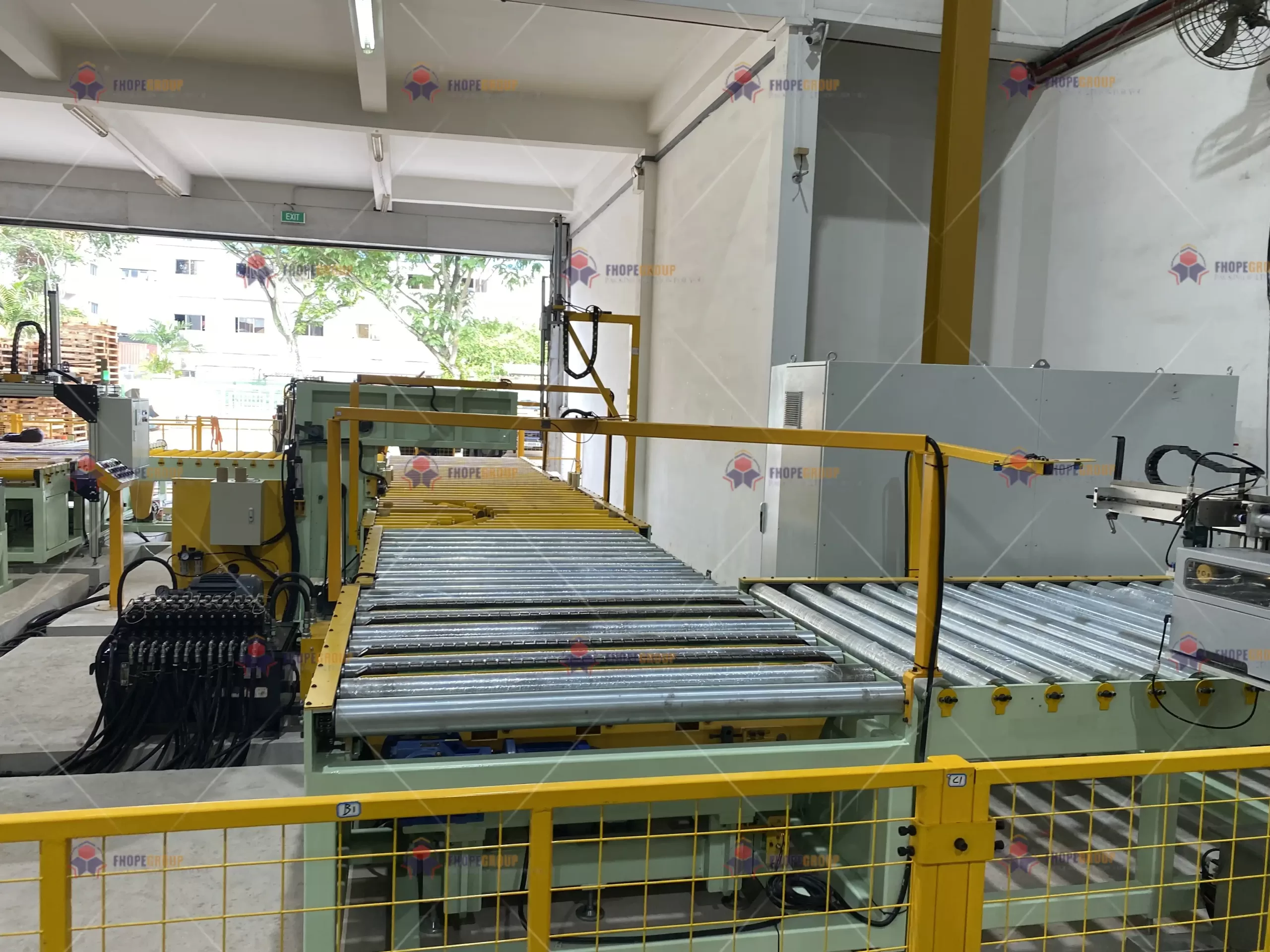
A Safer Workplace: Automation as a Safety Shield
Let's explore the specific ways automation improves safety in steel coil stacking and handling, creating a more secure working environment.
1. Elimination of Manual Heavy Lifting and Handling: Reducing Physical Strain
The most significant safety benefit of automation is the elimination of manual heavy lifting and handling, which are major sources of workplace injuries in coil processing.
- Robotic Coil Handling: Robots and automated manipulators handle the lifting, moving, and positioning of heavy steel coils, completely removing the need for manual lifting, which can cause strains, sprains, and back injuries.
- Automated Stacking: Stacking machinery precisely places coils onto pallets without manual intervention, eliminating the risks associated with manually maneuvering heavy coils at height.
- Coil Cars and Conveyors: Automated transport systems move coils between stations, reducing the need for manual pushing, pulling, or carrying of coils.
- Minimized Manual Intervention: Automation minimizes the need for operators to be in close proximity to heavy machinery during operation, reducing the risk of accidents.
2. Advanced Safety Features and Protocols: Built-in Protection
Modern automated coil stacking and handling lines are equipped with numerous safety features and protocols designed to protect operators and prevent accidents.
- Emergency Stop Systems (E-Stops): Strategically placed E-stop buttons allow for immediate shutdown of the entire line or individual sections in case of emergencies.
- Light Curtains and Safety Scanners: These devices create safety zones around hazardous areas. If an operator crosses a light curtain or enters a scanned zone, the machinery automatically stops to prevent accidents.
- Safety Interlocks and Guards: Physical guards and interlocks prevent access to moving parts and hazardous areas during operation. Interlocks ensure that machinery cannot operate if safety guards are removed or open.
- Two-Hand Control Stations: For certain manual operations or maintenance tasks within the automated line, two-hand control stations require operators to use both hands to activate machinery, ensuring that hands are kept away from moving parts.
- Audible and Visual Warning Systems: Alarms, sirens, and flashing lights provide warnings before machinery starts or during potential safety hazards.
3. Ergonomic Design and Operator Training: Enhancing Human Factors
While automation reduces manual labor, operator roles shift to monitoring and control. Ergonomic design and comprehensive training are crucial for maximizing safety in this new context.
- Ergonomic Control Stations: Control panels and HMIs are designed for comfortable and safe operation, minimizing operator fatigue and strain.
- Remote Monitoring and Control: Operators can monitor and control the line from a safe distance, away from heavy machinery and hazardous areas.
- Comprehensive Training Programs: Operators receive thorough training on system operation, safety procedures, emergency protocols, and routine maintenance. This ensures they are competent and confident in managing the automated line safely.
- Regular Safety Audits and Risk Assessments: Periodic safety audits and risk assessments are conducted to identify potential hazards, improve safety protocols, and ensure ongoing compliance with safety standards.
| Safety Aspect | Manual Stacking/Handling | Automated Stacking/Handling | Safety Improvement |
|---|---|---|---|
| Manual Lifting & Handling | High risk of strains, sprains, back injuries | Eliminated by robots and automated systems | Significant reduction in physical injuries |
| Proximity to Heavy Machinery | Operators often work close to moving heavy coils | Operators can monitor from safe distances | Reduced risk of impact and crushing injuries |
| Emergency Stop & Safety Systems | Often limited or less effective | Advanced E-stops, light curtains, safety scanners, interlocks | Enhanced protection against accidents and malfunctions |
| Operator Fatigue & Error | High fatigue leads to increased error risk | Reduced physical workload, less fatigue for operators | Lower risk of errors due to fatigue, improved vigilance |
| Ergonomics & Training | Ergonomics often overlooked, training may be basic | Ergonomic control stations, comprehensive safety training | Improved operator comfort, competence, and safety awareness |
By prioritizing safety through automation, steel coil processing facilities can create a significantly safer working environment, reduce workplace injuries, lower associated costs, and foster a culture of safety. Automation is not just about efficiency; it is also a powerful tool for protecting the most valuable asset: the workforce.
Vertical vs. Horizontal: Tailoring Automation to Coil Orientation
Confused about vertical or horizontal coil packing? Imagine a packing line perfectly adapted to your specific coil handling needs, whether your coils are eye-vertical or eye-horizontal. But how do you choose between vertical and horizontal coil packing line configurations, and what are the implications for automation? The choice between vertical and horizontal coil packing line configurations depends on factors like plant layout, coil specifications, and handling preferences, each offering distinct advantages in automation workflows.
Vertical coil packing lines are designed for coils with the eye horizontal, optimizing space utilization and often preferred for heavier, larger diameter coils, while horizontal lines handle coils with the eye vertical, typically suiting lighter, smaller diameter coils and integrating well with certain production layouts. The selection impacts equipment design, workflow, and overall automation strategy.
%[Packing line parameters efficiency optimization steel coil specifications]

Orientation Matters: Choosing the Right Configuration for Your Needs
Let's dissect the differences between vertical and horizontal coil packing lines, exploring their respective advantages and suitability for different operational contexts.
1. Vertical Coil Packing Lines (Eye Horizontal)
Vertical coil packing lines are designed to handle coils positioned with their eye horizontal (axis vertical).
- Space Efficiency: Vertical lines are generally more space-efficient, as coils are processed and stacked in a vertical orientation, reducing the footprint of the line, especially beneficial in facilities with limited floor space.
- Handling of Heavy and Large Diameter Coils: Vertical orientation is often preferred for heavier and larger diameter coils as it provides better stability during handling and stacking. Gravity assists in keeping the coil stable.
- Suitable for Certain Industries: Vertical lines are commonly used in industries dealing with heavy gauge steel coils, such as automotive and construction, where coil weight and size are significant factors.
- Equipment Design: Vertical lines typically feature equipment designed for vertical coil handling, such as vertical downenders/upenders, vertical wrapping machines, and specialized vertical stackers.
- Workflow: Coils enter the line in a horizontal orientation, are processed vertically, and stacked vertically, maintaining a consistent orientation throughout the packing process.
2. Horizontal Coil Packing Lines (Eye Vertical)
Horizontal coil packing lines are designed for coils positioned with their eye vertical (axis horizontal).
- Integration with Production Lines: Horizontal lines often integrate more seamlessly with certain types of production lines, particularly slitting and cut-to-length lines, where coils are produced and handled in a horizontal orientation.
- Handling of Lighter and Smaller Diameter Coils: Horizontal orientation is often favored for lighter and smaller diameter coils, as handling and processing in this orientation can be more straightforward for these coil types.
- Suitable for Certain Industries: Horizontal lines are common in industries processing thinner gauge steel, aluminum, and copper coils, such as packaging, appliance manufacturing, and electronics.
- Equipment Design: Horizontal lines utilize equipment designed for horizontal coil handling, including horizontal downenders/upenders, horizontal wrapping machines, and horizontal stackers.
- Workflow: Coils enter the line in a vertical orientation, are processed horizontally, and stacked horizontally, maintaining a consistent horizontal orientation throughout.
3. Key Considerations for Choosing a Configuration
The choice between vertical and horizontal coil packing lines depends on several factors:
- Coil Specifications: Coil weight, dimensions (diameter, width), and material type are primary determinants. Heavier, larger diameter coils often favor vertical lines, while lighter, smaller coils may suit horizontal lines.
- Plant Layout and Space Constraints: Available floor space and plant layout can dictate the choice. Vertical lines are more space-efficient, while horizontal lines may better fit existing layouts in some facilities.
- Integration with Upstream/Downstream Processes: How the packing line integrates with production lines (slitting, cut-to-length, etc.) and material handling systems (coil cars, cranes, AGVs) influences the optimal orientation.
- Handling Preferences and Industry Standards: Some industries have established preferences or standards for coil orientation based on material type, downstream processing, or customer requirements.
- Automation Goals and Budget: The level of automation desired and budget constraints can also influence the choice, as equipment costs and complexity may vary between vertical and horizontal configurations.
| Feature | Vertical Coil Packing Line (Eye Horizontal) | Horizontal Coil Packing Line (Eye Vertical) | Key Advantages | Suitable For |
|---|---|---|---|---|
| Coil Orientation | Eye Horizontal (Axis Vertical) | Eye Vertical (Axis Horizontal) | Space Efficiency, Stability for Heavy Coils | Heavy Gauge Steel Coils, Large Diameter Coils, Space-Constrained Facilities |
| Space Utilization | More Space-Efficient | Less Space-Efficient | Better Floor Space Utilization | Facilities with Limited Floor Space |
| Coil Weight & Size Handling | Best for Heavy, Large Diameter Coils | Best for Lighter, Smaller Diameter Coils | Enhanced Stability for Heavy Coils, Easier Handling for Lighter Coils | Heavy Industries (Automotive, Construction), Lighter Industries (Packaging, Appliances) |
| Production Line Integration | May Require Orientation Change | Often Seamless Integration with Certain Lines | Streamlined Workflow with Compatible Production Lines | Facilities with Existing Horizontal Production Lines (Slitting, CTL), Industries Processing Thinner Gauge Materials |
| Equipment Design | Vertical Downenders, Wrappers, Stackers | Horizontal Downenders, Wrappers, Stackers | Optimized for Vertical Coil Handling | Optimized for Horizontal Coil Handling |
Choosing between vertical and horizontal coil packing lines is a strategic decision that impacts efficiency, space utilization, and integration within the broader manufacturing process. A thorough assessment of coil specifications, plant layout, and operational goals is crucial to selecting the optimal configuration for complete automation.
Conclusion
Automated steel coil packing lines are not merely machines; they are strategic investments that redefine operational efficiency. By integrating complete automation, from initial strapping to final stacking, steel manufacturers are realizing unprecedented gains in productivity, safety, and cost savings. Embracing these advanced systems is no longer optional but essential for staying competitive in today's fast-paced industrial landscape. As industries evolve, the packing line parameters of these automated systems will continue to adapt, driving further innovations and setting new benchmarks for excellence in steel coil processing and packaging.


