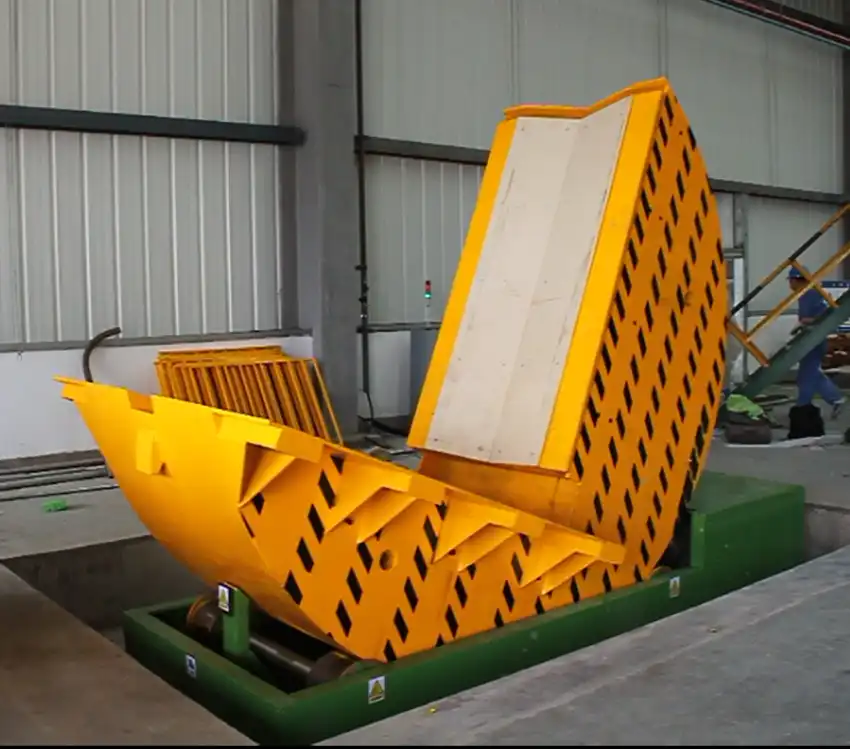
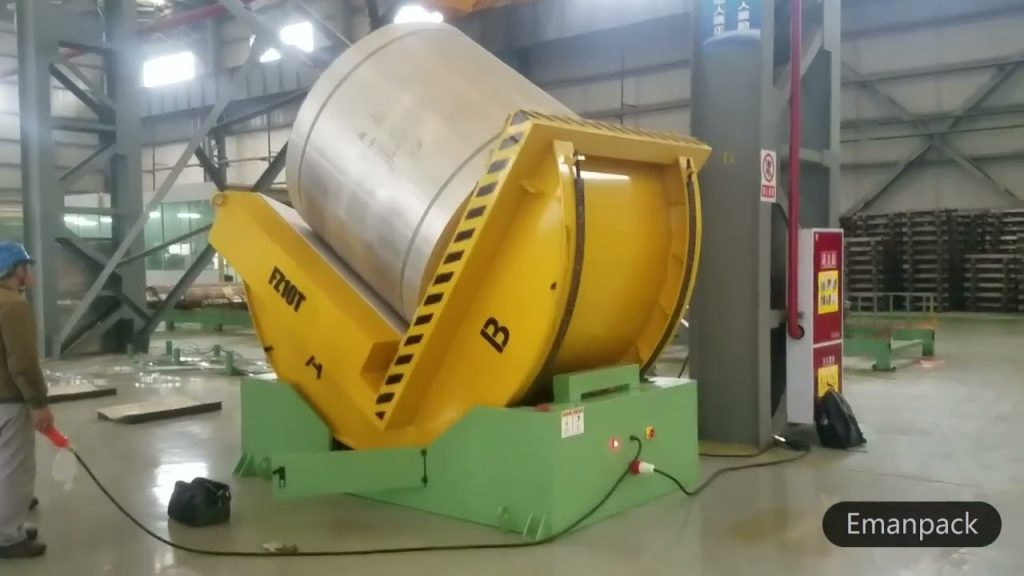
In the demanding environment of a foundry, efficiency and safety are often seen as competing priorities. However, when it comes to handling heavy molds, particularly the crucial task of inverting them, safety isn't just a consideration – it's paramount. For operations requiring a 180-degree turnover of molds for separation, maintenance, or various production stages, the traditional methods often employed are fraught with danger, risking both worker well-being and product integrity. This article will outline the best practices for safe mold upender operation, focusing on how modern foundry equipment minimises risk while maximising productivity, ensuring a safer and more efficient workspace.
The Risky Reality of Manual Mold Inversion
For too long, foundries have relied on improvised and often perilous methods to invert heavy molds. A disturbingly common practice involves misusing overhead cranes – equipment explicitly designed for vertical lifts – to awkwardly maneuver molds. This typically entails lifting the mold upright, precariously teetering it over its centre of gravity, and finally laying it down. This misuse of cranes isn't just inefficient and time-consuming; it drastically increases the risk of dropped loads, potentially causing severe damage to equipment, product, and, most importantly, personnel.
Fork trucks, often coupled with makeshift rigging using straps or chains, represent another frequently employed but equally hazardous approach. The same "stand up, teeter over, and lay down" sequence is replicated, inheriting all the drawbacks and dangers of the crane method. These methods, born out of necessity or perhaps a lack of awareness of safer alternatives, expose workers to unacceptable risks. The potential for human error in these complex, uncontrolled maneuvers is significant, and the consequences of failure can be catastrophic.
Mold Upenders: Engineered for Safety and Efficiency
Fortunately, the foundry industry has evolved, and purpose-built solutions now exist to address the inherent dangers of mold inversion. The Mold Upender Inverter represents a significant leap forward in foundry safety and operational efficiency. Designed specifically for this task, these material handling devices eliminate the precariousness of manual methods by providing a secure and controlled inversion process.
At their core, mold upenders are engineered to clamp and firmly secure the mold. With the push of a button, a hydraulic or electro-mechanical system smoothly rotates the load through 90 or 180 degrees. This controlled motion removes the jerky, unpredictable movements associated with crane and forklift methods, dramatically reducing the risk of load instability and accidental drops.
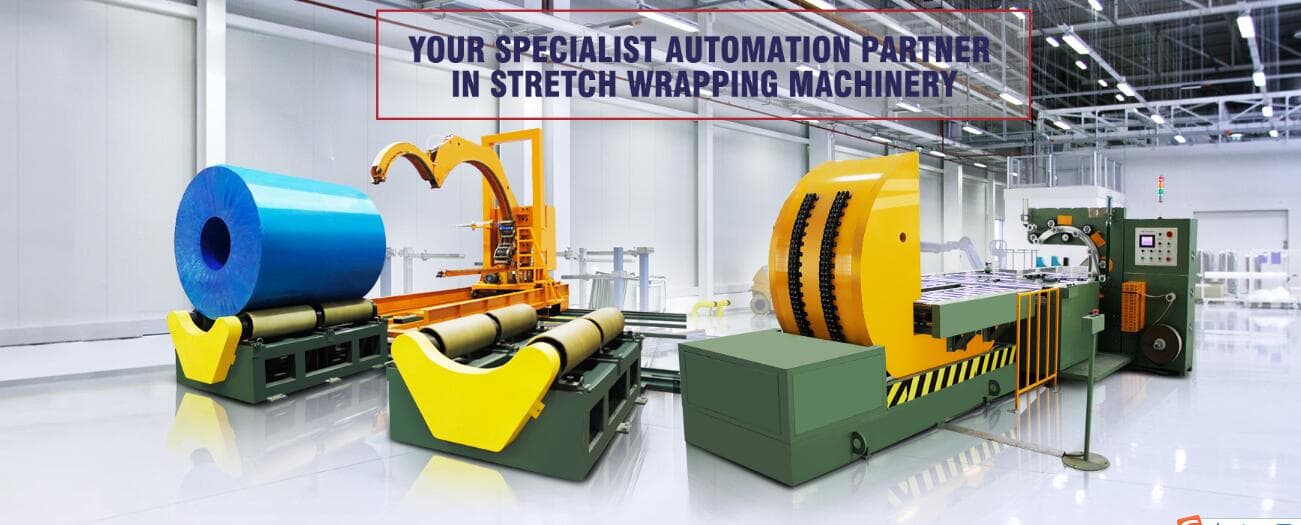
The design of these upenders often features an open configuration on three sides, allowing for the handling of large and oversized molds, even those with some overhang. Standard models can manage loads up to 10,000 pounds, with heavy-duty modified versions capable of handling up to 50,000 pounds for the most massive foundry items. This versatility in handling different sizes and weights underscores the adaptability of mold upenders to diverse foundry operations.
Furthermore, the open-sided design offers operational flexibility. Upenders can be configured for "in-the-mouth" loading, offering a visually intuitive approach, or side-loaded, enabling pass-through operation and loading/unloading from the same side, streamlining workflow and saving valuable floor space.
Essential Safety Features: Building a Foundation of Protection
The safety of mold upender operations is not solely reliant on the inherent design of the equipment; it's underpinned by a suite of crucial safety features integrated into modern units. These features act as safeguards, mitigating potential hazards and ensuring a secure working environment.
Emergency Stop Mechanisms: Immediate Response in Critical Situations
In the high-pressure, fast-paced environment of a foundry, rapid response to unforeseen events is critical. Emergency stop mechanisms are paramount in preventing brief lapses in attention from escalating into serious incidents. Strategically placed emergency stop buttons, readily accessible to operators, are a fundamental safety component. Pull cords, extending along the operational perimeter of the upender, provide another layer of immediate shut-down capability, allowing for quick intervention from various positions. Safety mats, positioned around the machine's base, can automatically halt operation if an unintended presence is detected within the hazard zone. These interconnected systems ensure that, in case of any anomaly or emergency, the upender's motion can be instantly stopped, minimizing the potential for accidents and injuries.
Guarding Systems: Preventing Access to Danger Zones
Guarding systems form a physical barrier, preventing operators from inadvertently entering hazardous areas during upender operation. These systems typically incorporate physical barriers like fixed panels or fences, creating a defined safety zone around the moving parts of the machine. Interlocks, crucial components of the guarding system, are designed to halt machine operation if a barrier is breached or opened. This ensures that the upender cannot function if the safeguarding is compromised, preventing accidental contact with moving components during operation. Safety sensors further enhance these systems, detecting any presence within the defined danger zone and triggering an immediate system lockdown. This layered approach of physical barriers, interlocks, and sensors creates a robust safeguarding system, proactively preventing access to hazardous areas and significantly reducing the risk of accidents.
Proper Lighting: Illuminating the Path to Safety
Often overlooked, but incredibly vital, is the role of adequate lighting in mold upender operations. Poorly lit work areas can significantly increase the risk of accidents and reduce operational efficiency. Proper lighting ensures clear visibility of the machinery, molds, and the surrounding work environment. This enhanced visibility allows operators to accurately monitor the inversion process, detect potential hazards like obstructions or misalignments, and respond proactively. Well-illuminated workspaces reduce the likelihood of errors and misjudgments, leading to safer and more precise mold handling. Furthermore, improved visibility contributes to a more focused and alert operator, boosting overall productivity and reducing the chances of accidents stemming from fatigue or inattention.
Operational Guidelines: Mastering Safe and Efficient Mold Upender Use
Beyond the inherent safety features of the equipment, adhering to operational best practices is crucial for ensuring safe and efficient mold upender utilization in foundries. These guidelines encompass simple operational steps, automation considerations, and the importance of training and maintenance.
Simple Operation Steps: A Streamlined and Secure Process
Operating a mold upender is designed to be straightforward, minimizing complexity and reducing the potential for operator error. The typical operation follows a clear and logical sequence:
- Loading: The mold is carefully loaded into the upender, ensuring it is properly positioned and stable within the clamping mechanism.
- Clamping: The operator initiates the clamping sequence, typically by holding a "Clamp Close" button. The upender's clamping mechanism securely grips the mold, adjusting until a firm and safe hold is established. Once clamped, the button can be released.
- Rotating: With the mold securely clamped, the operator initiates the rotation by pressing either a "CW" (clockwise) or "CCW" (counter-clockwise) button, depending on the desired direction of inversion. The upender smoothly rotates the mold, ceasing rotation upon release of the button or upon reaching the pre-set 90 or 180-degree limit switch.
- Unloading: Once the rotation is complete, the operator initiates the unclamping sequence by holding a "Clamp Open" button. The clamping mechanism retracts, releasing the inverted mold for removal.
This simple, step-by-step process, governed by clear controls, minimises the chance for misoperation and contributes significantly to operational safety.Automation and Conveyors: Enhancing Efficiency and Integration
To further enhance efficiency and safety, mold upenders can be integrated with automation and conveyor systems. PLC (Programmable Logic Controller) controlled auto-sequencing packages can automate the entire inversion process, from clamping to rotation and unclamping, with a single touch from the operator. This automation reduces manual handling, streamlines the workflow, and allows operators to focus on loading and unloading or other tasks while the inversion cycle is underway.
Integrating powered conveyors with mold upenders provides an even greater leap in automation. By adding conveyors, foundries can create a fully automated rollover operation, seamlessly incorporating the upender into existing conveyor lines. This allows for continuous, hands-free mold handling, boosting productivity and significantly reducing the risk of manual handling injuries. Furthermore, utilizing external feed conveyors in conjunction with overhead cranes enables a safer and more efficient workflow. Overhead cranes can be used properly for vertical lifts, loading molds onto feed conveyors, which then transport molds into the upender, complete the rollover, and return them via the same conveyor for crane removal to the next processing stage.Training and Maintenance: Cornerstones of Safe Operation
Regardless of the sophistication of safety features and automation, proper training and regular maintenance are indispensable for ensuring the long-term safe operation of mold upenders. Comprehensive training programs should be implemented for all operators, covering not only the basic operational steps but also emergency procedures, safety feature functionality, and troubleshooting common issues.
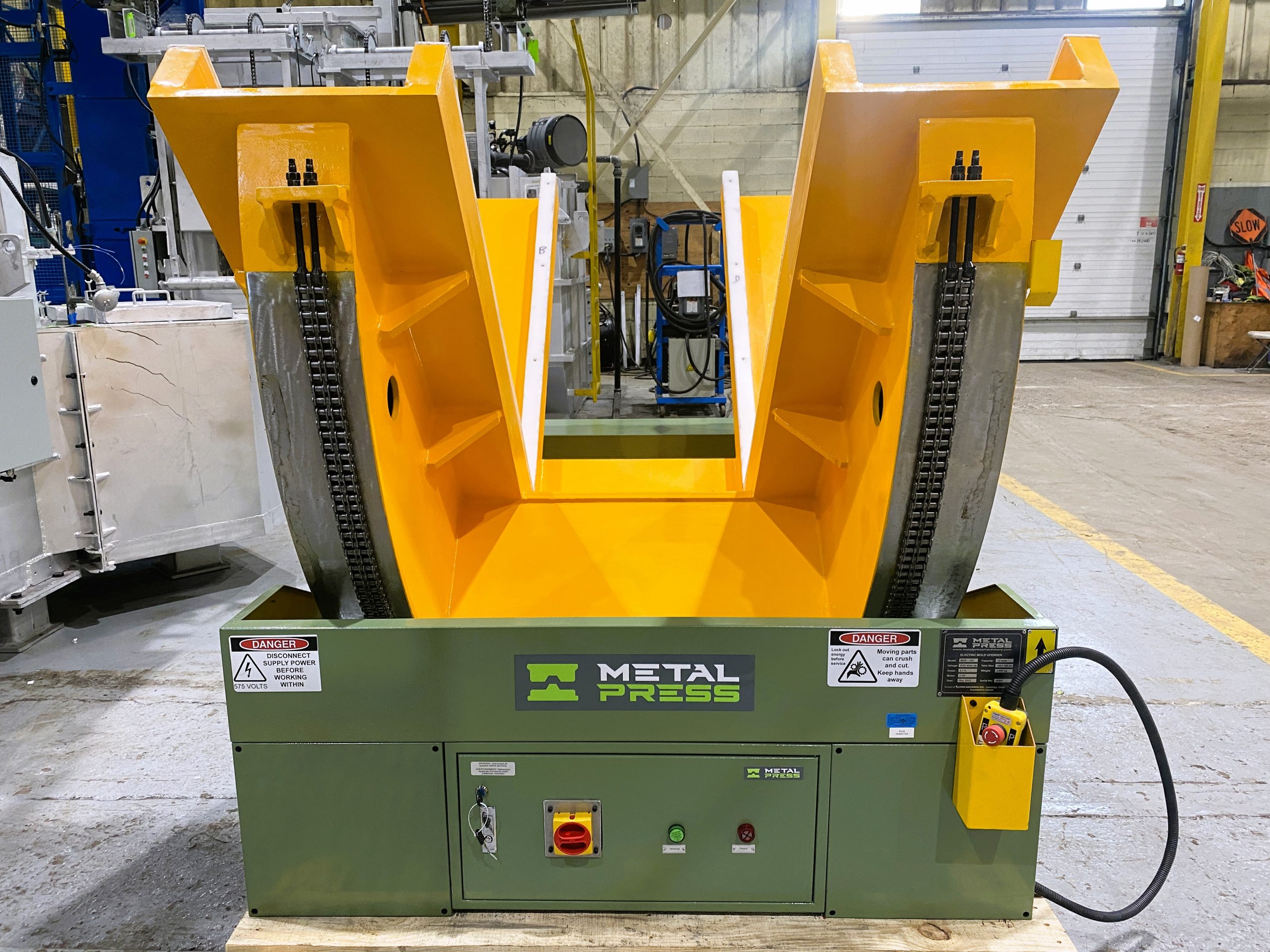
Regular maintenance schedules are equally critical. Routine checks of hydraulic systems, clamping mechanisms, rotation mechanics, and safety interlocks should be conducted to ensure all components are functioning correctly and effectively. Promptly addressing any wear, tear, or malfunctions is essential for maintaining the upender's safety and operational integrity, preventing unexpected failures that could lead to accidents.
Foundry Safety: A Holistic Approach
Safe mold upender operation is integral to, but not isolated from, the broader context of foundry safety. Enhancing safety in mold inversion contributes to a more secure overall foundry environment, reinforcing a culture of safety throughout the entire operation. Foundries are inherently hazardous workplaces, demanding constant vigilance and adherence to stringent safety protocols. General foundry safety rules encompass crucial aspects like moisture control, fire safety, ventilation, and responsible material handling. Strict rules against unsafe behaviours, such as running or goofing around in the foundry area, and operating equipment under the influence of impairing substances, are non-negotiable for maintaining a safe workspace.
Furthermore, the proper use of personal protective equipment (PPE) is paramount. Leather shoes, fireproof aprons, leg protection, proper gloves, wire mesh face shields, safety glasses, and cotton or leather hats are essential for protecting against the multiple hazards present in foundry environments, from molten metal splashes to flying debris. Clothes made from natural fibres like cotton are crucial, as synthetics can melt and adhere to skin in case of heat exposure. These broader foundry safety considerations, combined with best practices for mold upender operation, create a holistic safety framework, safeguarding workers from a range of potential hazards.
Conclusion: Investing in Safety, Investing in Success
Implementing best practices for safe mold upender operation in foundries is not merely about compliance; it's a strategic investment in a more productive, efficient, and, most importantly, safer future. By replacing hazardous manual methods with engineered solutions like mold upenders and embracing comprehensive safety protocols, foundries can eliminate "hope nobody sees this…" scenarios, modernise their operations, boost morale, and significantly enhance productivity. The integration of safety features, adherence to operational guidelines, and a commitment to training and maintenance are the cornerstones of a robust safety strategy. Ultimately, prioritising safe mold upender operation is a win-win for foundries, fostering a workplace where safety and productivity go hand in hand, creating a thriving and responsible industrial environment.
Best practices for safe mold upender operation in foundries include regular maintenance, comprehensive operator training, utilizing safety features like emergency stops and guarding systems along with following clear operational guidelines to improve safety and productivity while minimizing risks associated with mold handling.